
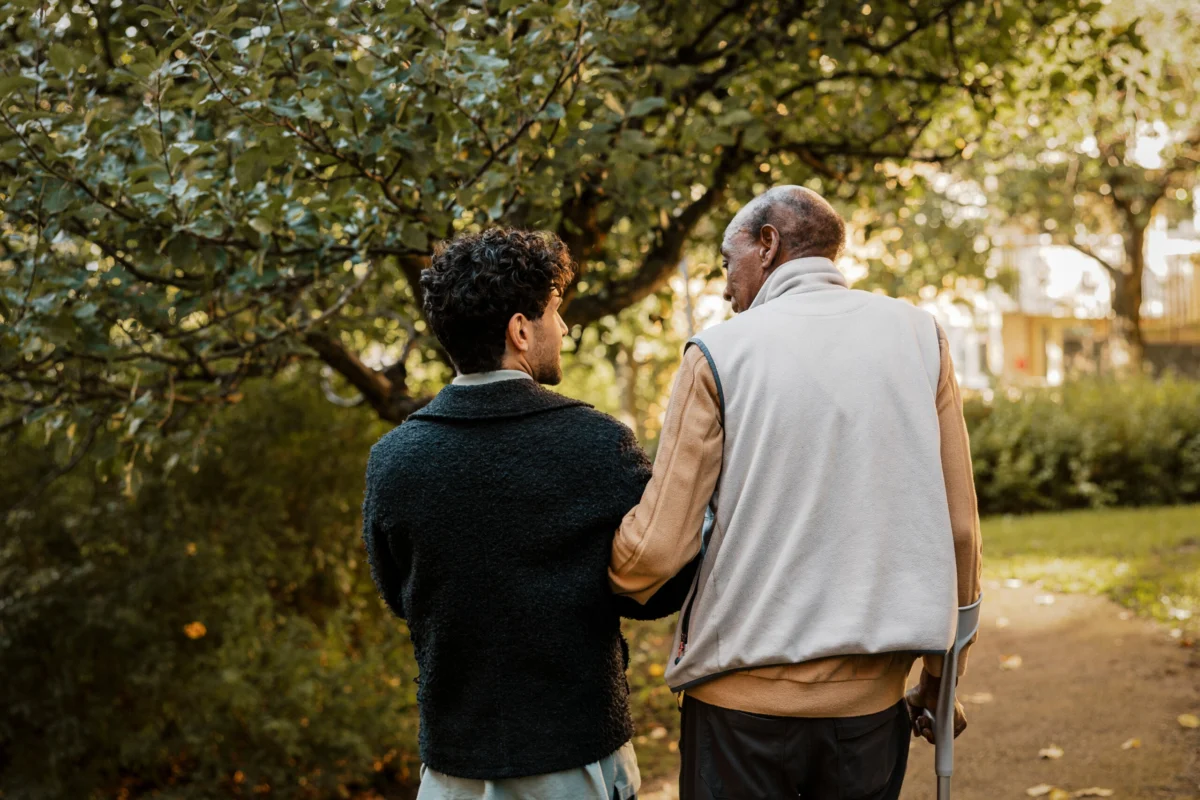
"As traditional family structures shift and the population ages, friendships are increasingly becoming vital lifelines for eldercare, offering crucial support that fills the gaps left by diminishing familial networks."
This profound observation underscores a significant societal transformation: the traditional model of eldercare, long considered an exclusive family responsibility, is undergoing a dramatic redefinition. Driven by demographic shifts, changing social norms, and evolving life paths, friendships are emerging as indispensable pillars of support for an aging population. This evolution highlights the growing importance of community and social networks in ensuring the well-being of older adults who may lack consistent family care.
The story of Nicole Straight and Patricia Wood in Sausalito, California, vividly illustrates this burgeoning trend. For years, their interactions were limited to pleasantries and occasional coffee, a typical neighborly relationship. However, a life-altering fall for 93-year-old Patricia Wood, resulting in a broken neck and a prolonged rehabilitation, fundamentally reshaped their connection. Upon her return home, Wood found herself reliant on assistance for mobility, particularly navigating stairs. It was at this juncture that Straight, a 53-year-old retired chef, stepped in, transforming their acquaintance into a profound bond of care.
Straight’s commitment extends beyond simple neighborly gestures. She now visits Wood weekly, bringing not only treats like lattes and cookies but also prepared meals. Her practical support is invaluable: Straight’s husband installed grab bars, erected shelves, and managed essential maintenance like changing light bulbs and smoke detector batteries in Wood’s home. The ease of communication is remarkable, with texts flying back and forth, enabling Straight to inquire about grocery needs, which Wood, no longer driving, readily supplies. Wood, a retired insurance executive, describes Straight as "a gift from heaven," cherishing their conversations, the shared laughter, and the unexpected development of a "new best friend" in her later years.
This personal narrative is not an isolated incident but a reflection of broader societal trends. Sociologists like Deborah Carr of Boston University, who researches aging populations, point to a growing number of older adults who are remaining single, divorced, or childless. These demographic shifts mean that fewer individuals have readily available spouses or adult children to rely on for caregiving. "The number of older adults who have never married or are divorced has been increasing, so we have more people aging alone," Carr notes. Furthermore, the proportion of individuals who are childless, whether by choice or circumstance, is also rising, and families that do have children often have fewer of them than in previous generations. This dwindling pool of potential family caregivers, coupled with geographic dispersion and, in some cases, family estrangement, amplifies the need for alternative sources of support.
The role of friends and neighbors as caregivers is gaining academic recognition. A recent study published in JAMA Network Open, conducted by researchers at the University of Michigan, delved into the phenomenon of friends and neighbors providing care, often in supplementary capacities. Utilizing data from the National Health and Aging Trends Study, which surveyed over 2,600 older adults with health limitations (averaging 79 years of age), the researchers identified individuals who received help from friends and family members. While family remained the primary source of care, approximately 14% of participants identified friends, including neighbors, as caregivers. This translates to an estimated 2.4 million caregiving friends nationwide. A separate national survey by AARP and the National Alliance for Caregiving in 2025 reported that 11% of caregivers were supporting nonrelatives.
Karen Fingerman, a gerontologist at the University of Texas-Austin and co-author of a commentary accompanying the JAMA study, emphasizes that these friends are often "auxiliary caregivers who have not been acknowledged." She argues that the sacrifices they make are frequently overlooked. The University of Michigan study, considered the first nationwide examination of caregiving friends, revealed distinct patterns in their involvement compared to family caregivers. Caregiving friends are less likely to live with the person they are assisting and rarely serve as the sole provider of care.
Yee To Ng, a gerontologist and lead author of the study, explained that caregiving friends typically contribute fewer hours of assistance. On average, friends provided 18 hours of help per month, a stark contrast to the approximately 67 hours provided by family members. Their contributions also differ in nature. "Friends are more likely to provide transportation," Ng stated. Driving friends to appointments, assisting with shopping, accompanying them outdoors, preparing meals, and attending medical appointments represent the top five tasks undertaken by caregiving friends.
In some instances, friends provide more comprehensive support. Czes Ferrino, an 82-year-old widow living alone in Westerly, Rhode Island, recently faced the challenge of her car breaking down. Her next-door neighbor accompanied her to multiple dealerships to help find a replacement vehicle, a gesture she described as akin to how a son would assist his mother or grandmother.
However, there are limitations to the scope of care that friends can comfortably or effectively provide. "There are some tasks friends might not be well equipped to provide or be comfortable with," Ng observed. Intimate personal care, such as bathing and dressing, remains largely within the purview of family members. This is often attributed to the potential impact on an individual’s self-esteem. "With family, we accept that when you’re really ill, they step up with intimate activities. It’s embarrassing to have your friends help you use the toilet," Ng explained.
The study also identified demographic correlations among those who receive care from friends. Individuals who named friends as caregivers tended to be younger than those who relied solely on relatives. They were also more likely to hold college degrees, suggesting that individuals with higher education levels often possess larger and more robust social networks. Unsurprisingly, those assisted by friends were also less likely to be married and more prone to living alone, mirroring the situation of Ann Greenwater, an 84-year-old resident of a mobile home park in rural Humboldt County, California.
Greenwater managed independently until a few years ago when severe back pain confined her to bed for nearly three months. Although she has since regained mobility and can manage household tasks and personal care, she acknowledges, "I’ve never really fully recovered." As a single woman with no close family beyond a distant nephew, and having ceased driving, her reliance has shifted to a group of friends she met at a nearby Zen Buddhist center.
Milli Quam, 86, assists Greenwater with her laundry and prescription pick-ups, while a 73-year-old friend helps with her computer and, along with others, provides grocery shopping assistance. Members of a local volunteer organization also drive her to medical appointments. Quam expresses her deep affection for Greenwater, stating, "I love Ann, and I’m happy there’s something concrete I can do. I hope I can keep doing it for a long time."
The inherent advantages of friendships as a source of care are significant. "Our friends are our own age and understand what we’re going through," Carr noted. This shared life experience can foster greater empathy and practical knowledge. Moreover, the support provided by friends can alleviate the burden on family caregivers.
However, the sustainability of friend-based caregiving is not without its challenges. Neighbors may relocate, and friendships can face strain if the recipient of care becomes overly demanding or if guilt arises from accepting assistance, potentially disrupting the egalitarian nature of friendships. Such strains can exacerbate depression in individuals with physical limitations, as indicated by a study led by Carr.
Furthermore, policy frameworks offer limited support for these non-familial caregiving relationships. For instance, the federal Family and Medical Leave Act, with very few exceptions, does not provide job-protected leave for individuals caring for a friend with a serious health condition, according to Laura Lawless, a labor and employment lawyer. While familial relationships often operate under an implicit "through thick and thin" expectation, friendships can be more transient. "There’s huge stigma to being estranged from your family, but it’s kind of normal for some friendships to just fall away," Carr observed.
In Sausalito, Wood humorously tells Straight, "she’s not allowed to move until I die," a statement that, while lighthearted, underscores the depth of their connection and dependence. Similarly, Greenwater’s friends in Humboldt County have remained steadfast, yet they, too, are aging. At 86, Quam acknowledges that her ability to drive may eventually diminish. This realization prompts Greenwater to ponder the future: "I’m wondering what will happen when these friends aren’t able to come to me. I guess we’ll deal with it when it comes." This sentiment reflects the ongoing adaptation and uncertainty that characterize the evolving landscape of eldercare, where the bonds of friendship are increasingly called upon to provide essential support in later life.
