

"Predicting who will die by suicide is as effective as a coin toss, a challenge that has persisted for fifty years. This reality compels a shift in focus from identifying at-risk individuals to implementing systemic interventions that reduce access to lethal means, a strategy proven to save lives."
The stark reality that even seasoned mental health professionals struggle to predict suicide with any degree of certainty underscores a fundamental flaw in traditional approaches to suicide prevention. For decades, the focus has largely been on identifying individuals at imminent risk and intervening directly, a method that, while crucial, proves insufficient in the face of the unpredictable nature of suicidal crises. As Dr. Paul Nestadt, a leading psychiatrist and researcher in suicide prevention, candidly admits, pinpointing those likely to die by suicide in the near future is an elusive goal. This limitation, however, does not lead to despair but rather fuels a drive for alternative strategies. The most promising of these, according to Nestadt and a growing body of research, lies in making the act of suicide itself more difficult by restricting access to lethal means. This paradigm shift, moving from a purely individual-focused approach to one that incorporates environmental and systemic changes, is critical in addressing the persistent and devastating toll of suicide.
For Paul Nestadt, a psychiatrist specializing in the treatment of suicidal patients and a prolific researcher in suicide prevention, the limitations of prediction are a driving force. His extensive experience treating individuals at risk, coupled with his deep engagement in academic research and teaching, has led him to a profound realization: the current ability to forecast who will die by suicide is remarkably poor, no better than chance and showing no improvement over the last half-century. This inherent unpredictability, however, does not render Nestadt or the field of suicide prevention hopeless. Instead, it propels a vital reorientation towards interventions that do not hinge on the accurate identification of individuals on the precipice.
"Instead of asking every doctor to figure out which patient will die by suicide and locking that patient up, it might be that we need to make sure there aren’t loaded guns available," Nestadt states, articulating a core tenet of this evolving strategy. This perspective highlights a move away from solely focusing on individual psychology and towards a broader public health model, drawing parallels to other public safety initiatives. KFF Health News’ ongoing series, "Eleven Minutes," delves into these expanded approaches, recognizing that while therapy and medication are indispensable, a more comprehensive strategy is needed. The challenge, particularly concerning firearms, lies in navigating the complex constitutional and political landscape that often paralyzes policy reform.
Research consistently demonstrates that limiting access to lethal means is one of the most effective strategies for suicide prevention. This can encompass a range of measures, from installing physical barriers on bridges and buildings to prevent falls, to reducing the quantity of medications accessible through prescriptions or over-the-counter purchases. However, the data points to the reduction of access to firearms as having the most significant potential to save lives. Nestadt, who also serves as the medical director at the Johns Hopkins Center for Suicide Prevention, emphasizes this point, acknowledging that this particular avenue of intervention faces the most significant obstacles.
The statistics surrounding firearm suicides are stark. In the United States, over 28,000 individuals died by suicide using a firearm in the most recent year for which preliminary federal data is available, representing more than half of all suicide deaths. This figure is particularly alarming as, even with a recent dip in overall suicide rates, gun suicides have reached record highs for five consecutive years. While historically these deaths have been concentrated among middle-aged white men and veterans, groups with persistently high suicide rates, there has been a concerning rise in gun suicides among women and within some Black and Latino male populations. The surge in first-time gun buyers during the COVID-19 pandemic further underscores the urgency for broadly applicable prevention efforts.

A common assumption is that restricting access to one lethal means is futile, as individuals determined to end their lives will simply find another method. However, a substantial body of research refutes this notion of "means substitution." The reality is that suicidal crises can be incredibly rapid, with individuals sometimes making the decision to die and acting on it within minutes. Any delay, such as the time required to access a firearm from a locked safe, can provide a crucial window for reconsideration or for an intervention by others. This brief but vital period of delay can be the difference between life and death.
Despite the clear evidence supporting the efficacy of restricting access to lethal means, discussions around firearms in the U.S., even within the context of suicide prevention, are intensely politicized. Proposed policies like background checks, waiting periods, and red flag laws often become divisive, with gun owners and the firearms industry asserting that such measures infringe upon Second Amendment rights, and many policymakers deeming them politically untenable.
The Trump administration, for example, has been a strong proponent of gun owners’ rights. During his tenure, numerous firearms regulations were rolled back, a previous surgeon general’s advisory labeling gun violence a public health crisis was rescinded, and grants focused on community gun violence prevention were revoked. Federal staff dedicated to this issue also saw reductions. While the White House did not directly address how these actions might impact gun suicide rates, a spokesperson stated President Trump’s commitment to "Making America Healthy Again," pointing to support for psychedelic treatments for mental illness and grants for veteran suicide prevention.
One policy that has seen some legislative traction, despite facing opposition, is the extreme risk protection order (ERPO), commonly known as a red flag law. These laws, enacted in 22 states and the District of Columbia, empower judges to temporarily remove firearms from individuals who present a demonstrated danger to themselves or others. While often enacted in response to mass shootings, research indicates that red flag laws are more effective in preventing suicides.
However, the efficacy of red flag laws is contingent on identifying individuals at risk, a challenge illustrated by the experience of Dorothy Paugh. Her father died by suicide in 1965 after losing his job, a tragedy she believes might have been averted if her mother had been able to secure an extreme risk protection order or if her father’s friend had temporarily held his handgun. Paugh later became a vocal advocate for such laws in Maryland. Studies across various states suggest that for every 10 to 20 guns removed under red flag laws, one suicide is averted.
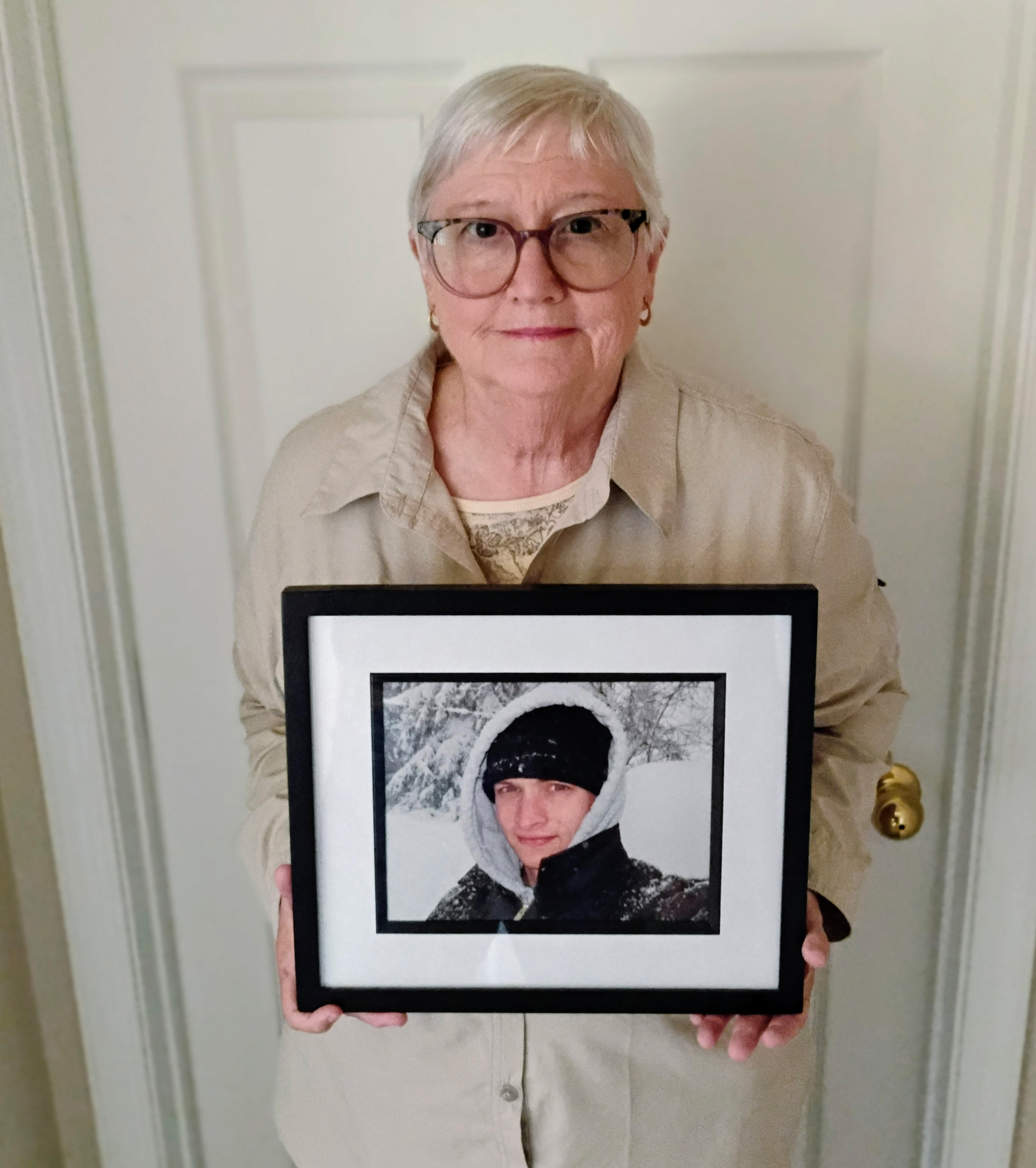
Yet, Paugh also acknowledges the limitations of these laws, stating that one would not have saved her son, Peter. In 2012, her 25-year-old son died by suicide by firearm, a year after purchasing a home and celebrating his brother’s birthday. Paugh received a thoughtful gift from him after his death—five novels by her favorite author—a testament to his thoughtfulness. Unlike her father’s situation, Paugh saw no overt warning signs for Peter. "I did not know that my son was suicidal. I didn’t have a clue," she recounts, highlighting how even a red flag law, had it existed then, might not have been utilized without foreknowledge of his distress.
Michael Anestis, a clinical psychologist and executive director of the New Jersey Gun Violence Research Center, notes that individuals most vulnerable to firearm suicide are often not identified as such by family or clinicians. Research indicates that those who die by suicide using firearms are less likely to have sought mental health care previously. Furthermore, a significant majority of veterans and service members who die by gun suicide do not disclose their suicidal thoughts in the months leading up to their deaths. This reality positions red flag laws as a valuable but incomplete first step, effectively targeting specific high-risk individuals while overlooking the many others who are silently struggling.
Nestadt proposes a compelling analogy to road safety for approaching suicide prevention. "You’re not trying to figure out who’s at risk of an accident," he explains, by constantly assessing individual factors like reaction time. Instead, governments implemented speed limits, seat belt laws, and mandated safety features in vehicles, leading to a significant decline in traffic fatalities.
Applying a similar public health framework to suicide prevention could involve measures such as requiring permits and background checks for firearm purchases, alongside mandatory waiting periods. One study found that implementing permit-to-purchase laws in Connecticut was associated with a substantial decrease in gun suicide rates, while the repeal of such a law in Missouri corresponded with an increase in firearm suicides.
Furthermore, approximately three dozen states have enacted laws mandating gun owners to secure their firearms in homes with children, a practice proven to reduce youth suicides. This is particularly critical given the alarming rise in gun suicide rates among Black youths (245%) and Latino youths (98%) since 2014. Anestis points out that laws requiring permits and safe storage can also mitigate homicides and other gun-related injuries, which can, in turn, increase an individual’s risk of suicide due to trauma and habituation to the idea of death or injury.
Gun owners and firearm industry associations often express opposition to universal measures, preferring educational initiatives that emphasize individual responsibility. They advocate for programs that teach people to recognize warning signs, discuss mental health, and safely store firearms. The National Shooting Sports Foundation, for instance, has collaborated with the American Foundation for Suicide Prevention to distribute educational materials in gun shops.
The National Rifle Association argues that focusing on firearms overlooks the deeper underlying causes of suicide, such as mental illness. They advocate for incapacitating dangerous individuals rather than solely restricting their access to a particular means.
Despite these divisions, some initiatives have fostered collaboration among diverse groups, including gun store owners, public health experts, and libraries. These efforts aim to provide free gun locks, establish temporary gun storage locations for individuals in crisis, and educate people on preventing the sale of firearms to those who may be suicidal.
These collaborative efforts offer Dorothy Paugh hope, fueling her continued advocacy for improved mental healthcare, open conversations about suicide, and policies that restrict access to lethal means. While acknowledging that such policies are not a panacea, she firmly believes they save lives, a value she understands profoundly, having lost both a parent and a child to suicide. For the individuals and families directly affected, these interventions make "all the difference in the world."
