
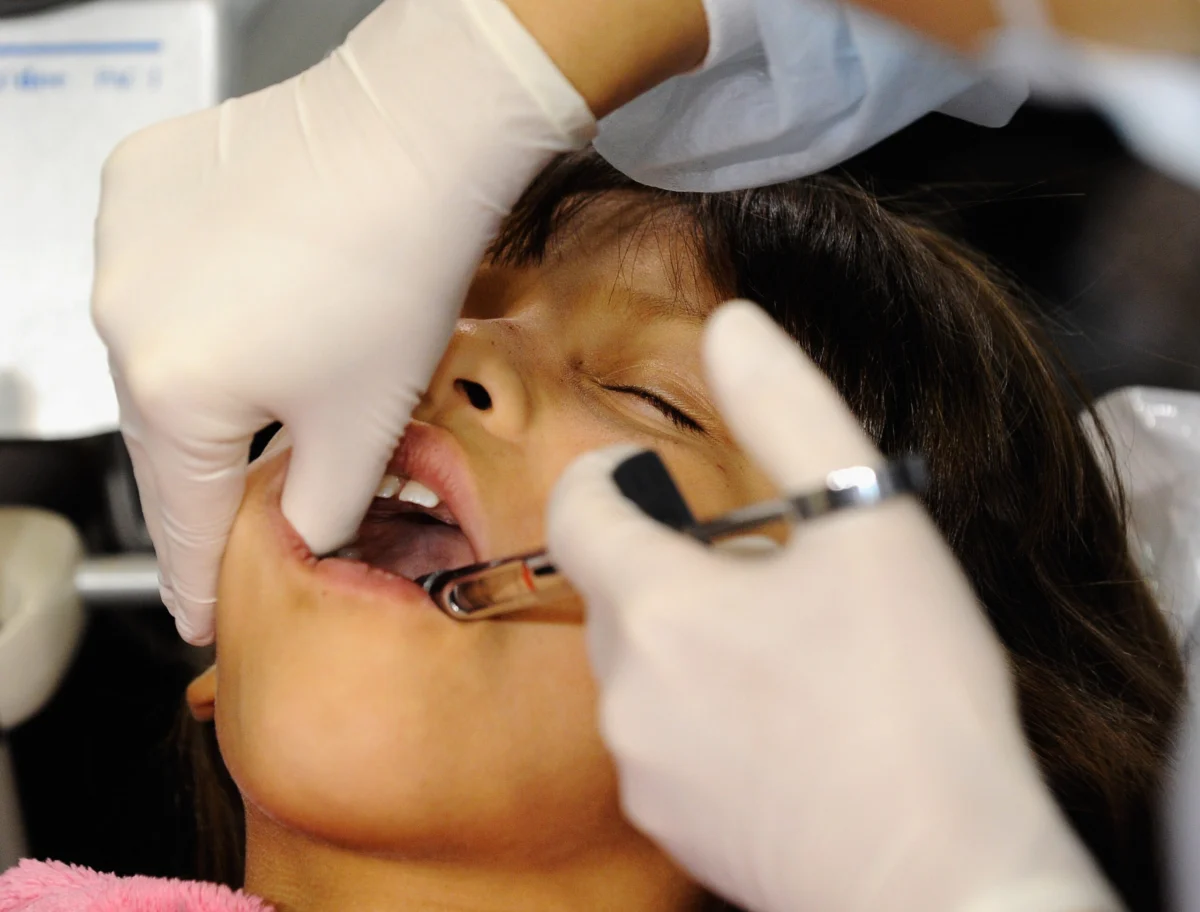
"A groundbreaking phase 3 trial reveals that a simple, non-invasive liquid treatment can halt decay in over half of baby teeth, offering a vital alternative to painful, expensive, and anxiety-inducing procedures for young children."
For parents of toddlers, hearing that their three-year-old requires multiple fillings under general anesthesia is a profoundly distressing experience. Beyond the immediate fear of a small child undergoing sedation, these procedures are often costly, necessitate hospital or surgical center visits, and carry significant emotional weight. However, a substantial new study published in JAMA Pediatrics offers a beacon of hope. This pivotal phase 3 trial demonstrates that a liquid, applied to cavities in mere seconds without drilling, injections, or sedation, successfully arrested decay in more than half of affected baby teeth when administered every six months. This innovative approach, utilizing silver diamine fluoride (SDF), while not entirely new, now boasts robust, large-scale US trial evidence, presenting parents with a tangible and less invasive option.
The Promise of Silver Diamine Fluoride: A Paradigm Shift in Pediatric Dental Care
The recent large-scale US trial has provided compelling evidence for the efficacy of silver diamine fluoride (SDF) as a treatment for early childhood caries, particularly for baby teeth. The study, published in JAMA Pediatrics, enrolled 830 children under the age of six who were suffering from severe early childhood caries. These participants were recruited from diverse settings, including dental offices, pediatric medical practices, and Head Start programs across Michigan, New York, and Iowa. The children were then randomly assigned to receive either a 38% SDF solution or a placebo.
The results were significant: SDF successfully arrested decay in over half of the treated baby teeth when applied at six-month intervals. Dr. Margherita Fontana, a professor of dentistry at the University of Michigan School of Dentistry and the lead investigator of the study, described the treatment as "very effective and safe," noting its success even in children as young as one year old. This finding is particularly impactful given that tooth decay is the most common chronic disease among children in the US, affecting over 40% of them. Left untreated, this condition can lead to severe pain, infection, difficulties with eating and sleeping, and missed school days, underscoring the urgency for accessible and effective treatment options.
The trial, which commenced in 2018 and was supported by over $12 million in funding from the National Institute of Dental and Craniofacial Research, utilized Advantage Arrest 38% SDF, supplied by manufacturer Elevate Oral Care. While the positive outcome of arresting decay in more than half of the teeth is encouraging, it is crucial to acknowledge that a substantial portion of treated teeth did not respond to the treatment, necessitating further intervention.
Understanding SDF: Mechanism, Limitations, and Ideal Candidates
Silver diamine fluoride functions by arresting the progression of tooth decay through a dual mechanism. Firstly, it possesses antimicrobial properties, effectively killing the bacteria responsible for cavity formation. Secondly, it promotes remineralization by hardening the softened tooth structure, thereby creating a more resilient surface. This distinct mode of action differentiates SDF from traditional fillings.
Fillings serve to physically remove decayed tissue and restore the tooth’s original shape and function. SDF, on the other hand, does not remove decayed material or reconstruct the tooth. Its primary role is to halt the decay process, leaving the existing cavity in place. For primary (baby) teeth, which are naturally shed and replaced by permanent teeth, arresting decay until exfoliation is often a sufficient outcome. However, SDF is not a suitable treatment for teeth with extensive structural damage, nor is it appropriate for teeth that already exhibit signs of abscess or infection requiring drainage.
Furthermore, SDF is not a permanent standalone solution. Its efficacy relies on regular reapplication, typically every six months, and in some treatment protocols, even more frequently. This ongoing application schedule is integral to maintaining its protective effects.
Dr. Fontana highlighted that SDF can be particularly beneficial for specific patient populations who may face challenges with conventional dental treatments. These include very young children, older adults, individuals with developmental or physical disabilities, and those who experience severe dental anxiety. These groups often face the greatest hurdles in accessing and tolerating traditional dental procedures, and are precisely the populations for whom sedation dentistry is frequently employed.
A point of common confusion, especially in light of recent discussions surrounding fluoride, relates to the FDA’s actions concerning ingestible fluoride products. It is important to clarify that the FDA’s recent concerns and warnings pertain to swallowed fluoride drops and tablets administered to young children. Silver diamine fluoride, conversely, is applied topically to the tooth surface in very small quantities. The two are distinct products with different applications, and the FDA’s actions regarding ingestible fluoride do not extend to SDF.
The Aesthetic Trade-Off: Weighing the Black Spot Against Traditional Treatment
The primary drawback associated with SDF treatment is its cosmetic consequence, which can be quite noticeable. The silver component in SDF permanently darkens the decayed portion of the tooth, turning it black. This discoloration is confined strictly to the area of decay and is irreversible. While this aesthetic compromise may be largely imperceptible on posterior molars, it can be a significant concern for anterior (front) teeth. Parents of young children, particularly those approaching school age, must be fully informed about this permanent darkening before consenting to the treatment, so they can make a well-considered decision.
This aesthetic consideration must be weighed against the alternative: conventional dental treatment under general anesthesia for young children. Such procedures involve inherent anesthesia risks, require pre-operative fasting, necessitate a recovery period, and often incur substantial costs, frequently running into thousands of dollars. Access to care can also be a significant barrier, with lengthy waiting lists for hospital-based pediatric dental programs, during which dental decay continues to progress.
For many families, the prospect of a temporary black spot on a baby tooth that will eventually be replaced by a permanent one is a straightforward and acceptable trade-off. For others, the cosmetic aspect may be a more significant concern. Ultimately, this decision involves a legitimate parental judgment, and a dentist who dismisses or minimizes the aesthetic concern is not providing comprehensive counseling.
Navigating the Decision: Essential Questions for Pediatric Dentists
When discussing SDF with a pediatric dentist, asking specific and targeted questions is crucial to making an informed decision. Parents should inquire whether every affected tooth necessitates restoration or if some can be managed with SDF while others receive restorative treatment, as a combined approach is often viable and effective. Understanding which specific teeth are involved and their visibility in the mouth is important, as is determining if any tooth exhibits an infection that SDF cannot address.
It is also vital to ask about the potential timeline if SDF does not fully arrest a lesion and what the recommended reapplication schedule would be. Furthermore, parents should ascertain whether the dental practice offers SDF treatment, as not all general dentists routinely administer it.
Regarding costs, inquiring about insurance coverage, including plans and Medicaid in your state, is essential. Understanding the out-of-pocket expenses for SDF compared to treatment under anesthesia can significantly influence the decision-making process. Coverage for SDF varies considerably, which is one of the reasons researchers are actively pursuing formal approval pathways.
Parents should be aware of critical signs that necessitate prompt dental attention, irrespective of the chosen treatment route. These include facial swelling, fever accompanied by mouth pain, refusal to eat, a tooth that has turned dark, or pain that disrupts sleep. Facial swelling coupled with fever is a particularly urgent concern that requires immediate medical attention, not just a scheduled appointment.
The Road Ahead: FDA Approval and Insurance Coverage
Silver diamine fluoride has a long history of use in dentistry in many countries, and has been utilized in the United States off-label for cavity treatment since 2014. At that time, it was cleared by the FDA as a medical device for managing tooth sensitivity, rather than being approved as a drug specifically for treating cavities. The recent phase 3 trial was strategically designed to generate the comprehensive evidence necessary for a manufacturer to submit a formal dental caries drug application to the FDA.
Dr. Amr Moursi, a professor of pediatric dentistry at New York University College of Dentistry and a co-principal investigator in the study, emphasized that moving SDF from its off-label status to formal FDA drug approval would represent a significant innovation. He posited that such approval could lead to increased utilization, improved insurance reimbursement, and more consistent product quality. While this represents a researcher’s perspective and advocacy for a product they studied, it highlights the potential benefits of regulatory clarity.
The confirmed outcome of this extensive phase 3 trial involving 830 children in the US is that 38% SDF demonstrated success in arresting decay in over half of the treated primary teeth. The families most directly impacted are those facing the prospect of dental treatment under general anesthesia for their young children. The most prudent next step for these families is to consult with their pediatric dentist to determine if SDF is an appropriate option for some or all of their child’s affected teeth. The central remaining uncertainties revolve around the FDA’s eventual approval of SDF as a drug for cavities and the subsequent decisions by insurance providers regarding coverage.
Frequently Asked Questions
What is silver diamine fluoride?
Silver diamine fluoride (SDF) is a liquid solution applied directly to cavities. It works by killing cavity-causing bacteria and strengthening softened tooth structure, thereby arresting decay. Its application requires no drilling, injections, or sedation.
What were the key findings of the trial?
In a phase 3 trial involving 830 children under the age of six with severe early childhood caries, 38% SDF was found to arrest decay in more than half of the treated baby teeth when applied every six months.
Does SDF replace the need for fillings?
No, SDF does not replace fillings. While it effectively arrests decay, it does not remove decayed tissue or restore the tooth’s shape and function. It is also not suitable for treating existing abscesses or infections.
What is the main downside of SDF treatment?
The primary drawback of SDF is cosmetic: the silver component permanently stains the decayed portion of the tooth black. This staining is confined to the decayed area and cannot be removed.
Is SDF FDA approved for treating cavities?
Currently, SDF is not FDA approved as a drug for cavities. It was cleared by the FDA in 2014 as a medical device for tooth sensitivity and has been used off-label for cavities since then. The recent trial was conducted to support a future drug application to the FDA.
Is this related to the FDA warnings about fluoride?
No, this is unrelated to the FDA’s recent warnings about ingestible fluoride products. Those warnings concern swallowed fluoride drops and tablets given to children. SDF is applied topically to the tooth surface.
When should I seek urgent dental care for my child?
You should seek prompt dental attention if your child experiences facial swelling, fever with mouth pain, refuses to eat, has a tooth that has turned dark, or suffers from pain that wakes them at night. Facial swelling accompanied by fever is considered an urgent medical emergency.
