
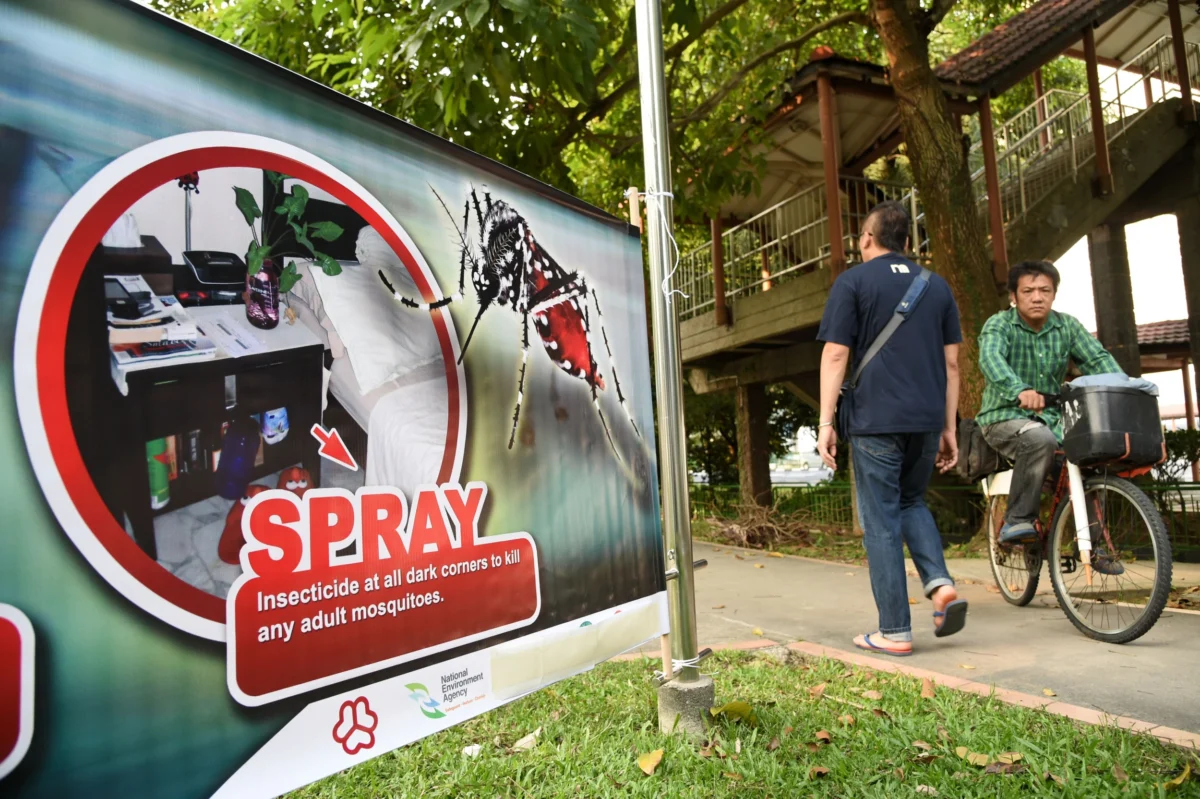
"CDC travel notices are dynamic tools, reflecting real-time surveillance and informing travelers about evolving mosquito-borne disease risks, emphasizing proactive prevention over travel restrictions."
The Centers for Disease Control and Prevention (CDC) has updated its travel health notices for dengue and chikungunya, signaling a significant shift in the geographical distribution of these mosquito-borne illnesses. These updates, particularly the revised list of countries under the Global Dengue notice, underscore the dynamic nature of infectious disease outbreaks and the importance of staying informed about potential health risks when traveling abroad. While the notices serve as crucial advisories, they are intended to guide travelers in adopting protective measures rather than imposing outright travel bans. Understanding the nuances of these advisories, the distinct characteristics of each disease, and the specific vulnerabilities of certain traveler groups is paramount for ensuring a safe and healthy journey.
The CDC’s Global Dengue Travel Health Notice, last updated on July 30, 2026, now identifies Colombia, Samoa, Vietnam, New Caledonia, the Maldives, Bolivia, Tonga, Cambodia, Kenya, Malaysia, and Sri Lanka as destinations where travelers should exercise caution. This updated list represents a material departure from the advisory issued in late January, which included Afghanistan, Bangladesh, Colombia, the Cook Islands, Cuba, Mali, Mauritania, Nicaragua, Samoa, Sudan, and Vietnam. Notably, only Colombia, Samoa, and Vietnam appear on both iterations, indicating a significant recalibration of perceived risk. The exclusion of Cuba, a country that has historically accounted for a substantial proportion of travel-associated dengue cases among returning U.S. travelers, is particularly noteworthy. Dengue is characterized by the CDC as a year-round threat in many tropical and subtropical regions, with outbreaks often occurring in cyclical patterns every two to five years, necessitating continuous monitoring and reassessment of affected areas.
In parallel, the CDC also updated its chikungunya travel notice on the same date, focusing on northwest Costa Rica. This notice remains at Level 2, urging travelers to "Practice Enhanced Precautions," and highlights an ongoing outbreak in the country’s northwestern region. Previous reporting indicated a concentration of chikungunya cases in the popular beach community of Playa Langosta within Guanacaste Province. It is crucial for travelers to understand that the removal of a destination from such a list does not signify the complete eradication of the disease. The CDC maintains a separate classification system, "Areas with Risk of Dengue," which maps out regions where the virus circulates continuously, offering a more generalized overview of endemic areas that moves at a slower pace than the dynamic travel advisories.
Both dengue and chikungunya are transmitted by Aedes mosquitoes, primarily Aedes aegypti and Aedes albopictus, which are known for their daytime biting habits, contrasting with mosquitoes that are more active at dawn and dusk. The initial symptoms of both diseases can be similar, often presenting as fever, but their progression and characteristic complications diverge significantly, impacting the urgency and nature of medical attention required.
Chikungunya typically manifests three to seven days after an infected mosquito bite. Its hallmark symptom is severe joint pain, often affecting the hands and feet, accompanied by fever, headache, muscle aches, joint swelling, and a rash. While most individuals recover within approximately one week, a subset of patients may experience persistent joint pain that can last for months or even longer. Although deaths are rare, certain populations, including newborns, adults aged 65 and older, and individuals with pre-existing conditions such as diabetes or heart disease, are at a higher risk of developing severe illness.
Dengue also begins with symptoms such as fever, headache, and body aches. However, the critical phase of dengue infection often occurs as the fever begins to subside, rather than at its peak. Warning signs that necessitate immediate medical attention include severe abdominal pain, persistent vomiting, bleeding from the gums or nose, and extreme fatigue or restlessness. A significant factor in dengue severity is the risk associated with secondary infections. A subsequent infection with a different dengue serotype carries a substantially higher risk of developing severe dengue compared to a primary infection. Therefore, individuals with a history of dengue infection should always inform their healthcare providers.
It is important for travelers to understand that CDC travel notices, categorized by levels, are recommendations for precautions, not outright prohibitions on travel. Currently, the CDC has not designated any destinations at Level 4 (Avoid All Travel) or Level 3 (Avoid Nonessential Travel) for either dengue or chikungunya. Level 1 signifies "Practice Usual Precautions," while Level 2 advises "Practice Enhanced Precautions." These levels are based on surveillance data indicating higher-than-expected case counts or an increase in infections among returning travelers. They are designed to inform travelers about necessary protective measures and do not restrict movement or cancel existing travel plans.
The landscape of vaccine availability for chikungunya has seen recent changes in the United States. On August 22, 2025, the Food and Drug Administration (FDA) suspended the license for the live-attenuated vaccine Ixchiq, citing in its safety communication that the product "does not have benefits outweighing risks, under most plausible scenarios." Following this decision, the manufacturer subsequently withdrew its application for the vaccine in the U.S. A separate vaccine, Vimkunya, which is a virus-like particle vaccine, remains licensed and available for individuals aged 12 and older. The CDC continues to provide clinical guidance on the appropriate use of this vaccine. For dengue, there is no widely recommended vaccine for most U.S. travelers, and no specific antiviral treatments are available for either infection. Consequently, the primary strategy for prevention remains rigorous bite avoidance.
Certain traveler groups face elevated risks from these mosquito-borne illnesses. Pregnant travelers, in particular, are advised to reconsider travel to areas with chikungunya outbreaks, especially closer to their due date. This is due to the risk of vertical transmission of the virus from mother to newborn around the time of birth, which can lead to severe illness in the infant. Older adults and individuals with underlying health conditions such as diabetes, heart disease, or compromised immune systems are also at greater risk of severe outcomes from chikungunya. As previously mentioned, travelers with a prior dengue infection are more susceptible to severe disease upon subsequent exposure. Furthermore, individuals visiting family and friends abroad, who often stay in residential settings for extended periods and may have less access to air conditioning or intact window screens, generally experience higher levels of exposure compared to those staying in typical tourist accommodations.
The most effective preventative measures against mosquito bites are practical and readily accessible. Travelers are strongly encouraged to use EPA-registered insect repellents containing DEET, picaridin, IR3535, or oil of lemon eucalyptus, applied according to label instructions. During daylight hours, wearing long sleeves and long pants can significantly reduce exposed skin. Choosing accommodations equipped with air conditioning or secure, intact window and door screens is also a crucial step. For extended stays, treating clothing with permethrin can offer an additional layer of protection.
Travelers are advised to consult the CDC’s travel website for the most current destination advisories before booking and again closer to their departure date, as these lists are subject to change. A consultation with a travel medicine specialist four to six weeks prior to departure is the optimal window for discussing and receiving necessary vaccinations and prophylaxis. Missing this appointment can limit the options available for disease prevention.
Upon returning from an area with known dengue or chikungunya risk, travelers should remain vigilant for symptoms for a period of 14 days. The development of a fever within two weeks of returning warrants an immediate call to a healthcare provider, with an upfront disclosure of recent travel history to ensure that appropriate diagnostic tests are ordered promptly. Dengue, in particular, is diagnosed through blood tests, and delayed diagnosis is common when travel history is not mentioned. In cases of severe abdominal pain, repeated vomiting, bleeding, difficulty breathing, or rapid deterioration in health after travel, urgent medical evaluation is necessary. The CDC continuously updates its travel health notices based on incoming surveillance data, and these advisories may be revised without a fixed schedule. Material changes to notice levels or destination lists will be reported to keep the public informed.
Frequently Asked Questions
Which countries are on the updated CDC dengue notice? As of the July 30 update, the notice names Colombia, Samoa, Vietnam, New Caledonia, the Maldives, Bolivia, Tonga, Cambodia, Kenya, Malaysia, and Sri Lanka.
Does a CDC travel notice mean I should cancel my trip? No. Level 1 and Level 2 notices recommend precautions. CDC currently lists no destinations at Level 3 or Level 4 for dengue or chikungunya.
What is the difference between dengue and chikungunya symptoms? Both begin with fever. Chikungunya is defined by severe joint pain that can linger for months. Dengue’s dangerous phase often begins as fever subsides, with warning signs including severe abdominal pain and bleeding.
Is there a chikungunya vaccine available in the United States? Vimkunya, a virus-like particle vaccine, remains licensed for people 12 and older. Ixchiq’s U.S. license was suspended in August 2025 and the manufacturer later withdrew its application.
Should pregnant travelers change plans? CDC advises pregnant travelers to reconsider travel to areas with chikungunya outbreaks, particularly near delivery. Decisions should be made with an obstetric provider.
What should I do if I get a fever after returning? Call a clinician within 14 days of return and state your travel history immediately, so the correct tests are ordered without delay.
How can I protect myself from bites during the day? Use an EPA-registered repellent, wear long sleeves and pants, and choose lodging with air conditioning or intact window and door screens. Aedes mosquitoes bite in daylight.
