
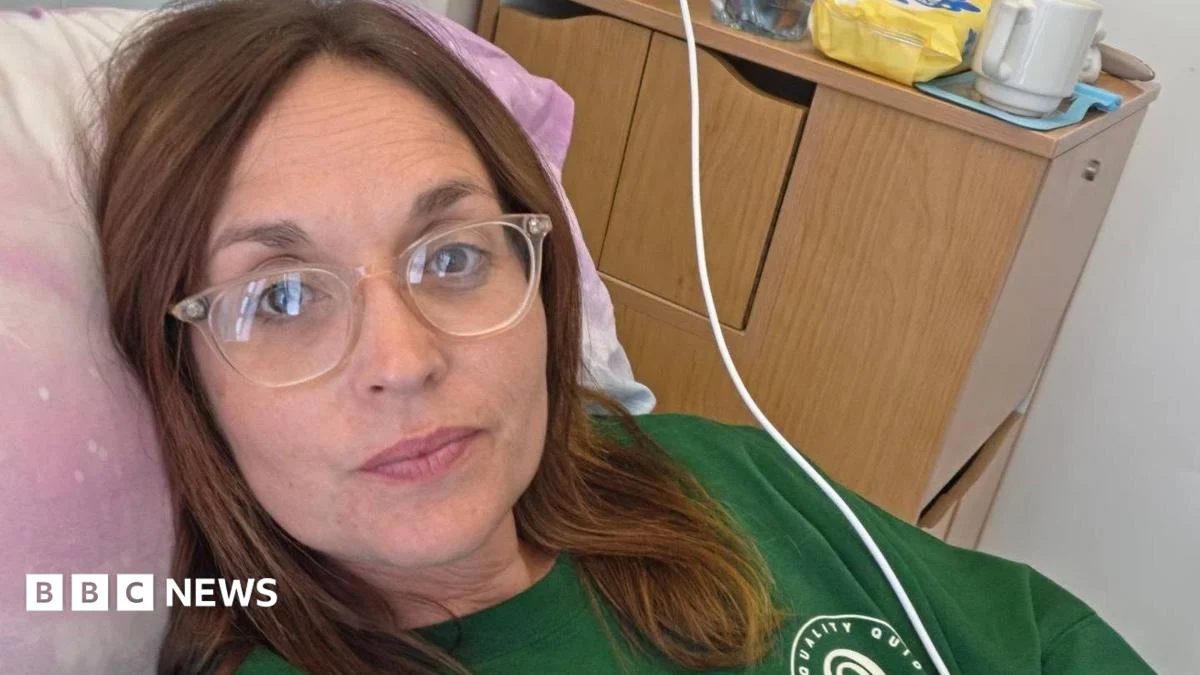
"A rare cancer diagnosis, often delayed and misunderstood, can leave individuals feeling isolated and vulnerable. Donna Marklew’s journey highlights the critical need for greater awareness to ensure no one faces this life-altering condition without information or support."
Donna Marklew’s life took an unexpected turn following a routine medical procedure, revealing a hidden battle with a rare and often-undiagnosed form of cancer. What began as treatment for complications from childbirth ultimately led to a life-changing diagnosis of neuroendocrine cancer (NETs), a condition so uncommon that it left the Coventry mum feeling shocked and isolated due to a profound lack of public and even medical understanding. Her experience underscores a systemic challenge in healthcare: the difficulty in recognizing and diagnosing conditions whose symptoms mimic more common ailments, leading to significant delays and emotional distress for patients.
Neuroendocrine cancers are a complex group of malignancies that arise from neuroendocrine cells, which are specialized cells found throughout the body. These cells share characteristics of both nerve cells and hormone-producing endocrine cells, playing crucial roles in regulating various bodily functions, including digestion, breathing, and blood sugar control. When these cells become cancerous, they can form tumours in almost any organ, though they are most commonly found in the gastrointestinal tract, pancreas, and lungs. Unlike many cancers, NETs often grow slowly, making them insidious and challenging to detect in their early stages. However, their ability to produce and release hormones can also lead to a range of non-specific symptoms that are easily mistaken for other, less serious conditions.
Marklew’s personal ordeal began when she underwent a hysterectomy at Warwick Hospital to address a uterine prolapse, a complication stemming from childbirth. It was during the subsequent analysis of tissue removed during the operation that the unexpected discovery was made: she had neuroendocrine cancer. The diagnosis was a profound shock. "I was very shocked because I’d never heard of neuroendocrine cancer," she recalled. This unfamiliarity extended beyond her personal experience, impacting her ability to communicate her condition to others. "I was left with not much information because it wasn’t known to anybody, and then trying to explain to people I’ve been diagnosed with neuroendocrine cancer, you’re kind of met with blank faces." This sense of isolation is a common thread among patients with rare diseases, where the lack of public awareness often translates into a lack of empathy and understanding from their social circles.
The rarity of neuroendocrine cancer contributes significantly to its diagnostic challenges. According to the charity Neuroendocrine Cancer UK, it is estimated to affect approximately 6,000 people in the UK each year. This relatively low incidence means that general practitioners and even specialists may encounter few cases throughout their careers, leading to a reduced likelihood of considering NETs in their differential diagnoses. Lisa Walker, the chief executive of Neuroendocrine Cancer UK, highlights a sobering statistic: the average time between people experiencing their first symptom and receiving a definitive diagnosis is a staggering five years. This extended diagnostic journey is primarily due to the non-specific nature of NET symptoms. "That is because the symptoms could be other conditions, and then people find themselves perhaps going down a different route and then needing to go back when the symptoms change or other symptoms are added in, which then start to look more like neuroendocrine cancer," Walker explained. Common symptoms like fatigue, digestive issues, flushing, palpitations, and unexplained weight changes can easily be attributed to conditions such as irritable bowel syndrome (IBS), menopause, anxiety, or stress, leading patients down prolonged and often fruitless diagnostic paths.
For Donna, an occupational therapist working in Leicestershire, the initial period before her diagnosis was marked by an absence of clear, identifiable symptoms. However, with the benefit of hindsight, she now reflects on a trip to St Andrews for her first wedding anniversary, where she experienced anxiety and palpitations. At the time, her GP attributed these symptoms to perimenopause, a common and understandable misdiagnosis given the overlap of symptoms. This anecdote perfectly illustrates the diagnostic labyrinth many women face, where gynecological or hormonal changes are often the first port of call for symptom explanation, potentially delaying a NET diagnosis even further. It wasn’t until the incidental finding during her hysterectomy that the true nature of her health challenge came to light.
Following her diagnosis, scans revealed the extent of Donna’s cancer, with tumours discovered in her appendix, Fallopian tubes, and surrounding tissue. To combat the spread of the disease, she underwent a significant nine-hour surgery to remove as many tumours as possible. However, the complex nature of NETs often means that surgery alone is insufficient to achieve a complete cure. Donna’s ongoing treatment regimen reflects this reality. She now requires three injections every week to help keep the cancer under control. Additionally, she has recently commenced Peptide Receptor Radionuclide Therapy (PRRT), an advanced targeted treatment administered four times, every two months. PRRT works by delivering a small dose of radiation directly to neuroendocrine tumour cells that express specific receptors, minimizing damage to healthy surrounding tissues. This innovative therapy represents a significant advancement in managing NETs, particularly for those with widespread or inoperable disease.
Donna’s tumours are classified as grade two, meaning they are slow-growing, a characteristic that offers some advantage compared to more aggressive forms of neuroendocrine cancer. "The tumours are slow growing, which is one of the benefits of this type of cancer," she noted. "There’s a different type of neuroendocrine as well, which can be more aggressive, but fortunately for me, mine are grade two, which means that they grow quite slowly, although mine are still growing." This distinction in grading is crucial in NETs, with Grade 1 representing very slow-growing tumours and Grade 3 indicating highly aggressive ones. While the slower growth rate allows for more treatment options and often a better prognosis, the persistent presence of cancer still exerts a profound mental and emotional toll.
Despite being able to maintain a semblance of normal life during her treatment, the psychological burden on Donna, a 44-year-old mother of four young children, is immense. "I’ve got four young children and my husband, my mum and my friends, and I think the reason why I’ve really wanted to get up and shout about it is because I just don’t want anyone to have people feel so vulnerable when you find out that you have this diagnosis because nobody knows about it [the condition]." Her experience of having an "invisible" illness further complicates her emotional landscape. Unlike more widely recognized cancers, where symptoms are often visible or the public has a general understanding of the disease’s impact, NETs patients frequently encounter well-meaning but ultimately unhelpful comments. "I could talk to my friends and family all day long, but no one will understand what it is like to live with this condition," she explained. "It’s really really hard and because it’s invisible everybody will say – oh you look great." This disconnect between outward appearance and internal struggle can deepen feelings of isolation and make it harder for patients to articulate their suffering.
In her quest for understanding and support, Donna reached out to Neuroendocrine Cancer UK, a charity dedicated to assisting those affected by the disease. She describes them as an "absolutely invaluable resource for people that have been diagnosed." Recognizing the profound benefit of connecting with others who share similar experiences, Donna took the initiative to establish a local patient support group. Her initial attempt in September saw one other person attend, providing a much-needed opportunity for shared conversation and support, facilitated by one of the charity’s nurses. As the group continued bi-monthly, its numbers grew, reaching six attendees. "It felt so good," Donna remarked, underscoring the vital role of peer support in navigating a rare cancer diagnosis.
Donna Marklew’s powerful advocacy coincides with World Neuroendocrine Cancer Day on Tuesday, an international observance aimed at raising global awareness of this often-overlooked disease. Her efforts are a testament to the critical need for increased education among both the public and medical professionals. By sharing her story, Donna hopes to empower others to recognize potential symptoms, advocate for thorough investigations, and reduce the agonizingly long diagnostic delays that plague NETs patients. Her journey from an unexpected diagnosis to a proactive advocate serves as a compelling reminder that behind every rare disease statistic is a human story, demanding recognition, understanding, and urgent action to improve outcomes for all those affected by neuroendocrine cancer. The collective voice of patients and charities like Neuroendocrine Cancer UK is instrumental in pushing for research, better diagnostic tools, and comprehensive support systems, ensuring that no one feels alone when facing a diagnosis as profound and bewildering as neuroendocrine cancer.
