
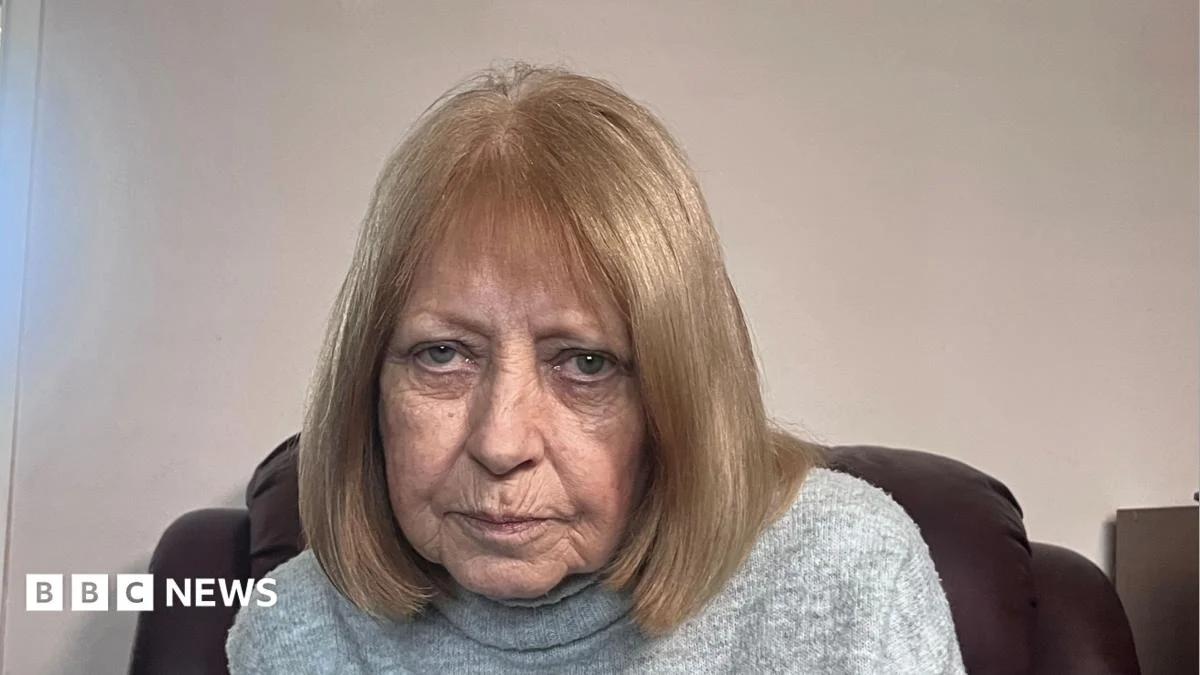
"To the day I die, I will regret putting a cigarette in my mouth." These poignant words from Joan McConville encapsulate the profound personal toll of lung cancer and underscore the urgent need for early detection. Her journey highlights a critical gap in Northern Ireland’s healthcare system: the absence of a funded, targeted lung cancer screening programme, a delay with potentially devastating consequences for countless lives.
Joan McConville’s battle with lung cancer serves as a stark reminder of the human cost associated with delayed diagnosis and the profound impact of a preventable disease. Her story is not merely a personal tragedy but a reflection of a systemic issue where the lack of proactive screening leaves individuals vulnerable to late-stage diagnoses, significantly limiting treatment options and reducing survival rates. As evidence mounts globally regarding the efficacy of early detection in mitigating lung cancer mortality, Northern Ireland’s continued postponement of a dedicated screening initiative raises serious questions about public health priorities and the long-term implications for its citizens.
Joan, a 71-year-old former teacher from Banbridge, was first diagnosed with lung cancer in 2023. Her regret is deeply rooted in her early exposure to smoking, which began at 19 while she was studying in Belfast. Like many of her generation, she admits to having started smoking because it was considered "trendy" and enjoyable, despite knowing the associated health risks. This candid admission speaks to the pervasive social norms surrounding smoking decades ago and the insidious nature of nicotine addiction, which proved incredibly difficult for her to overcome. Despite concerted efforts to quit, particularly during her pregnancies, she "never succeeded completely." Even after her diagnosis, and referral to a smoking cessation clinic, the grip of addiction remained formidable.
Her diagnosis came as "not remotely surprising" given her nearly 50-year smoking history and a family predisposition to cancer. The initial symptoms, a persistent cough, led to her admission to Craigavon Area Hospital (CAH) after a "dreadful coughing fit." A diagnostic scan, initially performed to check for a blood clot, unexpectedly revealed a 3cm lesion in her right lung. While surgical intervention successfully removed the primary cancer, the reprieve was tragically short-lived. Earlier this year, the cancer returned.
Following her initial surgery, McConville was scheduled for scans every six months. However, she noted that more than a year had passed when she began experiencing a persistent pain in the upper right side of her chest. Initially dismissed as a minor injury from gardening or housework, this "tiny little niggle" gradually escalated in severity, accompanied by "dreadful" nausea. The debilitating symptoms soon began to restrict her daily life, making simple tasks like going into town, walking, or visiting her beloved grandchildren increasingly difficult. A subsequent visit to CAH and further scans delivered the devastating news: the cancer had not only returned but had also metastasized, spreading to her lymph nodes and ribs. At this advanced stage, surgery was no longer a viable option, and she was recommended for radiotherapy and chemotherapy – treatments often less effective than early surgical intervention.
McConville firmly believes that if a regular screening programme had been in place, her cancer, which developed between the ages of 50 and 70, could have been detected significantly earlier. An earlier diagnosis would likely have meant earlier treatment and surgery, potentially leading to a more favourable outcome and possibly preventing the aggressive recurrence and spread she now faces. Her frustration is palpable: "If I could have had screening and it could have made a difference to me, that would make me angry." She highlights a common misconception among the public that lung cancer only happens to others, underscoring how screening could deliver the stark reality of risk directly to smokers, prompting earlier intervention and potentially life-saving action. "If it was pointed out at a very early stage to smokers like me, ‘Look that tiny little dot is cancer. Stop smoking now and we’ll hopefully be able to remove it and then that’s it gone’," she articulated, envisioning the profound impact such a programme could have.
The medical community in Northern Ireland echoes McConville’s concerns. Respiratory consultant Wendy Anderson, who leads Northern Ireland’s lung cancer network, acknowledges the incremental improvements in survival rates but stresses that they "still not good." She notes a significant shift from less than one in ten patients surviving five years when she began her career to approximately one in four today. While this represents progress, lung cancer continues to be a formidable adversary, largely due to its often-late diagnosis. Early detection is paramount because, at later stages, treatment options become severely limited, directly correlating with lower survival rates.
Dr. Anderson highlights the transformative potential of screening, estimating that it could dramatically increase the proportion of people eligible for curative treatment from about 30% to an impressive 80%. This substantial increase could translate into an additional 100 people every year either surviving lung cancer or avoiding its development altogether. Such a programme would typically involve Low-Dose CT (LDCT) scans for high-risk individuals, primarily current or former heavy smokers within a specific age bracket. These scans are highly effective at identifying small, early-stage lung nodules that are often asymptomatic, offering a crucial window for intervention before the cancer progresses and spreads.
Beyond the direct impact on survival, Dr. Anderson emphasizes another critical benefit: the potential to tackle health inequalities. Lung cancer disproportionately affects individuals from more deprived communities, where smoking rates are often higher due to a complex interplay of socioeconomic factors. By proactively reaching out to and screening these vulnerable populations, a targeted programme could significantly improve health outcomes and reduce the health disparities prevalent across Northern Ireland.
While advocating for screening, Dr. Anderson unequivocally states that reducing smoking rates remains the single most important strategy for preventing lung cancer. The benefits of quitting extend far beyond lung cancer prevention, encompassing a reduction in the risk of other debilitating respiratory diseases, heart attacks, and strokes. This dual approach of robust prevention strategies alongside early detection through screening offers the most comprehensive pathway to improving public health.
The political landscape surrounding lung cancer screening in Northern Ireland presents a concerning picture of commitment followed by uncertainty. In December 2024, the former health minister, Mike Nesbitt, published a three-year health and social care plan. This document explicitly stated a commitment to introduce "a new targeted lung screening programme by April 2027, subject to additional funding." This initial commitment offered a glimmer of hope for patients and advocates alike, suggesting a clear timeline for implementation.
However, recent developments have cast a shadow over this promise. The Department of Health has since confirmed that there is "no definitive timeline" for the full implementation of the programme. The reason cited for this significant delay is, once again, funding. This retraction from a previously stated commitment highlights the precarious nature of healthcare planning when contingent on future financial allocations. While the Department has funded a Public Health Agency (PHA) project team to assess the necessary resources and funding for delivery, the timeline for action remains protracted. Planning is now scheduled to commence in December 2026 and is expected to take approximately a year. This means that even under optimistic scenarios, actual screening services would likely not be operational until well into 2028 or even later, a delay that could cost many lives.
The lack of a definitive timeline and the reliance on future funding underscore a broader challenge within Northern Ireland’s healthcare system, often characterized by resource constraints and competing priorities. Yet, the evidence for lung cancer screening is compelling and continues to grow internationally. Delaying its implementation is not merely a postponement of a service but a deferral of potentially life-saving interventions for a disease that remains a leading cause of cancer death. The long-term costs of treating late-stage lung cancer, both financially for the health service and immeasurably for patients and their families, often far outweigh the upfront investment required for a comprehensive screening programme.
Joan McConville’s experience is a powerful testament to the urgent need for action. Her story, marked by regret and the profound impact of a late diagnosis, resonates with the silent suffering of many. For Northern Ireland, the decision to fund and implement a targeted lung cancer screening programme is not just a policy choice; it is a moral imperative that promises to transform outcomes, save lives, and alleviate the immense burden of a devastating disease. The time for definitive action, free from the uncertainties of funding delays, is now.
