
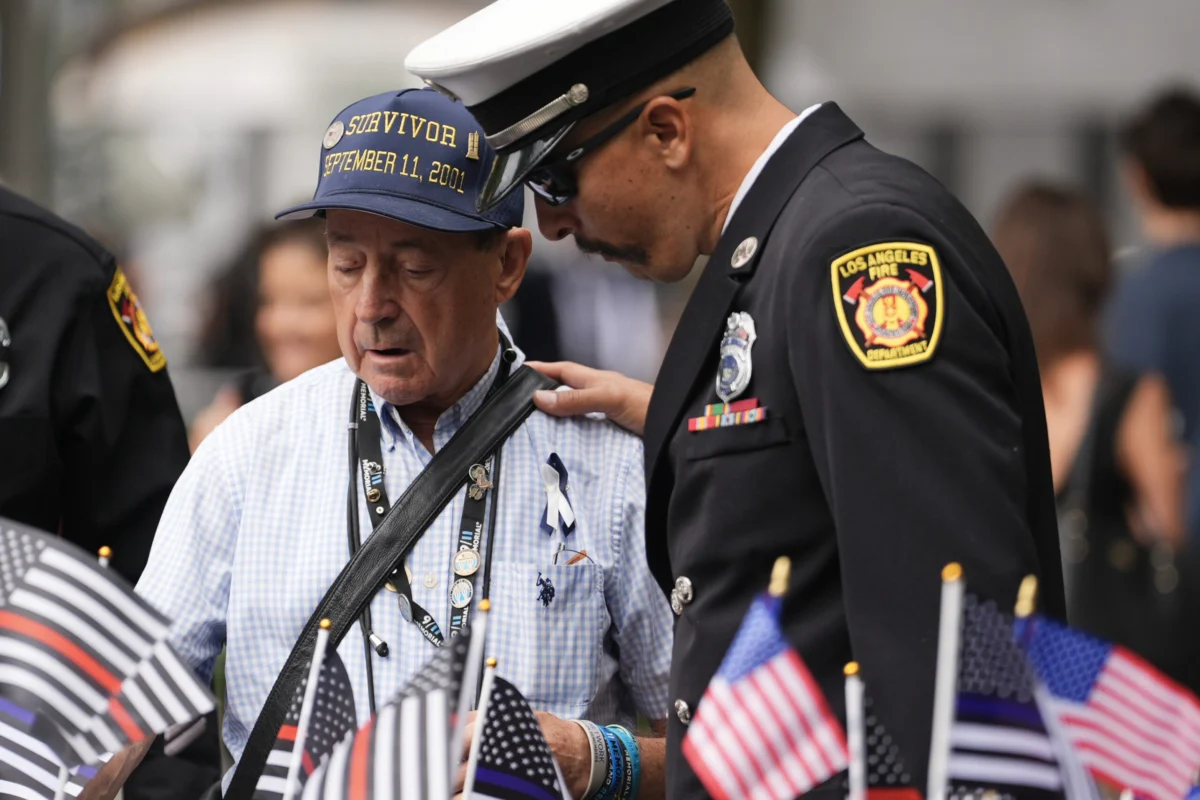
"The inclusion of a seventh moment of silence marks a profound acknowledgment that the tragedy of 9/11 continues to claim lives, underscoring the long-term health consequences for survivors and the ongoing need for support and remembrance."
For the first time in a quarter-century, the solemn commemoration at Ground Zero incorporated an additional moment of silence, a poignant addition to the annual ceremony. This seventh pause, observed at 12:52 p.m. on Friday, specifically honors the growing number of individuals who have succumbed to illnesses linked to the toxic dust and smoke that blanketed New York City in the aftermath of the September 11th attacks. This solemn observance, now designated as a permanent fixture of the annual remembrance by the 9/11 Memorial & Museum, signifies a crucial evolution in how the nation grapples with the enduring legacy of that tragic day.
The original six moments of silence historically marked the precise times of the World Trade Center towers’ impacts and collapses, the attack on the Pentagon, and the crash of United Airlines Flight 93 in Pennsylvania. The introduction of a seventh moment acknowledges a toll that has tragically surpassed the 2,977 lives lost on September 11, 2001. New York City Mayor Zohran Mamdani articulated the gravity of this shift, stating, "more people have died from 9/11-related illnesses than were killed on the day itself." This statement, amplified by CNN, highlights a disturbing reality: the insidious nature of the toxins released at Ground Zero has created a secondary wave of devastation, one that unfolds over years, if not decades. The ceremony’s timing also coincided with the city’s release of over 170,000 pages of air quality records from the post-attack period, documents that offer a stark reminder of the environmental hazards faced by those who were present.
For families who have endured the agonizing loss of a parent or spouse to a 9/11-related cancer years after the initial attacks, the resonating chime of the new bell serves as a stark, practical reminder. The federal September 11th Victim Compensation Fund (VCF) offers a lifeline, providing financial recourse for the personal representative of an individual who died from a certified 9/11-related physical illness. However, the fund operates with stringent registration deadlines, and a critical concern is that many families may remain unaware that the clock is ticking on their eligibility, potentially missing the opportunity to secure this vital support.
Compensation Fund Figures Released Before the Anniversary
Reinforcing the urgency surrounding these long-term health impacts, the World Trade Center Health Program recently reported a significant increase in certified cancers, with over 10,000 new cases identified in a single year. These sobering statistics emanate from the VCF, a distinct program administered by the Department of Justice, which plays a crucial role in providing financial assistance to victims and their families.
As of August 31, the VCF has processed an impressive volume of claims, receiving more than 112,000 applications and distributing over $18.56 billion to more than 77,000 claimants since its reopening in 2011. These figures, shared by Special Master Allison Turkel in remarks released by the Justice Department, underscore the vast and ongoing need for the fund’s services. The fund continues to receive a substantial influx of new claims, averaging over 750 per month. In 2025 alone, the VCF issued more than 9,800 award decisions, allocating over $1.8 billion to eligible claimants.
Special Master Turkel has estimated that as many as 400,000 individuals who lived, worked, attended school, or visited the designated New York City exposure zone may have been exposed to hazardous toxins. The geographical scope of eligibility encompasses Lower Manhattan south of Canal Street between September 11, 2001, and May 30, 2002. Similar windows of eligibility apply to those present at the Pentagon and Shanksville, Pennsylvania, sites. Crucially, the VCF’s reach extends beyond first responders, recognizing the broader spectrum of individuals affected. Eligible groups include journalists, construction and cleanup workers, utility crews, volunteers, and indeed, residents, office workers, students, and visitors who were present in the affected areas.
The passage of time presents a significant hurdle in the claims process, as locating essential documentation becomes increasingly challenging two decades after the attacks. In recognition of this, the VCF has proactively updated its guidance on proving presence in the exposure zones and has launched an interactive guide designed to assist claimants in identifying the necessary documents. This initiative is particularly vital for relatives who can support aging responders or survivors in their efforts to track down crucial records, such as old leases, pay stubs, or school enrollment records.
Deadlines Families Should Check Now
While the ultimate deadline for filing a claim with the VCF is October 1, 2090, the critical registration deadlines are considerably shorter and require immediate attention. According to the fund’s eligibility rules, individuals generally must register within two years of the date they are notified by a government entity, most commonly the World Trade Center Health Program, that a physical health condition is linked to the 9/11 attacks. It is imperative to understand that registration is a distinct and separate step from filing a claim, and it serves the crucial purpose of preserving the right to file a claim at a later date.
For families navigating the complex process following the death of a loved one due to a 9/11-related illness, specific rules apply. If the deceased individual had registered with the VCF on time before their passing, their family’s claim is considered timely. However, if prior registration was not completed, the personal representative of the estate generally must register within two years of the later of two key dates: the date of death or the date the VCF officially verifies that the condition causing the death was indeed 9/11-related. In certain limited circumstances, such as a death resulting from a condition that the World Trade Center Health Program has not yet certified, the VCF may facilitate the verification of the condition through its private physician review process. Therefore, families are strongly advised to confirm their specific registration deadline directly with the VCF, rather than assuming they have ample time to act.
Special Master Turkel has emphasized that "People do not have to be sick to register with the VCF." This critical point means that individuals who were present in the exposure zones can proactively register, even if they are currently in good health. Registration, as stated by the fund, does not waive any legal rights, and importantly, claimants are not required to retain legal counsel to navigate the registration or claims process. A significant legislative development in 2019 fully funded the VCF, ensuring its capacity to pay all eligible claims. The fund’s dedicated helpline, 1-855-885-1555, handles an average of over 4,000 calls per month, providing essential support and information. Turkel also issued a crucial warning about fraudulent websites, urging individuals to ensure they are using the official VCF website, which concludes with the ".gov" domain.
Families who have lost a loved one can begin the important process of gathering essential documents. These include the death certificate, preferably the long-form version that details the cause of death, any official correspondence from the World Trade Center Health Program, proof of presence in the exposure zone (such as leases, school records, or employment verification), and any court documents that officially name a personal representative for the deceased’s estate.
Care, Screening, and the Paperwork Ahead
The provision of healthcare and financial compensation operate as separate yet interconnected facets of support for 9/11 survivors. The World Trade Center Health Program offers crucial no-cost monitoring and treatment for certified 9/11-related health conditions to both responders and survivors, including individuals who lived, worked, or attended school in the disaster area as children or adults. Certification by this program is also the most common pathway for establishing a condition’s link to 9/11 for the purposes of the VCF. It is vital to note that enrollment in one program does not automatically confer registration in the other.
Cancer has emerged as the most frequently certified condition by the World Trade Center Health Program, with other prevalent ailments including chronic sinus disease, acid reflux, asthma, and post-traumatic stress disorder. Individuals who resided, worked, or studied in Lower Manhattan in the aftermath of the attacks are strongly encouraged to disclose this history to their healthcare providers, particularly if they receive a new cancer diagnosis, experience persistent coughing, shortness of breath, or chronic heartburn.
Those who experienced heavier exposure, such as responders and recovery workers who dedicated extended periods to the cleanup efforts, or residents who returned to Lower Manhattan in the early stages, may face elevated health risks. Many of these individuals have since relocated far from New York City, yet the health program extends its reach through a nationwide network of affiliated providers. Any instances of chest pain, sudden breathlessness, or coughing up blood require immediate emergency medical attention, irrespective of an individual’s documented exposure history.
The World Trade Center Health Program publishes updated statistics on certified conditions quarterly, with the next release anticipated this fall. Similarly, the VCF regularly updates its financial and claims data. MedicalDaily will continue to closely monitor and report on developments from both organizations.
The introduction of the seventh bell at Ground Zero serves as a tangible manifestation of a health crisis that has been slowly unfolding for 25 years. For survivors, the most proactive and beneficial step is to register with both the World Trade Center Health Program and the Victim Compensation Fund, even if they currently feel healthy. For grieving families, diligently confirming their specific claim and registration deadlines with the VCF is paramount to ensuring they can access the support they are entitled to.
