
"This case highlights how complex and surprising seizure manifestations can be, reminding us that a seemingly deliberate action like dancing can be entirely driven by abnormal brain activity, and potentially influenced by external stimuli like music."
A remarkable case of focal epilepsy has captured the attention of neurologists, demonstrating a seizure that manifested as energetic, "pop dancing" movements, a behavior never before observed in the patient. This unique presentation, captured on simultaneous video and electroencephalogram (EEG) during inpatient monitoring, offers new insights into the intricate ways seizures can manifest and raises intriguing questions about the potential influence of environmental factors, such as background music, on seizure behavior. While the case underscores the diverse spectrum of epilepsy and the importance of precise diagnostic tools, it does not alter current treatment guidelines, emphasizing the need for continued professional consultation for individuals living with the condition.
Unusual Seizure Manifestation Captures Neurological Attention
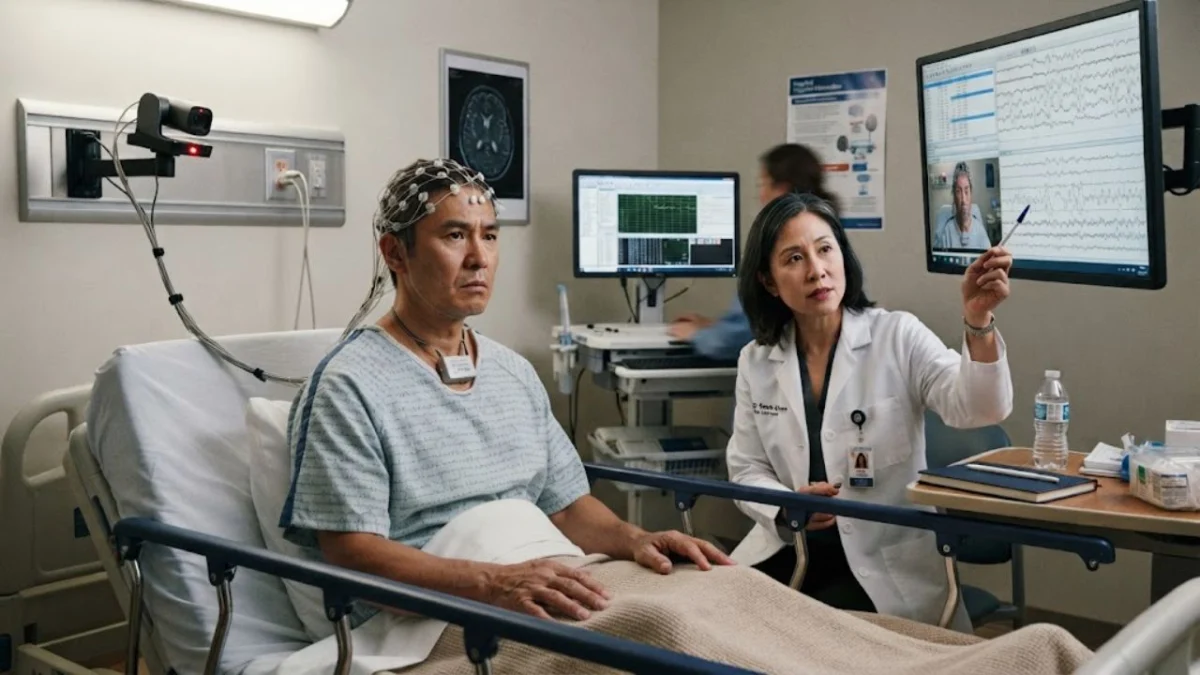
In a striking demonstration of the unpredictable nature of epilepsy, a 44-year-old man undergoing continuous inpatient monitoring experienced a seizure that defied typical expectations. While being observed in a specialized epilepsy monitoring unit at UT Southwestern Medical Center in Dallas, the patient’s right hand began to repeatedly point, a movement that, on video, appeared almost routine. However, within approximately 30 seconds, his body launched into a series of fast, energetic movements that his treating neurologists vividly described as resembling "pop dancing."
This unusual behavior was directly correlated with seizure activity by concurrent EEG recordings, which precisely tracked the brain’s electrical patterns. The findings, reported in the journal Epileptic Disorders in a March 2026 online publication and slated for the August print issue, are particularly noteworthy due to a peculiar detail: music was playing in the background during the event. Crucially, the patient had no prior history of exhibiting dancing-like behaviors during his seizures, prompting speculation about the potential role of environmental stimuli. This short educational submission, accompanied by teaching questions for clinicians, aims to illuminate this complex neurological phenomenon.
Understanding the Seizure’s Origin and Spread
The patient in question is left-handed and diagnosed with focal epilepsy, a condition where seizures originate in a specific area of the brain. While some of his seizures occasionally progress to involve the entire body in convulsive activity, this particular event presented a distinct motor manifestation. He was being treated with two anti-seizure medications: levetiracetam and lacosamide, a common combination for managing epilepsy.
His admission was part of a phase 1 pre-surgical evaluation, a noninvasive diagnostic process designed to pinpoint the exact origin of seizures before considering surgical intervention. This phase involves continuous video recording and scalp EEG monitoring to capture and analyze seizure activity.
During the observed seizure, the EEG revealed an abrupt surge of rhythmic electrical activity in the right temporal region of the brain, characterized by a frequency of 9 to 11 cycles per second. The temporal lobe, located near the ears, is a common site for seizure onset and is associated with various functions, including memory, auditory processing, and language. Following this initial burst, the electrical rhythm slowed and transitioned into sharper waves, indicating a more pronounced epileptic discharge. This activity then rapidly spread to the right frontal region, subsequently extending to the left frontal and temporal regions, and finally involving the midline structures of the brain.
The temporal sequence of events was meticulously documented. On video, the repetitive finger-pointing began first. The "pop dancing" movements commenced approximately 30 to 40 seconds after the initial electrical onset of the seizure, a crucial temporal relationship that informed the neurologists’ interpretation.
A Network Hypothesis for Ictal Dancing
The neurologists who reported this case propose that the observed "ictal dancing"—seizure-induced dancing—is not the result of abnormal activity in a single brain spot but rather the manifestation of seizure activity spreading through a distributed network of brain regions. This hypothesis is supported by the seizure’s electrophysiological pattern, which resembled earlier reported cases of dancing-like movements in individuals with temporal or frontal lobe epilepsy.
The timing of the dance in this patient is consistent with this network theory. The absence of immediate dancing upon seizure onset, followed by its emergence about half a minute later, aligns with the concept of seizure activity progressively spreading beyond its initial focus and engaging broader neural circuits. The rapid propagation of electrical activity across both hemispheres of the brain during this seizure further supports the idea that a complex, interconnected network was involved.
Published case reports of seizure dancing are relatively rare, adding to the significance of this new documentation. A 2009 video report in Neurology described a 39-year-old man whose seizures were characterized by dancing movements, though the precise seizure onset location could not be determined from his EEG. More recently, in 2017, neurologists at Seoul National University Hospital documented what they considered a highly plausible example of seizure dancing in a 42-year-old woman with right temporal lobe epilepsy. Her seizure began with right-hand movements and speech, preceding complex, rhythmic, and sequential movements during and after the seizure, captured simultaneously by video and EEG.
The current case from Texas follows a strikingly similar pattern: onset in the right temporal lobe, followed by right-hand automatisms (repetitive, involuntary movements), and subsequently, the distinctive dancing movements. This consistent pattern across multiple cases strengthens the hypothesis that specific brain regions and their interconnected networks are involved in generating such complex motor behaviors during seizures.
The Intriguing Question of Environmental Influence
One of the most compelling aspects of this case report is the tentative suggestion that background music might have influenced the manifestation of the seizure. The authors note that because the patient had no history of dancing-like seizures and music was playing, it is plausible that environmental stimuli could have contributed to the specific nature of his motor behavior.
However, it is crucial to emphasize that this remains a possibility, not a definitive finding. A single case recording cannot establish a causal link between the music and the movements. It is impossible to determine from this data alone whether the music actively shaped the movements, triggered any specific aspect of the seizure, or was merely a coincidental background element. The report does not provide details about the type of music played or its volume, further limiting the ability to draw firm conclusions.
This speculative link to environmental stimuli aligns with a growing interest within the medical community regarding how external factors can influence seizure activity. Senior author Irfan Sheikh, a co-author of this report, also contributed to a separate case study in the same journal that explored seizures triggered by listening to podcasts. This broader research area investigates the complex interplay between the brain, its internal electrical activity, and the external environment.
The patient provided written consent for the publication of his video and EEG data, ensuring ethical considerations were met. The research received no specific external funding. Dr. Sheikh, who also serves as an associate editor for Epileptic Disorders, disclosed this role in the paper, while the other three authors reported no conflicts of interest related to this work.
Implications for Individuals Living with Epilepsy
Epilepsy is a prevalent neurological disorder affecting millions worldwide. In the United States, approximately 2.9 million adults reported active epilepsy in 2021 and 2022, with an additional 456,000 children affected, according to the Centers for Disease Control and Prevention (CDC). While most seizures do not manifest in such dramatic or organized ways, this case serves as a powerful reminder that seizures can produce complex behaviors that may be misinterpreted by onlookers as volitional actions. The precise correlation of video and EEG in this instance was critical in definitively linking the unusual pointing and dancing movements to actual seizure activity.
It is important to reiterate that this case report is based on a single patient and cannot offer definitive conclusions about the frequency of seizure dancing or the role music might play in other individuals. Furthermore, these findings do not necessitate changes in established epilepsy treatment protocols. Individuals who observe repeated, unexplained episodes of unusual movements in themselves or a family member should meticulously document these occurrences and discuss them in detail with their healthcare provider. Any adjustments to anti-seizure medication should only be made under the direct guidance of a qualified clinician. The management of epilepsy remains a personalized process, guided by established medical expertise and individual patient needs.
