
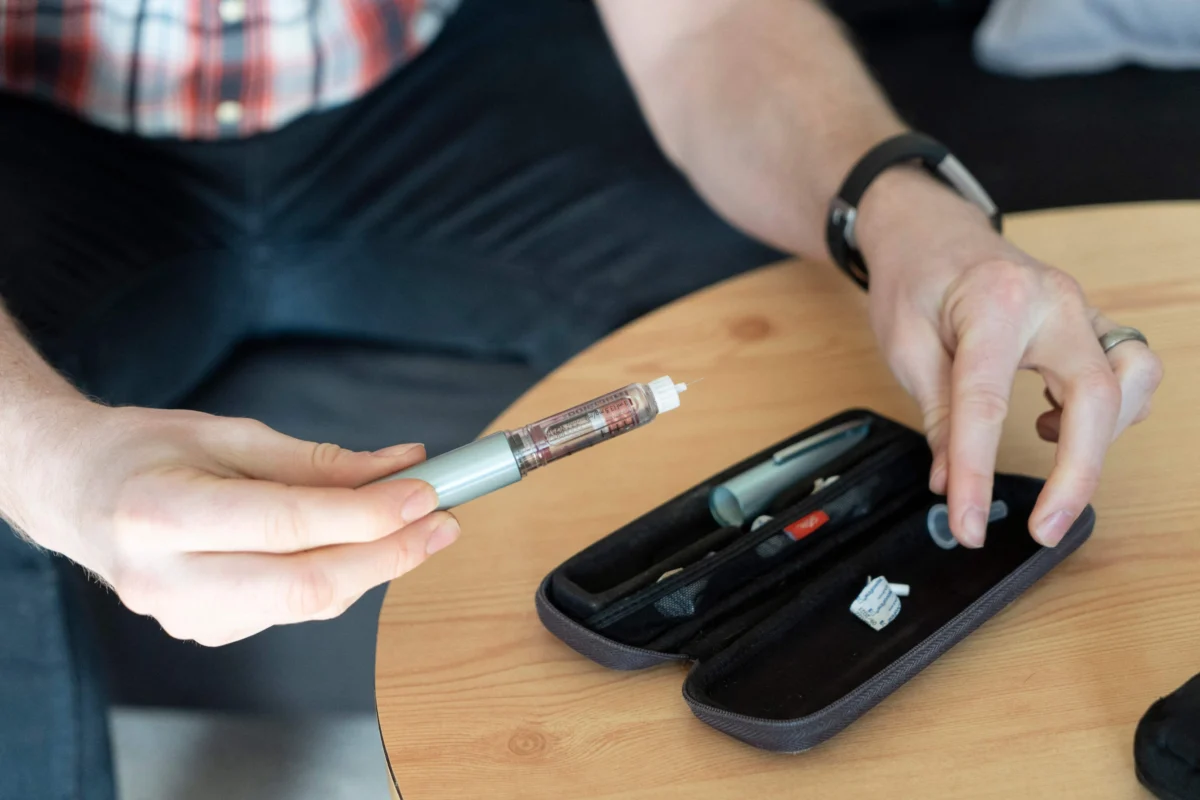
"While GLP-1 medications are proven to significantly improve physical health markers like blood sugar control and weight loss, a recent economic analysis of federal data found no discernible improvements in mental health, self-rated health, employment, or marital status among adults with diabetes who started these treatments."
This striking finding, emerging from a National Bureau of Economic Research (NBER) working paper, shifts the focus from the well-established physiological benefits of GLP-1 agonists to their potential broader impacts on daily life and overall well-being. The study, conducted by University of Chicago Harris School of Public Policy economist Robert Kaestner and coauthor Cuiping Schiman, meticulously examined over a decade of federal survey data. It specifically investigated whether the physical transformations brought about by these medications translated into tangible changes in crucial aspects of individuals’ lives beyond their diagnosed condition. For patients, particularly those bearing the financial burden of these treatments or navigating insurance hurdles, understanding these broader implications is paramount in setting realistic expectations for the monthly injections.
The NBER working paper, released in May 2026 and subsequently publicized by the University of Chicago in late July, delves into a nuanced question: beyond the clinic, do GLP-1 medications fundamentally alter how individuals experience their lives? The research does not dispute the profound physiological effects of these drugs, which include enhanced blood sugar regulation, significant weight reduction, and a decreased risk of cardiovascular events – benefits extensively documented in clinical trials. Instead, the analysis zeroes in on a more personal, yet equally significant, dimension: the carry-over effect of physical improvements into perceived quality of life, functional status, and socio-economic circumstances. This distinction is crucial for individuals and healthcare providers alike, especially as the landscape of GLP-1 prescription expands and out-of-pocket costs remain a significant consideration for many.
Unpacking the Analysis: Methodology and Nuances
The researchers employed data from the Medical Expenditure Panel Survey (MEPS), a nationally representative federal survey designed to capture a comprehensive picture of healthcare utilization and expenditures in the United States. Their focus was on adults diagnosed with diabetes between the years 2012 and 2023. A key methodological strength of this study is its longitudinal approach. Rather than comparing individuals who took GLP-1 medications with those who did not, the researchers tracked the same individuals over time. This "within-individual" analysis allowed them to assess whether a person’s circumstances changed after initiating GLP-1 treatment, thereby minimizing confounding factors that might exist between different patient groups. The analytical sample comprised a substantial number of observations: 4,284 for women and 3,672 for men.
The design of comparing individuals to their own pre-treatment baseline proved critical to the study’s findings. Initially, raw comparisons between GLP-1 users and non-users might have suggested differences in employment and marital status. However, these apparent disparities largely diminished when the analysis shifted to an intra-individual perspective. This suggests that the observed differences were more likely reflective of the characteristics of individuals who were initially prescribed these medications, rather than a direct consequence of the drugs’ effects. The robustness of these findings was further tested by examining data across different durations of medication use, specifically looking at roughly one-year and two-year windows post-initiation, with consistent results.
Despite the rigorous methodology, the authors acknowledge substantial limitations inherent in observational research. The outcome measures used were deliberately broad and focused on discrete events: employment status (employed vs. unemployed) and marital status (married vs. divorced). Standardized screening indicators for depression and psychological distress were also employed. In remarks accompanying the findings, lead author Robert Kaestner highlighted that while these are important indicators, they "don’t necessarily capture changes in self-esteem, relationship quality, or other day-to-day experiences." This implies that subtler, more qualitative aspects of well-being might not have been detected by the survey instruments.
Furthermore, this study represents observational research, not a randomized controlled trial (RCT). Therefore, a null finding on these specific measures does not equate to evidence that the drugs have no effect on overall well-being. The population studied was also specifically adults with diabetes during a period when GLP-1 use for weight management as a primary indication was considerably less prevalent than it is today. Consequently, the findings may not fully represent the experiences of the broader population now utilizing these medications primarily for weight loss.
It is also important to note that the paper is an NBER working paper, meaning it has undergone internal review but has not yet been subjected to the formal peer-review process common in academic publishing. Kaestner reported no conflicts of interest, having nothing to disclose.
The findings of this NBER working paper also stand in contrast to other preliminary research. A separate 2026 working paper, authored by Diamond, examined GLP-1 use for weight loss among women participating in the Understanding America Study. This research reported significant increases in employment among women who were not working at the start of the study and a rise in marriage or cohabitation among single women. However, this study has also not yet been peer-reviewed, underscoring the evolving nature of research in this rapidly developing field. No single analysis can definitively settle such a broad and complex question.
Implications for Coverage Decisions and Patient Expectations
The timing of this analysis is particularly pertinent, given the ongoing debates surrounding the extension of insurance and governmental program coverage for GLP-1 medications. With monthly list prices often reaching hundreds of dollars, payers are meticulously weighing the costs against the perceived benefits. The well-documented medical advantages of these drugs – improved glycemic control, weight loss, and cardiovascular risk reduction – already form a strong basis for coverage arguments. However, the existence of broader social and economic gains, if demonstrably measurable, would significantly strengthen the case for wider access by suggesting returns on investment that extend beyond the immediate clinical setting. This particular analysis, by finding no measurable social or economic gains in the observed outcomes, removes one potential avenue of advocacy for broader coverage, without undermining the established clinical benefits.
The distinction between clinical efficacy and broader socio-economic impact is often blurred in public discourse. A finding that GLP-1 drugs did not measurably alter employment status is not a declaration that they are ineffective. Rather, it is a reflection of what a large federal survey could detect in the lives of individuals with diabetes over a specific one-to-two-year timeframe. Such analyses are keenly observed by policymakers and payers responsible for national-scale healthcare decisions. For instance, the Centers for Medicare and Medicaid Services (CMS) recently launched the Medicare GLP-1 Bridge initiative on July 1, a time-limited demonstration designed to provide eligible Medicare Part D beneficiaries with access to certain weight-loss GLP-1 medications for a reduced monthly copay of $50, extending through December 31, 2027. This initiative highlights the ongoing efforts to balance access with cost considerations.
Guidance for Patients and Prescribing Clinicians
Crucially, no individual should alter or discontinue their prescribed GLP-1 medication based solely on the findings of a working paper. These medications are prescribed for critical health purposes, including glycemic control, weight management, and cardiovascular risk reduction. Abrupt cessation can lead to a reversal of metabolic gains and potentially adverse health consequences. Any questions regarding the appropriateness of a current medication regimen should be directed to the prescribing clinician.
What this research does offer is a more grounded framework for patient expectations. Individuals initiating these drugs with the hope that weight loss will spontaneously resolve pre-existing depression, mend strained relationships, or fundamentally alter their employment situation might be placing expectations on the medication that are not supported by the current detectable evidence. Understanding these potential limitations prior to starting treatment, rather than after a year of perceived lack of broader life improvement, can foster more realistic outlooks and proactive engagement with other forms of support.
Patients experiencing new or worsening mood symptoms while taking a GLP-1 medication should always communicate these changes to their healthcare provider. It is vital to distinguish between expected physiological changes and potential psychological effects. Mental health treatment and metabolic management address distinct issues, and improvements in one area do not automatically substitute for necessary care in the other.
For individuals and households grappling with the financial aspects of these medications, several practical avenues remain. Patient assistance programs, formulary appeals processes, and open discussions with prescribers about alternative treatment options are essential. Denials of prior authorization can often be appealed, and pharmacists are valuable resources for clarifying what specific insurance plans cover. The CMS guidance for providers outlines eligibility criteria for the Medicare GLP-1 Bridge demonstration, offering a potential pathway for cost reduction for some beneficiaries.
The researchers anticipate that the understanding of GLP-1 medications will continue to evolve. As their use expands beyond diabetes to encompass a broader population primarily seeking weight loss, and as longer-term follow-up data becomes available, new insights into broader effects may emerge. The next significant milestone to watch will be whether this working paper undergoes further revision or is ultimately published in a peer-reviewed journal.
Key unanswered questions persist regarding whether these drugs produce subtler benefits that are not captured by current survey instruments. Additionally, it remains unknown whether the observed outcomes differ significantly for individuals taking GLP-1s primarily for weight loss compared to those using them for diabetes management.
Key Questions Answered
- What did the analysis find? Among adults with diabetes, GLP-1 use was not meaningfully associated with changes in mental health, self-rated health, employment, or marital status within the observed timeframe.
- Does this mean GLP-1 drugs do not work? No. The established physical benefits, including improved blood sugar control, weight loss, and cardiovascular risk reduction, are well-documented in clinical trials and were not the focus of this specific analysis.
- What data was used? The study utilized over a decade of data from the Medical Expenditure Panel Survey, a nationally representative federal survey, focusing on adults with diabetes from 2012 through 2023.
- Has the research been peer reviewed? No, this is a National Bureau of Economic Research working paper issued in May 2026 and publicized by the University of Chicago in late July. It has not yet undergone formal peer review.
- What are the main limitations? The outcome measures were broad and focused on discrete events, potentially missing more subtle changes in self-esteem or relationship quality. The study population was adults with diabetes, not individuals using GLP-1 drugs primarily for weight loss.
- Should patients change their medication? No one should start or stop a prescription based on this analysis alone. Any concerns or questions about medication should be discussed with a prescribing clinician.
- Why does this matter for coverage? Insurers and government programs are actively considering broader access to these medications. Evidence of measurable social or economic gains would have bolstered arguments for expanded coverage, and this analysis did not find such gains within its scope.
