
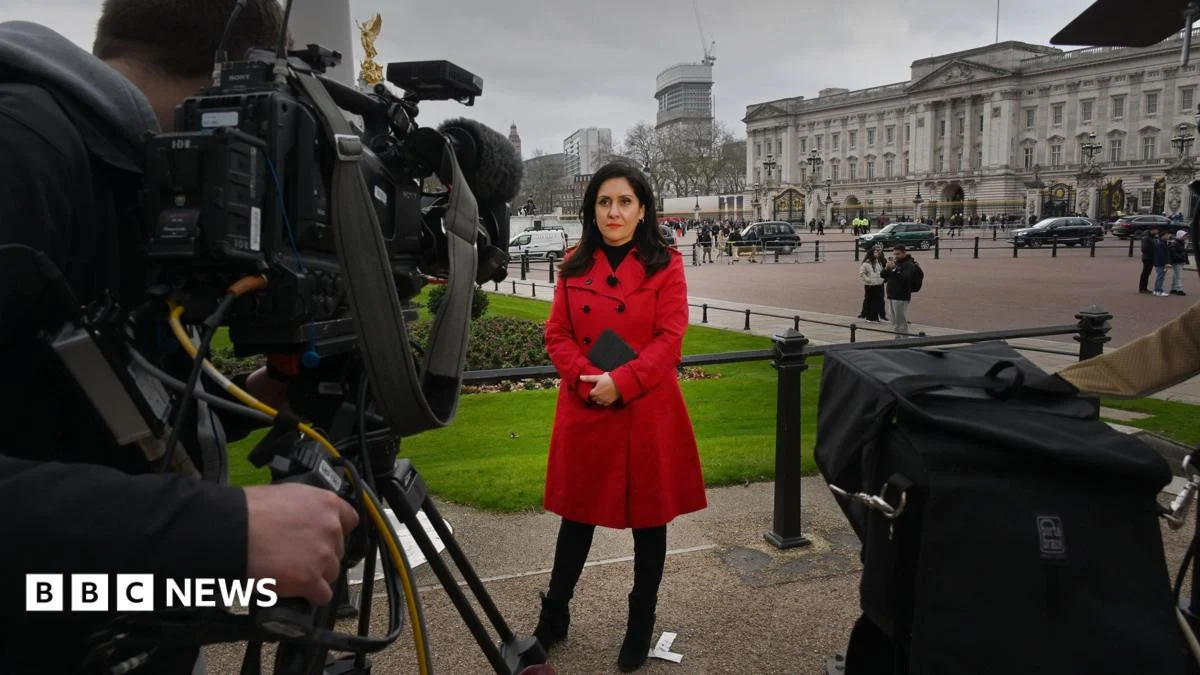
"Living with an incurable yet manageable blood cancer, Maryam Moshiri’s courageous decision to share her journey illuminates the critical need for early diagnosis and heightened public awareness, demonstrating profound resilience in the face of a silent disease."
BBC News presenter Maryam Moshiri has bravely stepped forward to reveal her two-year battle with polycythaemia vera (PV), a rare and treatable form of blood cancer. Her announcement aims to demystify the complexities of this condition and underscore the importance of vigilant health monitoring, particularly for diseases that often present with subtle or no initial symptoms. Moshiri’s candid account offers a powerful insight into the daily realities of managing a chronic illness while maintaining a demanding public-facing career, inspiring others to confront health challenges with openness and determination.
Maryam Moshiri, a familiar face to millions as a prominent anchor on the BBC News channel since joining in 2003, disclosed her diagnosis of polycythaemia vera (PV) approximately two years ago. The 49-year-old presenter explained that her decision to go public stems from a newfound understanding of her condition and its impact on her life. "It’s been two years since my diagnosis and I’ve felt that I’ve started to understand the disease a lot better and the way it affects my life. I’ve got a handle on it to a degree now, so I felt it was really important to raise awareness," she stated, acknowledging the lifelong commitment required for its management. "I’m going to have to spend the rest of my life being treated for this."
Polycythaemia vera (PV) is a chronic, myeloproliferative neoplasm (MPN), a group of rare blood cancers that originate in the bone marrow. In PV, the bone marrow produces an excessive number of red blood cells, and sometimes white blood cells and platelets, leading to an abnormal thickening of the blood. This increased viscosity significantly elevates the risk of serious complications, including life-threatening blood clots, which can manifest as strokes, heart attacks, or deep vein thrombosis (DVT). While PV is currently incurable, it is treatable, and its progression can be effectively managed, allowing many patients to lead relatively healthy lives.
A crucial aspect of Moshiri’s revelation is the insidious nature of PV. Despite its potential severity, symptoms can often be vague or absent in the early stages. Common indicators, such as headaches, confusion, dizziness, and blurred vision, might easily be dismissed as everyday ailments. Moshiri herself experienced minimal symptoms, highlighting the critical role of routine medical check-ups. "Mostly I had no symptoms and that’s one of the problems with this disease," she recounted. Her diagnosis was a testament to the meticulousness of her general practitioner. "The only reason mine was caught was because my GP was so fastidious in the way she did my routine blood tests and immediately sent them for further diagnosis." This emphasizes the invaluable importance of proactive healthcare and the vigilance of primary care physicians in detecting silent diseases.
Following her diagnosis, Moshiri embarked on an initial treatment regimen that included several "debilitating" hour-long sessions of venesection. This procedure, often described as therapeutic phlebotomy, involves inserting a needle into a vein to draw out a specific volume of blood. The primary goal of venesection in PV is to reduce the concentration of red blood cells, thereby decreasing blood thickness and mitigating the risk of clot formation. While effective, the process can be taxing on the body. Moshiri underwent venesection seven or eight times within a five-month period, which severely depleted her iron levels. "In about a space of five months, I had venesection seven or eight times. So you can imagine my iron levels hit the floor and I felt even more exhausted," she shared. The cumulative effect led to significant discomfort, including extreme fatigue, hair loss, and widespread itching. "After a while I started feeling extremely unwell and tired. I started losing my hair, I got itchy all over my body, but the main symptom was fatigue."
The profound and relentless fatigue experienced by Moshiri is a common and often debilitating symptom for individuals living with chronic conditions like PV. It transcends ordinary tiredness, impacting every facet of daily life. As a mother of three – Iris (13), Vivienne (11), and Caspian (9) – Moshiri described this fatigue as a complete energy depletion. "It’s the kind of fatigue that is not like I’m just tired and I didn’t get a good night’s sleep, you feel like someone has removed your battery completely, and however much sleep you get makes no difference," she explained. This has necessitated significant adjustments to her personal life, sometimes preventing her from attending family occasions or engaging in play with her children. The invisible nature of this symptom often makes it challenging for others to comprehend, underscoring the importance of patient advocacy and education.
Fortunately, Moshiri’s treatment journey evolved. She was able to access an immunotherapy treatment called interferon through the NHS. Interferon, a biological response modifier, works by modulating the immune system and suppressing the overproduction of blood cells in the bone marrow. After an initial period of adjustment and some treatment tweaks, Moshiri reports a significant improvement in her condition. "I’ve only needed one venesection in about 15 months, so that’s been really good. The last couple of months have been better than the last two years," she affirmed. This positive turn highlights the importance of finding the right treatment protocol tailored to individual patient needs, a process that often involves trial and error under medical supervision.
Despite the improvements, Moshiri acknowledges that life with PV is a continuous management process. "I think it’s really important people understand that this blood cancer is incurable but it’s manageable with the right treatment and you can lead a relatively healthy life," she stated. "It’s just a question of finding the right treatment and making sure it works for you." While she feels "much better," she admits she is "not the person I was two years ago" and lives with the ongoing uncertainty of her condition. "Even though I feel the best I have in two years, I don’t know how I’m going to be in six months, one year, two years," she reflected. The elevated risks of stroke, heart attack, or DVT remain a constant consideration, requiring ongoing vigilance and preventative measures.
Remarkably, Moshiri’s professional life as a chief presenter for BBC News has continued unabated throughout her health challenges. In the past two years, she has maintained a demanding international reporting schedule, anchoring from Qatar during the early stages of the US-Israel war with Iran, covering the selection of the new Pope from the Vatican, and travelling to Greenland for Vice-President JD Vance’s visit. Her ability to perform at such a high level despite the debilitating fatigue and other symptoms speaks volumes about her resilience and dedication.
Central to Moshiri’s ability to navigate her illness has been a robust support network. She credits her "supportive and helpful" husband Jonathan, the understanding management at the BBC, and her children. Opening up to her children about her illness was a gradual process, driven by a desire to protect them from worry. "It took me a long time to be able to tell them about this illness, because I don’t want to worry them, but they have been so understanding. When I say things like ‘mummy is too tired to play with you’, they get it and they don’t push it," she explained, highlighting the empathy and maturity of her young family.
Moshiri’s public disclosure has been met with appreciation from the blood cancer community. Helen Rowntree, chief executive of Blood Cancer UK, lauded Moshiri’s courage, stating, "We’re so grateful to Maryam for bravely sharing her story. When public figures speak openly about their diagnosis, it cuts through the silence that so often surrounds blood cancer – the UK’s fifth most common cancer and third biggest cancer killer." Rowntree reiterated that blood cancer often presents as a "silent" disease due to its vague, hard-to-spot symptoms, making awareness campaigns vital. She also emphasized that many individuals manage their illness, treatments, and side-effects while continuing to lead full lives, balancing work and family responsibilities.
The call for greater support and research is a resounding theme. "We urgently need continued public and government support to fund the next generation of kinder, more effective treatments with fewer side-effects – so that more people with blood cancer can live well, spend less time dealing with the impact of treatment and be there for the moments that matter," Rowntree urged. Moshiri herself echoed this hope for future advancements. "There is a lot of research going into blood cancer and scientific advancement to look forward to. Hopefully they’ll be some sort of advancement that will help even more than these medications I’ve been given," she concluded. Her journey serves as a powerful reminder of the human face behind medical statistics and the enduring hope for a future where chronic illnesses can be managed with even greater efficacy and less personal toll.
