
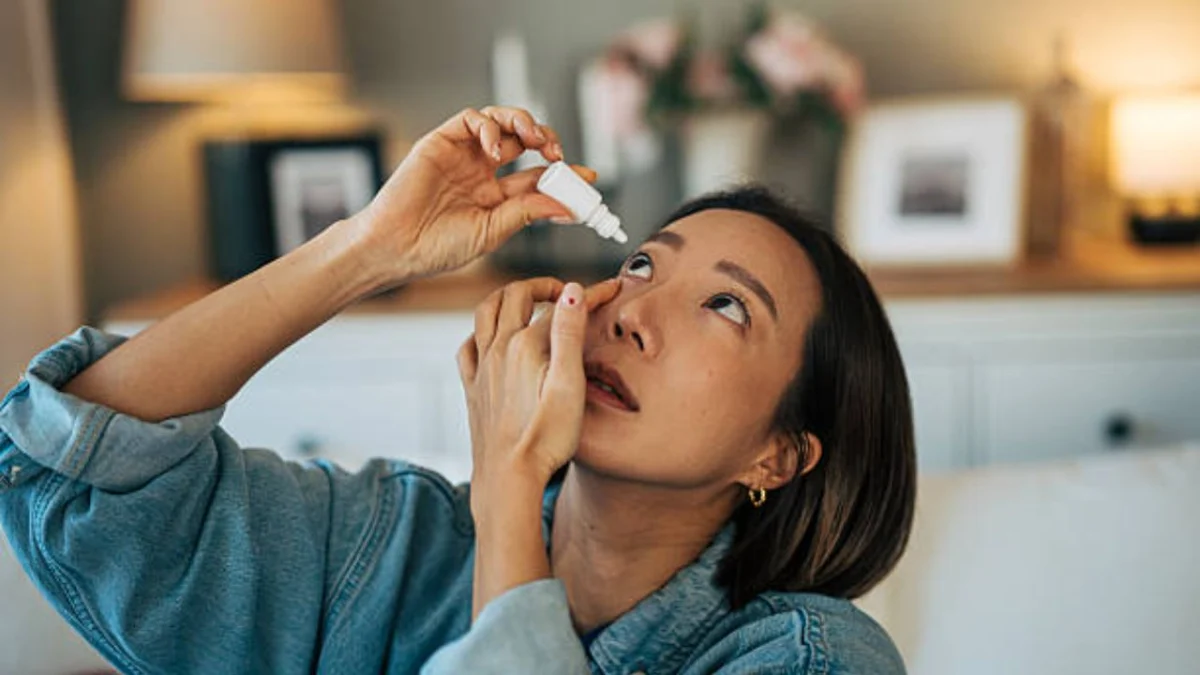
"Consumers are urged to immediately stop using suspect eye drops as two counterfeit products tested positive for dangerous bacterial contamination, posing a severe risk of infection and vision loss."
The U.S. Food and Drug Administration (FDA) has issued a critical warning to consumers regarding counterfeit over-the-counter eye drops that have been discovered in retail locations across several states, with a particular focus on stores serving primarily Spanish-speaking communities in Florida and Georgia. The agency’s investigation has revealed a disturbing contamination issue, with two of the identified fake products harboring harmful bacteria, including Staphylococcus. This discovery underscores the significant public health risks associated with counterfeit pharmaceuticals, which bypass regulatory oversight and can contain undisclosed and dangerous ingredients. The FDA is actively working to remove these products from the market and is urging vigilance from consumers and healthcare professionals alike.
The FDA’s alert, disseminated on October 22, 2026, highlights a concerning trend of counterfeit medicines entering the U.S. drug supply. While the agency has not yet received reports of adverse events linked to these specific counterfeit eye drops, the presence of bacterial contamination is a grave concern. The investigation is ongoing, and the FDA is collaborating with distributors to ensure the swift removal of these potentially hazardous products. The counterfeit packaging, printed solely in Spanish and designed to mimic legitimate brands, presents a significant challenge for consumers who may unknowingly purchase these dangerous imitations.
Two of the counterfeit products, identified as Colirio Ocusan Alivio rapido del enrojecimiento and Ocusan Ojos Secos, underwent testing by DLC Laboratory, revealing alarming levels of bacterial contamination. Colirio Ocusan Alivio rapido del enrojecimiento was found to be contaminated with Staphylococcus, a bacterium commonly associated with skin and wound infections that can lead to serious complications, including sepsis, if it enters the bloodstream or infects deep tissues. Ocusan Ojos Secos contained a different type of bacteria, the specific strain of which is still undergoing confirmation. The FDA emphasized the potential severity of these infections, stating, "This bacterial contamination may cause serious eye infections that could result in partial vision loss or blindness." Consequently, consumers are strongly advised to cease using these products immediately and to seek medical attention if any concerning symptoms arise.
Beyond the contaminated products, the FDA has identified three other counterfeit eye drops that have entered the market. These include a fake version of Colirio Manzanilla, designed to closely resemble PRO-MEX’s legitimate Colirio Manzanill A+ Redness Reliever & Lubricant. Additionally, a counterfeit Manzanilla Sophia Usala Diario has been identified. A fifth product, Manzanilla Sophia Ojo Rojo, is particularly concerning as it has no authentic counterpart available in the U.S. market, meaning any package found for sale is inherently a counterfeit.
The inherent vulnerability of the eyes to infection makes the contamination of eye drops a particularly perilous issue. As the FDA explains on its eye drop safety page, medications applied directly to the eyes bypass some of the body’s natural protective mechanisms, such as the skin barrier. This direct access allows pathogens to potentially penetrate ocular tissues more easily, leading to rapid and severe infections.
This warning comes on the heels of other significant safety concerns surrounding eye drops earlier in the year. In March 2026, K.C. Pharmaceuticals initiated a recall of over 3.1 million bottles of over-the-counter drops sold through major retailers due to a lack of sterility assurance. While recalls involve genuine products with manufacturing defects, counterfeit products represent a distinct and often more dangerous threat. They originate from unknown sources, and their manufacturing processes, ingredients, and purity are entirely unverified, making their safety profile impossible to ascertain.
The FDA’s page on counterfeit medicine elaborates on the common pathways these illicit products take to reach consumers. Many counterfeit drugs are manufactured internationally and subsequently enter the U.S. through mail shipments or are smuggled across borders. The agency’s Office of Criminal Investigations plays a crucial role in investigating and prosecuting cases involving counterfeit pharmaceuticals, working to disrupt these dangerous supply chains.
To aid consumers in identifying these dangerous fakes, the FDA has provided specific packaging clues that differentiate authentic products from counterfeits. For Ocusan products, counterfeit versions typically feature an expiration date of 12/2030 and lot number 5542D12. They are characterized by the use of red or blue caps and bear all product information exclusively in Spanish. Crucially, these fakes lack a "Drug Facts" panel, a standardized informational box required on over-the-counter medications in the U.S., and the bottom of their carton is blank.
In contrast, authentic Ocusan products manufactured by DLC Laboratories are distinguished by white caps, labels in English only, the presence of a "Drug Facts" panel, and an NDC (National Drug Code) number. The bottom of the genuine carton typically displays a barcode and the statement "Made in Korea."
For counterfeit Colirio Manzanilla, a key indicator is the absence of the word "STERILE" on the front of the box, and the word "Alivia" is printed in red rather than the correct yellow. The fake Manzanilla Sophia Usala Diario can be identified by lot number 160701DHR0, an expiration date of 12/2030, and a side label indicating a maximum public price of $33.00.
It is important to note that a recall of an authentic product in September 2026 by K.C. Pharmaceuticals involving a single lot of Colirio Manzanill A+ (lot AR25N01, expiration 11/2027) is a separate issue from the current counterfeit alert. The FDA clarifies that this recall was due to a manufacturing concern with a genuine product and should not be confused with the entirely fake products now being flagged.
The FDA strongly advises individuals who have used any of the identified counterfeit eye drops to remain vigilant for specific symptoms of infection. These include increased eye redness, the presence of eye discharge, and eye pain or discomfort. Any consumer experiencing these symptoms after using one of the listed products should seek immediate medical attention from a healthcare professional or visit an emergency facility.
Healthcare professionals are also alerted to this issue and are advised to inquire about all eye products their patients are using when diagnosing eye infections. Due to the non-standardized and often incomplete labeling of counterfeit products, retaining the original bottle and carton can be invaluable for clinicians attempting to identify the specific product used by the patient.
Consumers who encounter any of these counterfeit products on store shelves are urged not to purchase them and to report their findings to the store management. The FDA encourages the public to report any suspected counterfeit medications through its MedWatch online reporting form or by calling 1-800-FDA-1088.
The FDA has not yet disclosed the precise mechanisms by which these counterfeit eye drops infiltrated the U.S. supply chain or the estimated number of units sold. MedicalDaily will continue to monitor developments and provide updates as the agency releases further findings and information. The ongoing investigation aims to shed light on the distribution network of these dangerous fakes and to prevent their further dissemination. The proactive stance of the FDA, coupled with consumer awareness and reporting, is crucial in mitigating the potential harm posed by counterfeit pharmaceuticals.
