
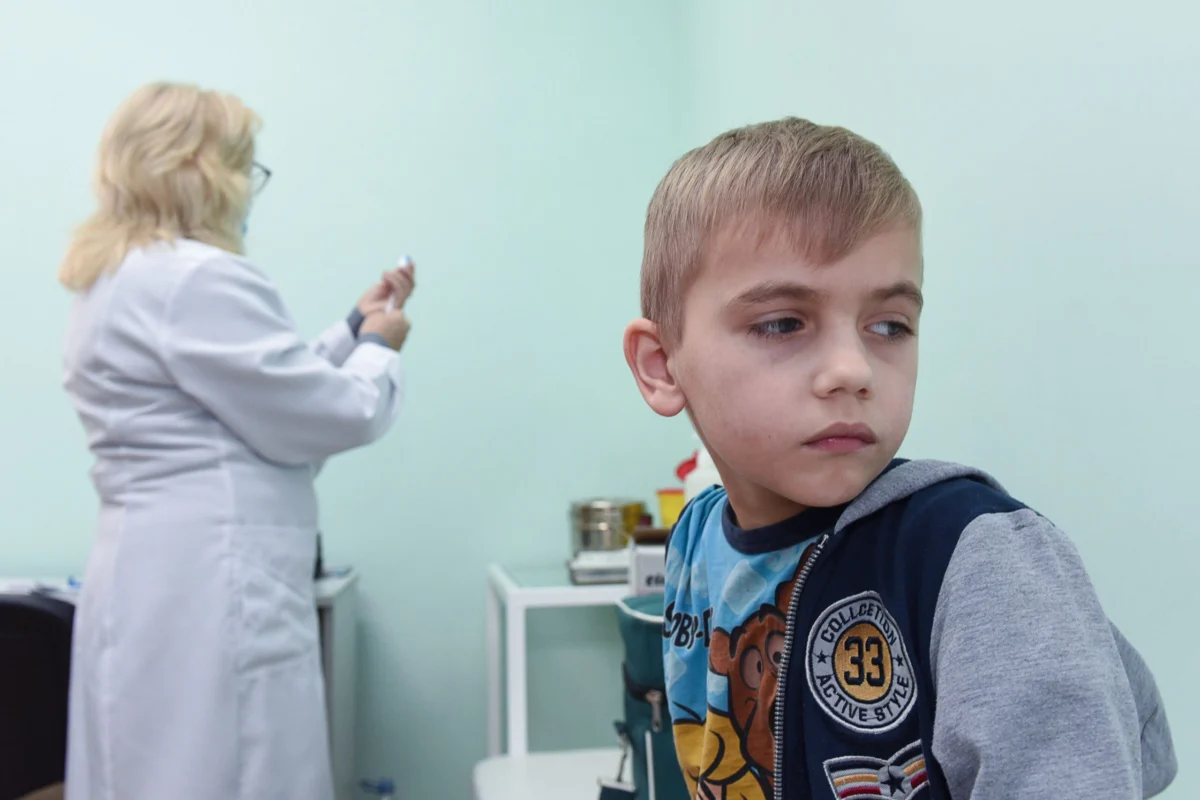
"We have no idea what the risk profile is for these products," stated Health and Human Services Secretary Robert F. Kennedy Jr., casting doubt on vaccine safety monitoring. However, federal agencies assert that a multi-layered system is in place to track vaccine safety, a claim supported by existing data and expert analysis, even as the nation grapples with a significant resurgence of measles.
Health and Human Services Secretary Robert F. Kennedy Jr. recently addressed the anti-vaccine group Children’s Health Defense, asserting that while vaccine injuries are likely rare, the current system for reporting them is fundamentally flawed, rendering it impossible to ascertain the true risk profile of these medical interventions. This declaration, made at a conference on September 17th, has drawn significant attention and prompted a review of the federal mechanisms in place for vaccine safety surveillance. Critics and public health experts point to a robust, multi-pronged approach utilized by the Centers for Disease Control and Prevention (CDC) and the Food and Drug Administration (FDA) that actively monitors vaccines post-approval, including extensive data analysis from large healthcare organizations. The timing of these pronouncements is particularly sensitive, coinciding with a sharp increase in confirmed measles cases across the United States and the typical fall season when families schedule routine vaccinations for children.
Kennedy’s keynote address to Children’s Health Defense, an organization he previously chaired, marked a return to a group he had distanced himself from since assuming his role as HHS secretary. During his hour-long speech, he assured attendees of continued White House support, according to accounts from CIDRAP and FactCheck.org. A central theme of his address was the alleged inadequacy of vaccine testing and injury reporting. He notably displayed a package insert for a hepatitis B vaccine, highlighting its list of reported adverse reactions. FactCheck.org, however, pointed out that Kennedy omitted a crucial caveat within the same insert, which states that voluntary reports cannot definitively establish the frequency or causal link of such reactions. Furthermore, his assertion that only one childhood vaccine had been tested against a placebo was deemed misleading, as FactCheck.org noted that other vaccines, including those for polio, chickenpox, and rotavirus, underwent placebo-controlled trials during their initial development.
The issue of measles, a highly contagious viral illness, was touched upon briefly by Kennedy, who contrasted headlines about measles-related fatalities with cases of alleged vaccine harm. This statement drew a sharp rebuke from Pennsylvania Governor Josh Shapiro, whose state has recorded four measles-associated deaths this year. Governor Shapiro publicly urged Kennedy to dedicate even a single sentence to encouraging measles vaccination. The resurgence of measles is a stark backdrop to these discussions. As of September 17th, the CDC reported 3,471 confirmed cases nationwide, a significant increase from the 2,289 cases in all of 2025, marking the highest annual total since 1991. These cases have been reported across 47 jurisdictions, highlighting the widespread nature of the outbreak.
At the heart of Secretary Kennedy’s criticism lies the Vaccine Adverse Event Reporting System (VAERS), a critical component of the nation’s vaccine safety infrastructure. VAERS serves as an early warning system, allowing anyone to report suspected adverse events following vaccination. It is important to note that VAERS reports are voluntary and unverified; therefore, they cannot independently establish causality. However, VAERS is instrumental in flagging potential patterns of concern that warrant further investigation.
The signals generated by VAERS are rigorously examined through several complementary federal systems designed to provide a comprehensive understanding of vaccine safety. The Vaccine Safety Datalink (VSD) is a crucial tool that monitors vaccine safety and conducts epidemiological studies by analyzing health data from large, integrated healthcare organizations. This system allows researchers to compare health outcomes between vaccinated and unvaccinated individuals within defined populations. Complementing the VSD is the Clinical Immunization Safety Assessment (CISA) Project, a collaborative network of vaccine safety experts from the CDC, leading medical research centers, and other academic institutions. CISA provides expert consultation and conducts research on vaccine safety issues. Additionally, V-safe is a smartphone-based tool that uses text messaging and web surveys to provide personalized health check-ins after people receive certain vaccines. Through these integrated systems, the CDC is able to collect, analyze, and disseminate vaccine safety information to various stakeholders, including other federal agencies, the public, healthcare providers, vaccine manufacturers, and its own vaccine advisory committees.
The U.S. Department of Health and Human Services itself emphasizes on its official website that "Every authorized or approved vaccine goes through safety testing." This statement directly contrasts with the narrative of uncertainty presented by Secretary Kennedy. FactCheck.org further investigated Kennedy’s claim that fewer than 1% of vaccine injuries are reported, tracing it to a 2010 report funded by the federal Agency for Healthcare Research and Quality. The fact-checkers highlighted that this report did not equate reported events with vaccine causation and noted that other research indicates VAERS tends to capture more serious events with greater completeness. While no medical intervention is entirely without risk, and rare side effects can occur, the existing federal monitoring systems are specifically designed to detect and investigate these potential issues. The assertion that the risks associated with vaccines are fundamentally unknown is not supported by the extensive data and ongoing surveillance efforts.
The current measles outbreak underscores the critical importance of vaccination. Pennsylvania is disproportionately affected, with the state health department reporting 767 cases and 150 hospitalizations as of the latest update. Lancaster County alone has reported 324 cases. The Pennsylvania Department of Health unequivocally states, "The best protection against measles remains getting fully vaccinated." While national death records are still being processed to definitively attribute deaths to measles as an underlying cause, the CDC is collaborating with state epidemiologists to establish a standardized definition for measles-related fatalities.
The risk of severe illness from measles is not evenly distributed. Unvaccinated children, infants too young to receive their first dose of the measles, mumps, and rubella (MMR) vaccine, pregnant individuals lacking immunity, and those with compromised immune systems are at the highest risk of serious complications. Nationally, approximately 95% of reported measles patients were either unvaccinated or had an unknown vaccination status, and about 9% of all cases have required hospitalization. The decline in kindergarten MMR vaccination coverage to 92.4% in the 2025-26 school year means that an estimated 280,000 kindergartners are now at increased risk.
Measles typically begins with a prodrome of high fever, cough, runny nose, and red, watery eyes, followed by a characteristic rash that starts on the face and spreads downwards. Individuals experiencing symptoms suggestive of measles, particularly after known exposure, are advised to call their healthcare provider before arriving at a clinic to prevent potential transmission. Severe symptoms such as difficulty breathing, confusion, or seizures necessitate immediate emergency medical attention.
For households, a proactive approach involves reviewing vaccination records. The CDC recommends a two-dose MMR vaccination schedule, with the first dose typically administered between 12 and 15 months of age and the second between 4 and 6 years of age. Two doses of the MMR vaccine are approximately 97% effective in preventing measles. The Vaccines for Children (VFC) program provides eligible children with vaccinations at no cost, and county health departments offer services to uninsured families. Parents with concerns about vaccine safety or scheduling should consult with a pediatrician, who can provide evidence-based guidance and address any questions before considering delaying vaccination.
The future landscape of vaccine policy and research remains dynamic. Secretary Kennedy indicated that HHS is supporting new vaccine research, though specific details were not elaborated upon. Meanwhile, a federal appeals court is slated to hear arguments on October 6th concerning legal challenges to recent modifications in the childhood vaccine schedule. The CDC continues to update its measles case count on a weekly basis, and the established recommendation for two doses of the MMR vaccine remains in place. The ongoing dialogue, coupled with robust scientific surveillance and public health efforts, aims to ensure the continued safety and efficacy of vaccines in protecting the population from preventable diseases.
