
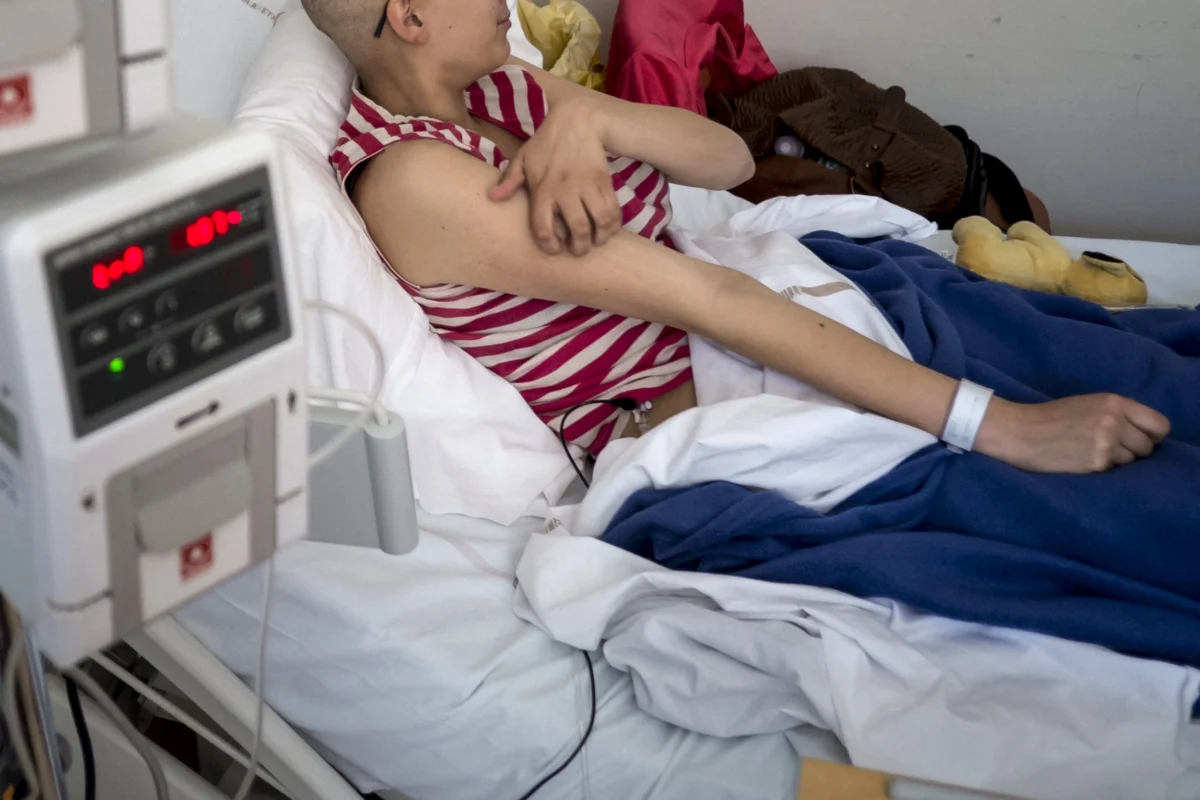
"The FDA’s expanded approval of Jaypirca marks a significant step forward in the management of chronic lymphocytic leukemia, offering a crucial new daily pill option for adults starting treatment, particularly those without a 17p deletion."
The U.S. Food and Drug Administration has granted a significant expansion of its approval for Eli Lilly’s Jaypirca (pirtobrutinib), now authorizing its use as a first-line treatment for adults diagnosed with chronic lymphocytic leukemia (CLL) or small lymphocytic lymphoma (SLL) who do not have a known 17p deletion. This landmark decision moves the once-daily oral medication from a later-stage treatment option to the forefront of care, potentially reshaping long-term treatment strategies and outcomes for a substantial portion of newly diagnosed patients. Previously, Jaypirca was exclusively available for individuals whose cancer had relapsed or become refractory to other therapies, a scenario previously explored by MedicalDaily in comparisons with similar BTK inhibitors like Brukinsa. The shift to a first-line indication underscores the drug’s demonstrated efficacy and provides patients and their physicians with an additional, powerful tool to consider at the initiation of therapy.
For many families, particularly those impacted by CLL which predominantly affects older adults, the addition of a new treatment option introduces a complex but necessary decision-making process. The American Cancer Society estimates approximately 22,760 new U.S. cases of CLL in 2026, with the average age at diagnosis hovering around 70 years. This demographic means that patients and their caregivers will meticulously weigh the benefits, potential side effects, ongoing monitoring requirements, and the financial implications of Jaypirca against existing treatment paradigms. The availability of this new oral therapy necessitates a thorough understanding of its clinical profile and how it integrates into the broader landscape of CLL management.
Clinical Trial Data Underpinning the First-Line Clearance
The pivotal approval for Jaypirca’s use in previously untreated CLL/SLL patients without a 17p deletion is anchored by the robust findings of the Phase 3 BRUIN CLL-313 trial, sponsored by Eli Lilly. This multi-center study enrolled 282 participants who had not previously undergone treatment for their disease and were confirmed to lack a 17p deletion. The trial meticulously compared the efficacy and safety of pirtobrutinib, administered orally at a dose of 200 mg once daily, against a standard chemotherapy-based combination of bendamustine and rituximab, commonly referred to as BR.
Following a median follow-up period of 28 months, the U.S. Food and Drug Administration reported a statistically significant hazard ratio of 0.20 for disease progression or death in the pirtobrutinib arm. In more accessible terms, this translates to an approximate 80% reduction in the risk of the cancer worsening or leading to death during the study’s observation period when compared to the BR regimen. Notably, the median progression-free survival (PFS) had not yet been reached within the pirtobrutinib group, indicating sustained disease control for the majority of participants. In contrast, the BR arm demonstrated a median PFS of 33.5 months.
Eli Lilly’s official announcement of the trial results also highlighted a superior overall response rate (ORR) for Jaypirca, with 94% of patients achieving a response compared to 81% in the BR arm. However, it is important to note that the rate of complete responses (CR) was somewhat lower with pirtobrutinib at 13%, compared to 21% observed with the BR combination. These compelling data were initially presented at a prominent hematology meeting in December 2025, garnering attention from the oncology community, as reported by Targeted Oncology.
Dr. Jennifer A. Woyach, Director of the Division of Hematology at The Ohio State University Comprehensive Cancer Center, emphasized the significance of these findings in Lilly’s press release, stating, "This approval is grounded in data from BRUIN CLL-313, which showed a significant delay in disease progression for pirtobrutinib compared to chemoimmunotherapy." She further underscored the critical nature of initial treatment choices, noting that "many people diagnosed with CLL or SLL today may only receive one or two lines of therapy, making initial treatment choices critically important."
However, it is essential for readers to acknowledge the inherent limitations of the trial data. The study was funded by the drug manufacturer, Eli Lilly, and Dr. Woyach’s expert commentary was provided within the context of the company’s release. Furthermore, the overall survival (OS) data were still considered immature at the time of the FDA’s review. The agency noted a low number of deaths—3 (2.1%) in the pirtobrutinib group versus 10 (7.1%) in the BR group—which is insufficient to draw definitive conclusions regarding long-term survival benefits. Additionally, the trial’s design compared Jaypirca to chemotherapy, not directly against other approved covalent Bruton’s tyrosine kinase (BTK) inhibitors such as ibrutinib, acalabrutinib, or zanubrutinib, which represent other important therapeutic options in the CLL landscape.
Understanding 17p Deletion and the Side Effect Profile
The significance of the 17p deletion in the context of CLL treatment cannot be overstated. This genetic abnormality signifies the absence of a portion of the short arm of chromosome 17 within the cancer cells. This specific region of chromosome 17 typically houses the TP53 gene, a critical tumor suppressor that plays a vital role in halting the proliferation of damaged cells and preventing uncontrolled growth. According to Lilly, the 17p deletion is observed in approximately 5% to 8% of CLL patients at the time of diagnosis and is often associated with a more aggressive disease course and a higher risk of progression.
The National Cancer Institute acknowledges that alterations in the TP53 gene profoundly influence both the prognosis and the available treatment options for CLL patients. Given that individuals with a 17p deletion were explicitly excluded from the BRUIN CLL-313 trial and are therefore not covered by this specific first-line indication, comprehensive genetic testing of the cancer cells prior to initiating treatment is paramount. Fortunately, the vast majority of CLL patients—estimated to be between 92% and 95%—do not harbor this deletion, as reported by AJMC. This statistic suggests that the new FDA approval for Jaypirca could potentially benefit a significant majority of patients requiring initial therapy.
Regarding the safety profile observed in the BRUIN CLL-313 trial, the most frequently reported side effects included upper respiratory infections, occurring in 27% of patients, followed by rash (22%) and COVID-19 (21%). Serious adverse reactions were reported in 28% of participants, with pneumonia being the most common serious complication, observed in 5% of patients. Hematological assessments revealed a decrease in neutrophils, a critical type of white blood cell responsible for fighting infection, in 48% of patients receiving pirtobrutinib.
The FDA-approved label for Jaypirca includes important warnings and precautions concerning potential risks such as infections, bleeding events, cytopenias (low blood counts), cardiac rhythm abnormalities, the development of secondary malignancies, liver injury, and potential harm to a developing fetus. Specifically, the trial data indicated that atrial fibrillation or flutter occurred in 1.4% of patients. Encouragingly, only a small proportion of patients, 4.3%, permanently discontinued the drug due to treatment-related side effects, according to Lilly’s data.
Navigating Costs, Coverage, and Crucial Patient Inquiries
Jaypirca is designed for daily oral administration and is typically continued until disease progression or the onset of unacceptable side effects. Eli Lilly has provided a wholesale price disclosure, listing the cost of 60 tablets of 100 mg—representing a 30-day supply at the standard dosage—at $23,042.25, effective January 2025. The actual out-of-pocket expenses for patients will be heavily influenced by their individual insurance coverage and benefits.
To mitigate financial burdens, Lilly offers a savings card program that can reduce out-of-pocket costs to as little as $0 per month for eligible commercially insured patients, with an annual cap of $10,600. It is important to note that individuals covered by Medicare, Medicaid, TRICARE, or VA health plans are not eligible for this specific savings program. This exclusion is particularly relevant given the demographic of CLL patients, many of whom are of Medicare age. These patients are encouraged to consult with their oncology team or pharmacy to explore alternative avenues of financial assistance, including Medicare Part D cost-saving strategies, foundation grants, and Lilly’s dedicated Support Services for Oncology.
It is crucial to remember that not all individuals diagnosed with CLL require immediate treatment. The National Cancer Institute advocates for a strategy of "watchful waiting," which involves close monitoring of the disease without initiating therapy for asymptomatic patients. Warning signs that may prompt a consultation with a clinician include the development of painless, enlarged lymph nodes, persistent fatigue, recurrent fevers and infections, unexplained bruising or bleeding, nocturnal sweating, and unintentional weight loss.
For patients and their caregivers facing the critical decision of initiating treatment, engaging in an open and informed dialogue with their healthcare provider is essential. Key questions to address include confirming whether 17p deletion and TP53 genetic testing have been performed, understanding how Jaypirca’s efficacy and safety profile compares with other targeted therapy options specifically tailored to their individual circumstances, and clarifying the necessary monitoring protocols for cardiac rhythm and blood counts. For individuals currently receiving treatment for CLL, it is imperative that they do not alter or discontinue their medication regimen without direct consultation and guidance from their care team.
Eli Lilly has also conducted the BRUIN CLL-314 trial, a Phase 3 study designed to directly compare pirtobrutinib against ibrutinib in patients who had not previously received a BTK inhibitor. While this trial met its primary endpoint by demonstrating a noninferior response rate, longer-term follow-up is still required to ascertain any differences in how long these drugs maintain disease control. Similarly, extended follow-up data from the BRUIN CLL-313 trial are anticipated to provide further clarity on whether the observed delay in disease progression with Jaypirca translates into a statistically significant improvement in overall survival.
For the present, the FDA’s expanded approval of Jaypirca provides the majority of newly diagnosed CLL patients with an additional, highly effective targeted oral therapy option. While not a cure, this advancement represents a significant development in the ongoing fight against CLL, empowering patients with more choices and potentially improving long-term disease management when integrated into a personalized treatment plan, informed by genetic profiling, co-existing health conditions, insurance coverage, and a collaborative discussion with their oncologist.
