
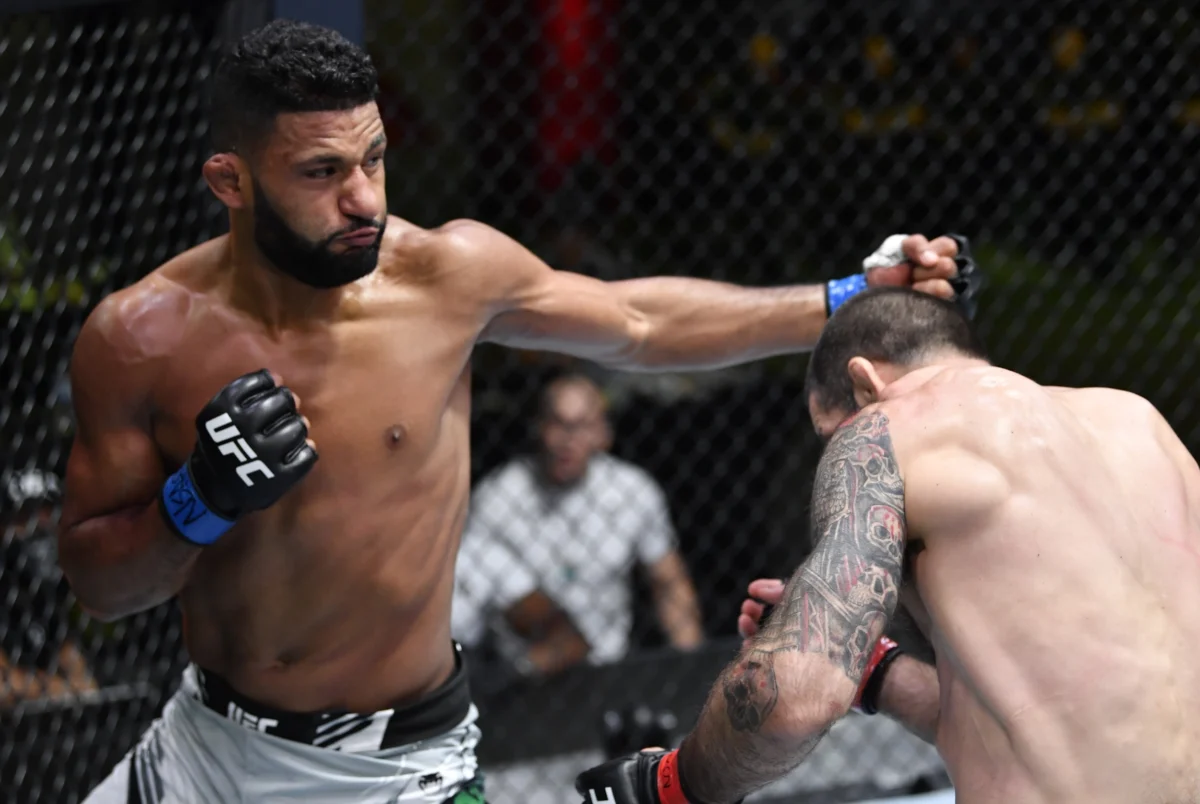
"What we’re doing is prize fighting," states former UFC welterweight Matt Brown, dismissing calls for Justin Gaethje’s retirement and emphasizing that professional combat athletes knowingly accept inherent physical risks.
Former UFC welterweight Matt Brown has voiced strong opposition to the escalating calls for fellow fighter Justin Gaethje to retire from mixed martial arts. Brown’s defense centers on the fundamental understanding that professional combat sports, by their very nature, involve significant physical consequences, which athletes willingly accept as part of the profession. He argues that suggestions for Gaethje to step away from the octagon due to the accumulated punishment of his career overlook the conscious decision fighters make to compete, fully aware of the inherent dangers. Brown’s perspective underscores the intrinsic nature of prize fighting, where embracing risk is a prerequisite for the pursuit of athletic achievement and financial reward.
Brown’s commentary emerges at a pivotal moment for Gaethje, who remains a prominent figure in the UFC’s lightweight division. Recent reports indicate a potential championship bout against Khabib Nurmagomedov, reigniting interest in one of the division’s most compelling rivalries. Amidst this speculation, the discourse surrounding Gaethje’s future has intensified, with Brown asserting that decisions regarding retirement are deeply personal and should remain solely within the purview of the athlete, rather than being dictated by external observers.
The Inherent Risks and Athlete Autonomy in Combat Sports
Matt Brown unequivocally rejects the notion that fans, commentators, or any external parties should dictate when a fighter like Justin Gaethje should retire. According to MMA Fighting, Brown emphasized that professional mixed martial artists enter the sport with a profound understanding of the physical demands and potential repercussions. His assertion, "Anybody telling Justin Gaethje he should retire now… what we’re doing is prize fighting," highlights the core principle that accepting risk is an inextricable component of pursuing a career in professional combat sports. Elite athletes, he explained, are driven by a powerful competitive spirit and the aspiration for championships, even when fully cognizant of the sacrifices required. This drive often outweighs the immediate concern for long-term physical well-being, as the allure of victory and legacy takes precedence. Brown’s stance implicitly acknowledges that while the risks are undeniable, the motivation for these athletes stems from a deeply ingrained desire to test their limits and achieve the pinnacle of their sport.
The ongoing speculation about Gaethje’s potential rematch with Khabib Nurmagomedov further fuels the debate surrounding his career longevity. While the matchup itself promises to be a significant event, Brown’s intervention focuses on defending the veteran fighter’s right to make his own career choices. He champions the autonomy of athletes in deciding their own paths, particularly when those paths involve high-stakes competition. This perspective aligns with a broader understanding of professional sports, where individual agency plays a crucial role in career trajectory and decision-making.
Understanding the Physical Toll of Mixed Martial Arts
Mixed martial arts (MMA) is a multifaceted combat sport that integrates a diverse array of disciplines, including striking, wrestling, grappling, and submission techniques. This inherent complexity exposes athletes to a wide spectrum of potential injuries. A comprehensive review published in the National Institutes of Health details common afflictions such as facial lacerations, fractures, ligament sprains and tears, joint dislocations, and injuries to the hands, shoulders, and knees. The head and face are particularly vulnerable areas, frequently sustaining damage during competition. Beyond acute injuries, the repetitive nature of training and the cumulative effect of repeated impacts can lead to chronic overuse injuries affecting muscles, tendons, and joints, underscoring the significant physiological burden placed on MMA practitioners.
The American Medical Society for Sports Medicine (AMSSM) advocates for a multi-pronged approach to mitigating these risks. They emphasize the importance of appropriate coaching, the rigorous application of proper techniques, and the implementation of protective measures during training sessions. Furthermore, prompt and thorough medical evaluation following any injury is crucial for ensuring proper recovery and preventing the exacerbation of existing conditions. Despite these preventative measures, the fundamental nature of combat sports, characterized by significant physical contact and the intentional application of force, means that a degree of inherent risk will always remain. The AMSSM’s guidance serves as a vital framework for athletes and organizations striving to balance the competitive demands of the sport with the imperative of athlete safety.
The Specter of Chronic Traumatic Encephalopathy (CTE)
A particular area of concern within MMA, and combat sports more broadly, is the long-term impact of repeated head trauma. The Mayo Clinic highlights that sustained exposure to repetitive head impacts has been linked to chronic traumatic encephalopathy (CTE), a progressive neurodegenerative disease. CTE is characterized by a range of cognitive, behavioral, and mood-related symptoms, which can worsen over time. Critically, a definitive diagnosis of CTE can currently only be made posthumously through neuropathological examination. It is important to note that not every individual subjected to repeated head impacts will develop CTE. Researchers are actively investigating the underlying factors that contribute to this variability, seeking to understand why some athletes are more susceptible than others. Maintaining optimal physical conditioning, proactively reporting any neurological symptoms, and ensuring adequate recovery periods after concussions or other head injuries are paramount for protecting an athlete’s long-term neurological health. These proactive measures are essential in mitigating the potential risks associated with repetitive head trauma.
A Crucial Conversation for Aspiring Fighters
Matt Brown’s defense of Justin Gaethje’s decision to continue competing brings to the forefront a critical and ongoing discussion within the combat sports community. This dialogue grapples with the delicate balance between an athlete’s ambition to compete at the highest level and the imperative of safeguarding their long-term health and well-being. Professional fighters, by their very choice of profession, willingly accept substantial physical risks in their pursuit of championships and athletic glory. However, the crucial element remains the ability for athletes to make informed decisions regarding their training regimens, access to comprehensive medical care, and ultimately, their retirement from the sport. These decisions must be grounded in a thorough understanding of their physical condition and the potential long-term consequences of their chosen career path.
For both seasoned professionals and aspiring amateurs in MMA and other combat sports, this ongoing conversation serves as a vital reminder of the foundational principles of protecting one’s physical health. This begins with meticulous preparation, which includes rigorous training regimens that prioritize safety and technique. Equally important is the commitment to honest and transparent reporting of all injuries, no matter how minor they may seem. Adherence to medical advice, including rehabilitation protocols and prescribed recovery periods, is non-negotiable. Maintaining peak physical conditioning, allowing sufficient time for recuperation after competitions, and critically, avoiding any premature return to action following injuries, are all essential steps in minimizing preventable harm. By embracing these principles, athletes can better support their long-term physical and neurological health, ensuring a more sustainable and healthier future both within and beyond the confines of the sport.
