

"Even in states with protective laws, the specter of federal funding threats has forced major hospitals to halt gender-affirming care for transgender youth, leaving families scrambling for alternatives and facing profound uncertainty."
This quote encapsulates the core challenge faced by transgender adolescents and their families in the United States. Despite legal protections and a generally more inclusive political climate in some states, the threat of federal funding withdrawal has led healthcare systems to unilaterally discontinue essential gender-affirming medical treatments for minors. This abrupt halt creates significant disruption, forcing families to navigate a complex and often scarce landscape of alternative care, while grappling with the emotional and physical toll on their children. The situation highlights a critical tension between state-level protections and federal administrative pressure, with young people caught in the middle of a politically charged debate.
In late 2024, a sixth-grader known as Bug, assigned female at birth, informed his parents of his transgender identity, requesting to be recognized as a boy and use he/him pronouns. His mother, identified only as J due to fears of harassment, responded with immediate acceptance and support. "OK, cool," she recalled saying, followed by, "What do you need to be supported?" Bug’s straightforward request for healthcare marked a pivotal moment, one J had anticipated since the family’s relocation from Texas to Massachusetts earlier that year. The move was motivated by a desire for a more liberal and inclusive political environment, with the expectation of readily accessing necessary medical expertise. However, the family soon discovered that even within a supportive state framework, access to gender-affirming treatment could be precarious.
The landscape of transgender healthcare for minors has become increasingly complex, with individual hospitals across the U.S., regardless of their state’s political leaning, making decisions to withdraw care. These decisions are often a direct response to pressure exerted by the federal administration, particularly concerning potential repercussions for providing gender-affirming services. Reports indicate that in the initial months of a previous administration, at least 20 hospitals curtailed or ended transgender care for minors. This was often in response to threats of federal funding withdrawal, or the initiation of investigations into fraud or wrongful claims. This trend has continued, with services becoming more scarce.
Bug and his younger sister were born in Austin, Texas. However, concerns grew for their parents, J and her husband, as Texas enacted legislation restricting abortion access, dismantled diversity, equity, and inclusion programs, and limited medical and civil rights for LGBTQ+ individuals. The parents harbored anxieties that the essential support services their children, both of whom have autism, might require could be compromised. J articulated this fear, stating, "I had a fear of being like the frog in the boiling water and not realizing what was happening until it was too late. I needed to get the kids out of Texas."

Their move to Massachusetts offered a degree of relief, as the state boasts a "shield" law designed to protect providers offering gender-affirming care. Furthermore, Massachusetts is among 24 states mandating that commercial insurance, which Bug’s family possesses, cover such treatments. Following Bug’s gender affirmation, J’s research led her to Baystate Health, the largest hospital system in the region, based in Springfield, Massachusetts. This marked the beginning of a months-long process to initiate hormone therapy for Bug.
Bug, now a 14-year-old with a passion for art, horses, cats, and filmmaking, was too old for puberty blockers but eagerly anticipated starting testosterone therapy. He understood that this would lead to a deepening of his voice, the growth of facial hair, and increased muscle mass. "Every part of it sounds fun," he expressed, looking forward to these physical changes that aligned with his gender identity.
However, this hopeful trajectory was abruptly altered in February, just two weeks before Bug was scheduled to begin testosterone. Baystate Health announced it would cease providing gender-affirming medications to minors, offering only counseling services. The letter to affected families did not provide a specific reason for the decision. Heather Duggan, a spokesperson for Baystate, issued a statement explaining that the decision to end treatment for minors was influenced by the potential loss of "hundreds of millions of dollars in government reimbursement" due to the federal administration’s policies. The statement further noted that "Nearly 70 percent of Baystate Health’s patients rely on Medicaid and Medicare for coverage."
For Bug, the news meant the imminent disappearance of care he had eagerly awaited. "I felt frustrated that they would do that," he stated. He articulated the disappointment felt by many young people in similar situations: "I bet there’s tons and tons of kids who are like: ‘OK, I’m going for trans-affirming healthcare. Yay!’ And then, like, tons and tons of kids were disappointed and sad and frustrated." J echoed this sentiment, describing the experience as if "the floor had fallen out from under them." She admitted, "Maybe this is naive, but I didn’t think that would happen in Massachusetts."
Baystate Health’s decision places it among a growing number of providers who have opted to discontinue puberty blockers and hormone therapies, even as the legal challenges surrounding these treatments continue. This spring, Massachusetts joined a lawsuit challenging federal actions that threatened providers of gender-affirming care for minors. A federal judge had previously ruled it unlawful for the Department of Health and Human Services to threaten federal funding for such providers. In June, another federal judge permitted 16 states, including Massachusetts, to proceed with a separate lawsuit against the administration concerning its efforts to criminalize gender-affirming care.
The American Academy of Pediatrics, while declining an interview request, has previously stated that decisions regarding gender-affirming care should be made collaboratively between young patients, their families, and their doctors, emphasizing that such care should be "delivered with compassion, and offered without political interference."
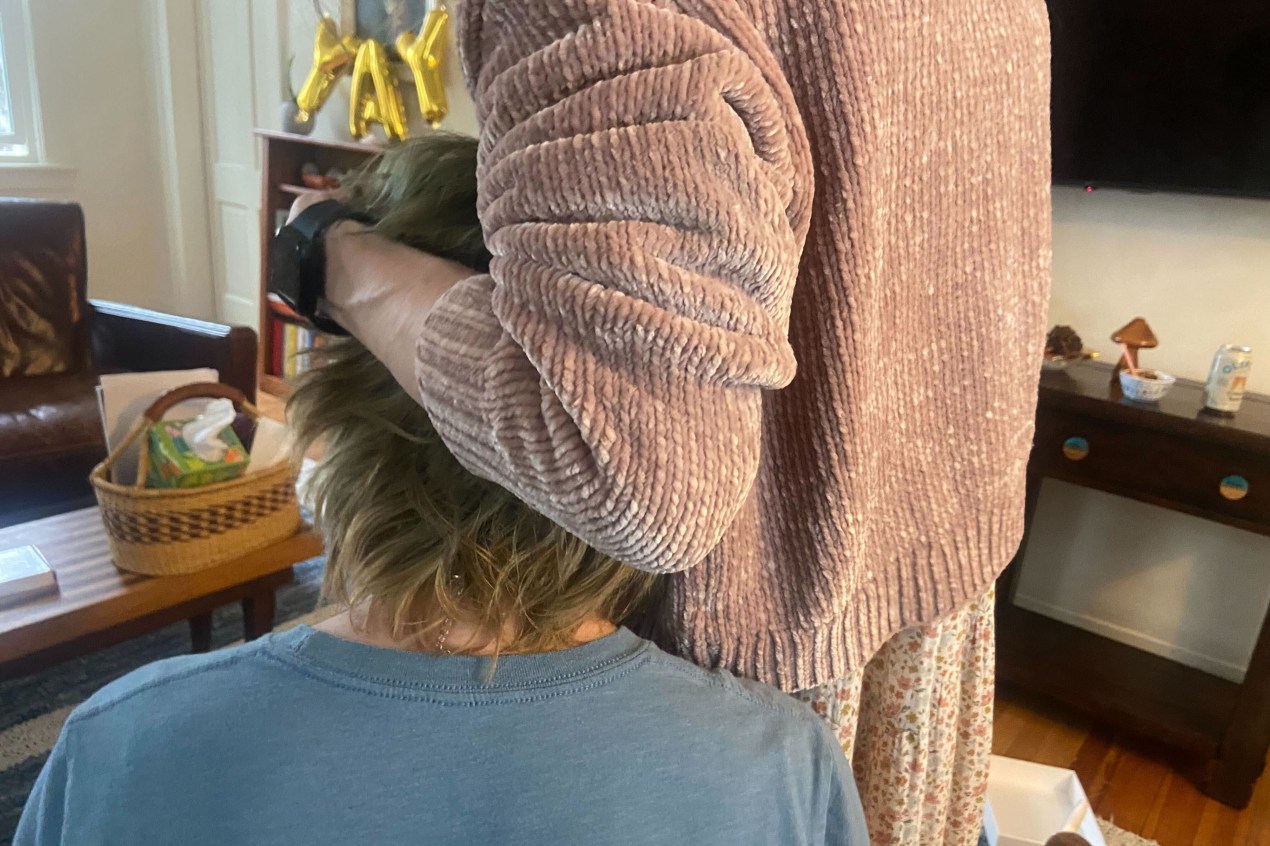
One mother, identified as L, shared her experience with a former Baystate patient. Before her daughter came out as a transgender girl, she had struggled with severe depression and suicidal ideation. L reported a marked improvement in her daughter’s mood and academic performance after Baystate doctors prescribed puberty blockers and estrogen. The abrupt cessation of medical treatment at Baystate left L furious. She, along with other parents, filed civil rights complaints with the Massachusetts attorney general’s office, which did not respond to a request for comment. "There’s a sense of, ‘How could you?’" L said. "And there’s also the awareness of the impact just pulling care could have on a youth — from a physical health perspective but also from a mental health perspective."
Both L and J successfully found alternative care for their children. L arranged for their primary care physician to manage her daughter’s hormone prescriptions. Bug’s family was referred to Transhealth, a private specialty clinic in Northampton, Massachusetts. Transhealth reported that it has accepted approximately 50 former Baystate patients. Jo Erwin, CEO of Transhealth, stated, "Transhealth has been staffing ourselves up for a while now in anticipation of the fact that this may be happening across the state." Erwin explained that Transhealth can sustain its operations despite funding threats due to significant private donations, making it less reliant on Medicaid and Medicare compared to larger hospital systems. However, Erwin expressed concern for the broader LGBTQ+ community, noting that such events can instill fear that these restrictions might eventually extend to all, including transgender adults.
The legal and political battles over transgender healthcare for minors are unfolding nationwide. In May, Colorado’s Supreme Court mandated that a children’s hospital in that state resume medical treatments for transgender youth. Conversely, in Texas, a court settlement compelled a children’s hospital to establish the nation’s first "detransition clinic." The federal administration has continued to exert pressure on providers, including by seeking the medical records of transgender minors.
Following the disruption at Baystate, Bug was able to commence testosterone therapy at the new clinic in the spring. J reported that the treatment is progressing smoothly, with Bug learning to administer his own injections. Nevertheless, she expressed ongoing anxiety that the federal government might find further means to impede his treatment. She admitted to occasionally questioning the family’s decision to move from Texas, wondering if relocating to Canada might have been a more secure option.
This article is a product of a partnership involving New England Public Media, NPR, and KFF Health News.
