
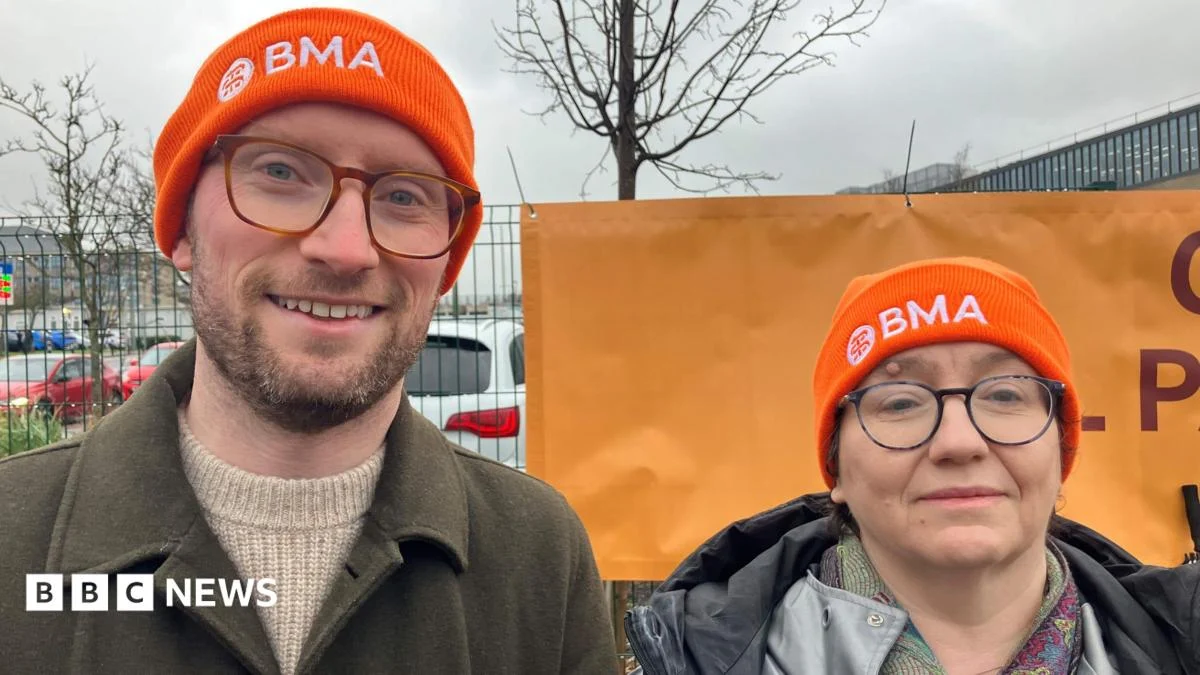
"Northern Ireland’s doctors are striking not just for fair pay, but against the ‘moral injury’ of delivering care in ‘third world conditions,’ highlighting a deepening crisis exacerbated by pay disparities and systemic pressures on the health service."
This critical juncture in Northern Ireland’s healthcare system sees doctors taking industrial action, driven by profound dissatisfaction over pay awards that lag behind their counterparts across the UK and fail to keep pace with inflation. The strike, orchestrated to provide "Christmas Day cover" to maintain essential emergency services, nonetheless signals a stark warning about the fragility of the health service and the moral burden shouldered by its staff. It underscores a growing chasm between the demands on healthcare professionals and the resources allocated to them, setting the stage for significant patient impact and raising urgent questions about the future of healthcare provision in the region.
A System Under Strain: Doctors’ Grievances Reach Breaking Point
The industrial action by doctors in Northern Ireland represents a critical escalation in a long-standing dispute over pay and working conditions, illuminating the severe pressures facing the region’s beleaguered health service. Leanne Davison, an associate specialist doctor in ICU at the Belfast Trust, articulated the profound sense of injustice felt by her colleagues. She noted that doctors in Northern Ireland are "quite rightly feeling aggrieved that their colleagues across the UK have already had uplift in their pay awards," creating a significant disparity that undermines morale and professionalism.
This sentiment is amplified by the broader economic context, where, as Dr. Davison highlights, "most public and private sector workers are now back in line with inflation, yet doctors, nurses and hospital staff are not." This disparity is not merely about financial compensation; it reflects a deeper devaluation of a workforce that has been at the forefront of unprecedented challenges, from managing the COVID-19 pandemic to grappling with chronic underfunding and escalating demand. The failure to offer a competitive and equitable pay award relative to inflation, and indeed to other UK nations, is perceived as a direct attack on the professional standing and economic security of healthcare staff.
Beyond the immediate financial concerns, doctors are sounding the alarm about the systemic collapse of the health service itself. Dr. Davison’s poignant observation that colleagues "could not continue to watch the health service disintegrate around us" speaks to a deep-seated frustration. The "moral injury" of attempting to deliver quality care in what she describes as "third world conditions," often involving patients receiving care in hospital corridors, is a powerful indictment of the current state of affairs. Moral injury, a term gaining increasing recognition in healthcare, refers to the psychological distress that results from actions, or lack of them, that violate one’s moral or ethical code. For doctors sworn to uphold patient well-being, being forced to compromise care due to systemic failures represents a profound ethical dilemma and a significant contributor to burnout and mental health challenges within the profession.
The Mechanics of the Strike and Immediate Patient Impact
The strike, which commenced at 07:00 GMT, has been meticulously planned to mitigate the most severe risks to patients. Adopting a "Christmas Day cover" model, the industrial action ensures that full emergency services remain operational. This strategic approach by the British Medical Association (BMA) aims to exert pressure on authorities while upholding the fundamental commitment to patient safety in life-threatening situations.
Despite these safeguards, the strike’s ripple effects are considerable and immediate. Dr. David Farren, chair of the BMA’s Northern Ireland consultants committee, explained that while emergency cover is maintained, "hospital appointments, routine investigations, routine operating lists" would be significantly affected. This translates into widespread cancellations for non-urgent but often vital procedures and consultations. The Western and South Eastern health trusts, for instance, have advised patients with Monday appointments to attend as planned unless explicitly told otherwise, acknowledging the inherent uncertainty this creates. The South Eastern Trust specifically confirmed the closure of the urgent care centre at Lagan Valley Hospital on Monday and committed to rescheduling postponed appointments and procedures as swiftly as possible.
The advice to patients – to attend unless notified otherwise, but to "not be surprised if your appointment doesn’t happen when you get there" – underscores the disruptive nature of the strike and the potential for patient frustration and anxiety. This situation exacerbates the already dire problem of waiting lists in Northern Ireland, which are among the longest in the UK. Any further delays risk worsening patient conditions, prolonging suffering, and potentially leading to poorer health outcomes in the long run. The health minister estimated that Monday’s strike, combined with a previous Friday’s action, would impact approximately 1,694 patients, with further consequences anticipated as the region heads into the busy winter period due to the knock-on effect of rescheduled activity.
The Health Minister’s Dilemma: Financial Constraints vs. Professional Demands
From the perspective of the health minister, the dispute is framed by severe financial constraints and the delicate balance of public sector pay. While the minister’s door "remained open" for dialogue, a firm line was drawn regarding the pay award. The minister stated that "going beyond the 3.5% as recommended by the independent pay review body would have significant repercussions for nurses, teachers, police officers and indeed the entire public sector workforce." This highlights the broader fiscal challenge facing the Northern Ireland Executive, where a decision to significantly increase doctors’ pay could trigger similar demands across other vital public services, leading to an unsustainable budget crisis.
The independent pay review body (PRB) plays a crucial advisory role, making recommendations based on evidence from various stakeholders. However, these recommendations are not binding, and the government ultimately decides on the final pay award. The BMA’s position is that the 3.5% recommendation is insufficient, particularly when compared to inflation rates and pay awards in other parts of the UK. This creates a deadlock, where the minister feels bound by the PRB’s recommendation and the wider public sector implications, while doctors feel undervalued and unfairly treated.
The Department of Health further complicated the financial picture by stating that implementing the 2026-27 pay award and the Real Living Wage would cost approximately £280 million. This figure encompasses not just the current year’s dispute but also future financial commitments, illustrating the long-term budgetary pressures. The minister also highlighted a "real pressure" to deliver the Real Living Wage for domiciliary workers, who provide essential care packages in people’s homes. This speaks to the multi-faceted demands on the health budget, where every pound spent on one area potentially means less for another, creating difficult trade-offs and intensifying the challenge of achieving industrial peace.
Political Backdrop and Calls for Meaningful Engagement
The industrial action unfolds against a backdrop of prolonged political instability in Northern Ireland, with the Stormont Assembly having faced periods of collapse and absence. This lack of a fully functioning government often exacerbates existing challenges, as critical decisions and long-term strategic planning are either delayed or fall to civil servants operating within strict parameters.
Philip McGuigan, Sinn Féin assembly member and chair of Stormont’s health committee, acknowledged the widespread impact of the strike, noting that there would be "many disappointed and, in some cases, angry patients." He echoed a common sentiment that "nobody wants to see strike action, nobody wants to see patients missing appointments, particularly given the length of the waiting list." However, McGuigan firmly placed the onus on the health minister to "engage meaningfully with the BMA." This call for meaningful engagement implies that past discussions, such as the meeting on October 1st mentioned by Dr. Farren, have been perceived as insufficient or lacking genuine intent to resolve the dispute. Dr. Farren himself stated that "any sort of meaningful engagement could’ve halted these strikes," and lamented that "after that meeting we heard nothing." This communication breakdown is a significant barrier to resolution.
Northern Ireland’s healthcare system has long grappled with deep-seated structural issues, including chronic underfunding, a severe recruitment and retention crisis, and the aforementioned excessively long waiting lists. The current pay dispute is not merely an isolated incident but a symptom of these systemic fragilities. Doctors leaving the region for better pay and conditions elsewhere in the UK or abroad further depletes an already strained workforce, creating a vicious cycle of increased pressure on those who remain.
Towards Resolution: A Path Forward?
The immediate outlook for resolution remains uncertain. While the BMA has demonstrated its willingness to engage, giving six weeks’ notice for the strike (six times the legal requirement) to allow for planning, the deadlock persists. The minister’s steadfast position on the 3.5% pay cap, driven by broader public sector implications, clashes directly with the doctors’ demands for fair, inflation-matching pay and recognition of their invaluable contributions.
The long-term implications of a prolonged dispute are severe. Beyond the immediate impact on patient care and waiting lists, a failure to address doctors’ grievances risks accelerating the exodus of vital medical professionals from Northern Ireland. This would further cripple the health service, making it increasingly difficult to recruit new staff and deliver even basic services. The "moral injury" felt by doctors could translate into a broader erosion of trust and commitment, leading to an irreversible decline in the quality and capacity of healthcare provision.
Ultimately, a sustainable resolution will likely require more than just a pay adjustment. It demands a comprehensive strategy that addresses the underlying issues of workforce planning, funding, and the systemic pressures that contribute to the "third world conditions" described by medical staff. Meaningful engagement, as called for by political figures and medical professionals alike, must move beyond rhetorical gestures to tangible negotiations that acknowledge both the financial realities facing the government and the moral and professional imperative of supporting a vital healthcare workforce. The health of Northern Ireland’s population, and the integrity of its healthcare system, hinges on finding a path through this complex and increasingly urgent crisis.
