
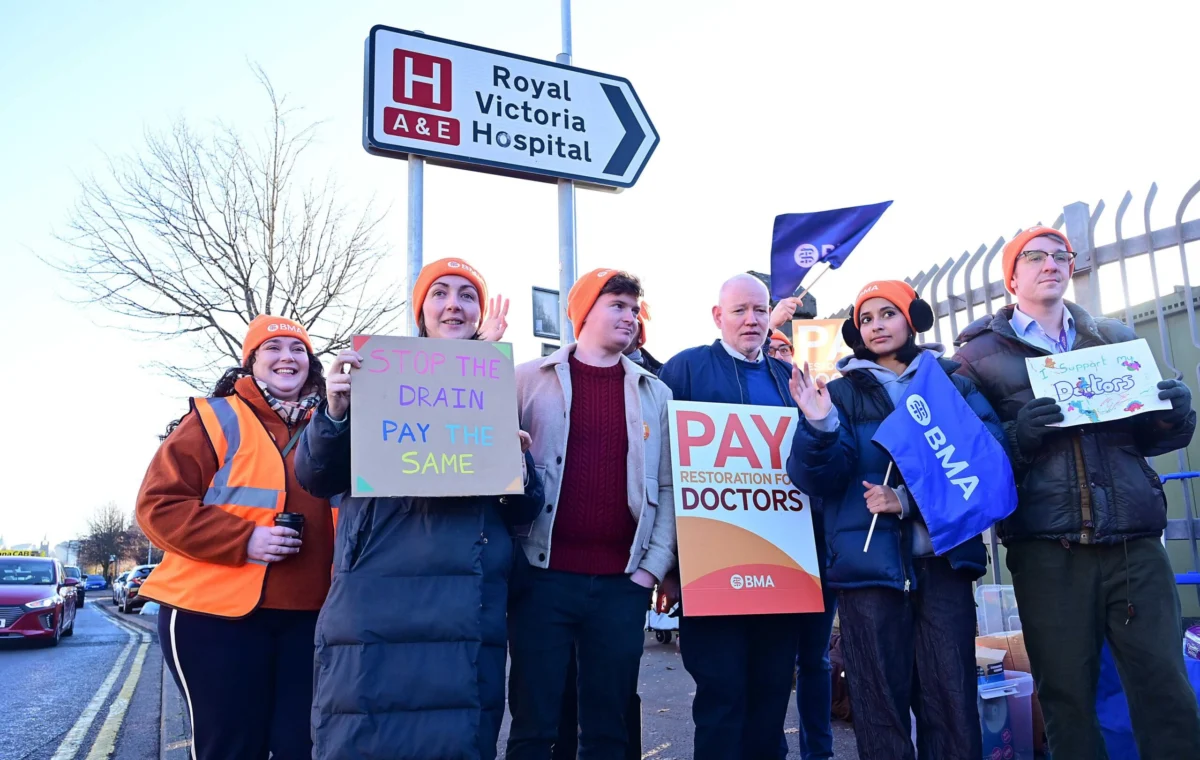
"The escalating industrial action by doctors in Northern Ireland underscores a critical tipping point for the region’s healthcare system, threatening patient care and exposing deep-seated issues of pay erosion and staff retention."
This quote highlights the severe implications of the ongoing strikes, which saw resident doctors conclude their walkout only for consultants and specialists to begin theirs. At its heart, the dispute is a battle for pay restoration to 2008 levels, a demand reflecting years of below-inflation increases that health professionals argue are driving an exodus of talent and pushing the system towards collapse. With thousands of appointments already cancelled and further disruptions imminent, the industrial action casts a stark light on the profound challenges facing Northern Ireland’s recently restored government in adequately funding and sustaining its vital health and social care services.

Northern Ireland’s healthcare system is facing an unprecedented period of industrial unrest as a 24-hour strike by resident doctors concludes, immediately followed by a separate but related walkout by consultants and specialist doctors. The staggered action by the British Medical Association (BMA) signals a deepening crisis within the region’s health and social care sector, driven by long-standing grievances over pay and working conditions that threaten to destabilise an already fragile system.
The initial 24-hour strike by resident doctors, which began on Friday and was due to end at 07:00 GMT on Saturday, significantly impacted non-emergency services across Northern Ireland. Patients experienced the cancellation of numerous planned outpatient appointments, contributing to an already extensive backlog in a system grappling with some of the longest waiting lists in the UK. While urgent surgery and most GP services managed to continue, largely due to the presence of senior doctors, the disruption served as a stark reminder of the vulnerability of the health service when a significant portion of its workforce withdraws labour.
However, the respite for the health service is brief. From 07:00 GMT on Monday, consultants and specialty, associate specialist, and specialist grade (SAS) doctors will embark on their own 24-hour strike. This successive wave of industrial action is expected to inflict further substantial damage, with routine hospital and elective services facing widespread cancellations. Unlike the resident doctors’ strike, the consultants’ action will operate under "Christmas Day cover," meaning full emergency care will remain in place. While this ensures critical services for life-threatening conditions, it underscores the severe reduction in all other vital healthcare provisions. Health trusts, including the Western and South Eastern trusts, have advised patients to attend appointments as planned unless directly instructed otherwise, yet the South Eastern Trust has already confirmed the closure of the urgent care centre at Lagan Valley Hospital for Monday. The cumulative impact of these strikes, as highlighted by Health Minister Robbie Butler, is profound, with previous similar actions in June leading to over 2,200 cancelled appointments and carrying "real consequences for patients, waiting lists and service delivery."

At the core of this escalating dispute is the BMA’s demand for pay restoration to 2008 levels, a response to what it describes as years of below-inflation pay rises that have eroded the real-terms value of doctors’ salaries. Since 2008, doctors in Northern Ireland have seen their pay diminish significantly when adjusted for inflation, leading to a substantial decrease in their purchasing power and a widening gap between their remuneration and that of their counterparts in other parts of the UK and the Republic of Ireland. The BMA rejected a recommended 3.5% pay rise, arguing it falls far short of what is needed to address the historical decline in pay and to make the profession financially viable and attractive within Northern Ireland.
This pay erosion has directly contributed to a severe recruitment and retention crisis within the health service, a phenomenon often referred to as a "brain drain." Doctors, facing stagnant wages and immense pressure, are increasingly considering opportunities elsewhere. Dr. Seamus Crumley, an anaesthetics registrar working in intensive care at the Ulster Hospital, shared his personal experience, noting a pay cut upon moving from Scotland to a more senior role in Northern Ireland. His testimony echoes a broader sentiment among medical professionals who find themselves undervalued compared to their peers. Dr. Steven Montgomery, Chair of the BMA’s Northern Ireland Resident Doctors Committee, articulated the widespread burnout and emotional distress among his colleagues, exacerbated by unsustainable workloads stemming from staff shortages. He stressed that the BMA is not seeking a single, immediate lump sum for pay restoration but rather a credible, long-term plan from the minister to address the issue incrementally. The appeal of better pay and conditions elsewhere is palpable, with resident doctor Dr. Oisín Fearon openly stating he has explored training options in the Republic of Ireland and even considered a move to Australia, highlighting the international competition for medical talent that Northern Ireland is struggling to meet. The long-term consequences of this exodus are dire, threatening the quality and accessibility of healthcare for the entire population.
Health Minister Robbie Butler finds himself in a precarious position. While acknowledging the need to address doctors’ pay, he has publicly accepted the recommended 3.5% rise but states he cannot implement it without sufficient funding for his department. Butler has met with the BMA to explain the severe financial pressures confronting the Department of Health. The funding model for Northern Ireland’s public services, heavily reliant on the block grant from Westminster, means that any significant unbudgeted expenditure creates a domino effect across all departments. The Minister highlighted that cumulative pay rises over the previous three years averaged 30% for resident doctors, 25% for SAS doctors, and 24% for consultants, framing the 3.5% offer as a reasonable, albeit not ideal, increase given the constraints. He also cautioned that exceeding this offer would have "significant repercussions for nurses, teachers, police officers and indeed the entire public sector workforce," underscoring the difficult balancing act required to manage public sector pay across various professions. This argument highlights the interconnectedness of public sector pay and the wider economic challenges facing the recently restored Northern Ireland Executive.

Adding another layer of complexity to the industrial landscape, the Northern Ireland Public Service Alliance (Nipsa) recently released the results of a ballot among its health and social care members. A resounding 94% voted in favour of strike action, with 97% backing action short of a strike, reflecting widespread discontent across the broader healthcare workforce. This indicates that the current dispute is not isolated to doctors but is a symptom of systemic pressures affecting all staff within the health and social care sector. Nipsa has warned that it will consider its next steps, potentially leading to coordinated industrial action across the entire health service in the coming weeks. Such widespread action would amplify the current disruption, placing unprecedented strain on services and further delaying patient care.
The confluence of ongoing strikes, severe staff shortages, burgeoning waiting lists, and a challenging financial climate places Northern Ireland’s healthcare system at a critical juncture. While the immediate focus remains on resolving the pay dispute, the underlying issues demand a comprehensive, long-term strategy. This includes not only fair pay for healthcare professionals but also sustained investment in infrastructure, workforce planning, and systemic reforms to ensure the long-term viability and resilience of health and social care services. The challenge for the Northern Ireland Executive is immense: to navigate the immediate crisis while laying the groundwork for a stable, equitable, and effective healthcare system that can meet the needs of its population for years to come.
