
"Billions earmarked for opioid crisis remediation are being spent on questionable expenditures, sparking concerns about effective oversight and the true impact on communities struggling with addiction."
The monumental $58 billion in opioid settlement funds, intended to address the devastating addiction crisis, is proving to be a complex financial landscape. While intended for crucial remediation efforts, a significant portion of these funds, particularly the nearly half allocated to local governments, is being directed towards expenditures that critics argue do not directly combat substance use disorders or support those affected. This has led to widespread concerns about the lack of robust oversight and the potential for these vast sums to be misspent, failing to achieve their intended purpose of turning the tide on the epidemic.
Companies that aggressively marketed and distributed prescription opioid painkillers have collectively committed approximately $58 billion to settle lawsuits stemming from their role in fueling the nation’s addiction crisis. This substantial financial influx has drawn the attention of a diverse array of stakeholders, including addiction treatment providers eager to expand services, companies developing innovative opioid-related products, and government officials grappling with budget deficits. However, a critical issue has emerged regarding the distribution and utilization of these funds, particularly the nearly half that flows directly to local governments, managed by county commissioners and city councilors.
The rationale behind channeling these funds to local authorities is rooted in the belief that local leaders possess the most intimate understanding of their communities’ needs and can therefore ensure the most just and effective distribution of these payouts. These funds are often described with poignant and visceral terms, such as "blood money," by individuals who have endured the profound loss of loved ones to opioid overdoses. Yet, a significant challenge lies in the fact that many local officials lack comprehensive training in addiction policy and may not have access to robust local health departments or established policy guardrails to guide their decision-making.
This deficiency in expertise and support structures has, in some instances, led to spending decisions that clinicians, researchers, and addiction recovery advocates contend are unlikely to yield positive outcomes in saving lives or treating substance use disorders. For example, in New York, where approximately 46% of the opioid settlement money is directly controlled by local governments, public records obtained by the nonprofit advocacy group Legal Action Center and shared exclusively with KFF Health News revealed expenditures on items such as surveillance cameras, technology to enhance police access to data on locked cellphones, and goggles that simulate intoxication. While these purchases may be legally permissible, many affected individuals view them as a deeply insensitive and inappropriate allocation of funds meant for healing and recovery.
The potential for "going rogue" with these funds, as described by Jasmine Budnella, director of drug policy at VOCAL-NY, an organization dedicated to serving those impacted by the war on drugs, highlights a systemic issue of accountability. When advocates and families of overdose victims attempt to raise concerns with state agencies responsible for oversight, they often encounter a frustrating cycle of inter-agency deflection. "It feels like the Spider-Man meme, where it’s like everybody’s pointing at each other," Budnella remarked, emphasizing the urgent need for a definitive authority to enforce proper fund utilization. "Somebody needs to be able to have the stick and slam their hand on the table and be like, ‘You’re doing this wrong and this is the consequence.’"
The experiences in New York serve as a microcosm of a broader national trend where regulatory bodies appear to be evading oversight responsibilities, while various interests compete for a share of this substantial financial windfall. Data meticulously collected over several years by KFF Health News, in collaboration with the Johns Hopkins Bloomberg School of Public Health and the addiction nonprofit Shatterproof, has consistently revealed the allocation of settlement money towards law enforcement equipment, such as night-vision goggles and bulletproof vests. Furthermore, funds have been directed towards unproven prevention initiatives, like employing a drug-awareness magician for children, and have been used to plug general budget deficits, a practice that diverts resources from their intended purpose.
The question of who should, or will, take decisive action regarding these questionable expenditures remains unclear. The distribution of settlement funds is fragmented across various entities within each state, creating a leadership vacuum. The federal government, which did not play an active role in the multi-district litigation that resulted in these settlements, has minimal involvement in the oversight of these funds. Advocates and families who have suffered personal losses are pushing for accountability, but their influence is limited. While a few states have enacted new legislation, the pace of change is slow and inconsistent.
The settlement agreements themselves mandate that the majority of the funds be allocated to "opioid remediation," a broad category that encompasses over 100 suggested expenditures. However, the definition of remediation is expansive and open to interpretation. Compounding this issue, many states, including New York, designate a portion of the settlement dollars as unrestricted, allowing for general spending without specific accountability to remediation goals. This ambiguity, coupled with federal budget cuts that have threatened addiction-related services and increased demand for funding, creates a precarious situation. Despite a recent decrease in overdose deaths from their 2022 peak, the crisis continues to claim approximately 186 lives daily.

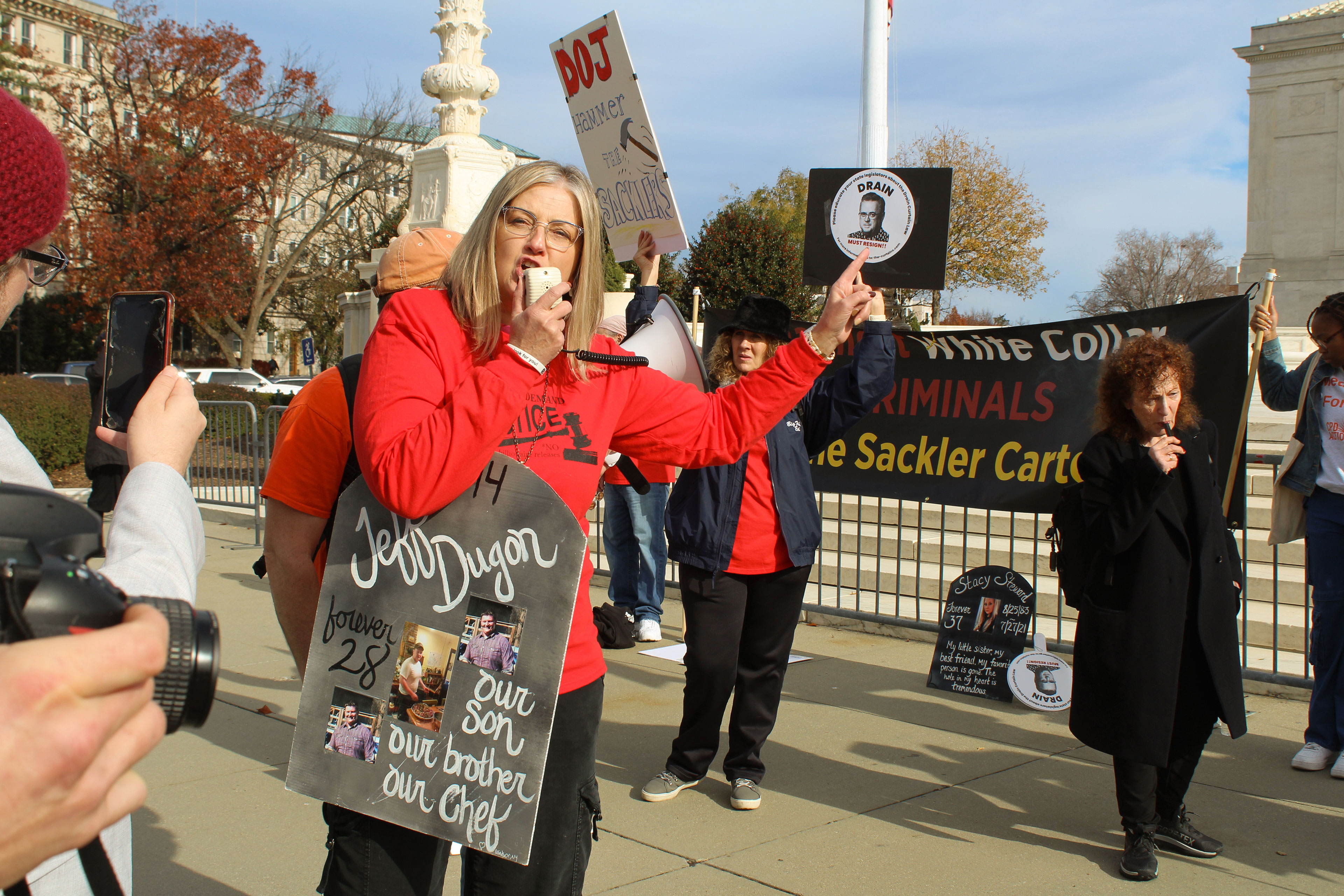
"We really are wasting this opportunity to use these funds to turn the epidemic around," stated Alexis Pleus, a resident of Binghamton, New York, whose 28-year-old son, Jeff Dugon, died of a heroin overdose in 2014. Pleus, who now runs a nonprofit dedicated to supporting individuals struggling with addiction and their families, believes that if the settlement funds could spare other families the heartache she has experienced, it would offer a measure of solace. "We need oversight," she emphasized, highlighting the critical need for accountability in the allocation of these funds.
In New York, oversight responsibility is theoretically distributed among three primary entities: the Office of Addiction Services and Supports (OASAS), the Attorney General’s office, and the Comptroller’s office. OASAS is designated as the "lead state agency" responsible for distributing a portion of the settlement dollars through grants, guided by recommendations from the state’s Opioid Settlement Fund Advisory Board. This agency also possesses the authority to conduct oversight and audits of funded projects and programs and can withhold future funds from local governments that fail to comply with specific requirements.
Despite this authority, OASAS spokesperson Jerry Gretzinger indicated that the office has not yet exercised its power to withhold funds, while acknowledging its oversight role. "OASAS has a duty to ensure these funds are used responsibly and strategically to build programs that will have a lasting impact in reversing this crisis," Gretzinger stated. The office is currently auditing the use of funds by 19 local governments to ensure compliance with "reporting and recordkeeping requirements." However, advocates are concerned that this focus may not encompass the broader question of whether the money was spent on appropriate uses.
This narrow interpretation of oversight has led to frustration among some stakeholders. For instance, language included in the previous year’s state budget mandated that local governments publicly report their settlement fund expenditures. OASAS subsequently collected links to these reports on its website. However, the agency does not review the accuracy or detail of this data, instead relying on "the information as it is provided" by localities, according to Gretzinger. Christine Khaikin, a deputy director at the Legal Action Center, finds this approach insufficient: "That doesn’t feel like oversight." Members of the state’s Opioid Settlement Fund Advisory Board have also urged OASAS to provide more comprehensive data and evaluation of fund utilization. However, at a February 2025 meeting, OASAS Commissioner Chinazo Cunningham stated, "OASAS has no oversight over these portions of dollars," referring to the 46% of settlement money directly allocated to counties and cities. She further elaborated that the agency "cannot dictate exactly" what data each county collects.
Examples of spending decisions in New York have amplified calls for greater oversight. Through public records requests filed by the Legal Action Center with 56 New York counties and New York City, it was revealed that while many jurisdictions allocated funds to effective addiction treatment, recovery, and prevention initiatives, others exhibited questionable expenditures. Records from Cortland County, for example, showed $150,000 in settlement cash directed to "Sheriff Jail" with no further explanation, and the county did not respond to requests for clarification. Sullivan County spent over $30,000 on Cellebrite technology for data extraction from cellphones and over $37,000 on Tasers, justifying these purchases from unrestricted funds. These justifications rankle families affected by the crisis, who argue that even if not legally prohibited, such expenditures lack moral justification. "Anything that is not directly tied to people who are struggling with opioid addiction or the loss of someone is a poor use of funds," stated Alexis Pleus, who lost her son to an overdose.

Furthermore, many jurisdictions have yet to spend a significant portion of their allotted funds, a pattern observed in other states as well. Local officials cite the need for thoughtful planning as a reason for delays. However, some advocates suspect that the substantial interest generated by settlement dollars sitting in bank accounts may be a motivating factor for holding onto funds. In a notable instance, Nassau County transferred nearly $14 million in accrued interest from unused opioid settlement funds to its general fund, a move that was reversed after public outcry. Advocates believe such attempts to divert funds may be occurring elsewhere but are difficult to detect within complex budgetary documents. Jasmine Budnella of VOCAL-NY expressed frustration: "It feels like it’s up to us all – the organizers, the advocates, the service providers – to be constantly watching."
The Attorney General’s office, led by Letitia James, has been a prominent national voice in prosecuting pharmaceutical companies linked to the overdose crisis, touting its role in securing billions in settlement funds for New York. However, when questioned about the office’s responsibility in ensuring the appropriate expenditure of these funds, a spokesperson stated, "While our partners in state and local governments distribute and oversee these funds, we will continue our work to hold accountable the companies responsible for fueling the spread of addictions and overdoses." This stance contrasts with the expectations of many, including state Senator Nathalia Fernandez, who chairs the committee on alcoholism and substance use disorders. Senator Fernandez believes the Attorney General’s office has a crucial enforcement role. "The money is here because of their efforts," she stated, adding, "I believe it is under the Office of the Attorney General to enforce." Jasmine Budnella echoed this sentiment, asserting, "It would be a shame for all of their work that they have done to secure all this funding for it to be misspent."
In contrast to New York’s Attorney General, attorneys general in states like Michigan and Kansas have adopted a more proactive stance, issuing lists of prohibited expenditures that include many law enforcement-related items that have raised concerns among New York advocates. The New York Attorney General’s office did not comment on whether it would consider implementing a similar list.
The role of the state Comptroller’s office, as a fiscal watchdog, has also been proposed as a potential avenue for oversight. Early this year, the Reason Foundation released a model law that would require recipients of over $1 million in settlement funds to undergo independent financial reviews. While this model does not dictate what constitutes an appropriate use of funds, it aims to ensure that recipients adhere to their commitments. New York Comptroller Thomas DiNapoli’s office confirmed it is conducting an audit focused on OASAS’s oversight of the opioid settlement money, encompassing both state and local allocations. The office stated that any future enforcement actions will depend on the audit’s findings and ongoing monitoring. This approach mirrors actions taken by comptrollers and auditors in other states, such as New Jersey, Missouri, and Nashville, Tennessee, who have already intervened in the management of settlement cash.
These initial oversight efforts have instilled a degree of hope among advocates and researchers. "We’re already years in and we’ve seen the craziest stories" of funds being used for events like concerts or the construction of police shooting ranges, observed Layal Bou Harfouch, a co-author of the Reason Foundation’s model law. "If we can prevent that at least a little and have these funds be a bit more focused, I don’t think it’s too late." The ongoing flow of these funds for over a decade presents a critical window of opportunity to refine oversight mechanisms and ensure that these billions contribute meaningfully to mitigating the enduring impact of the opioid crisis.
