
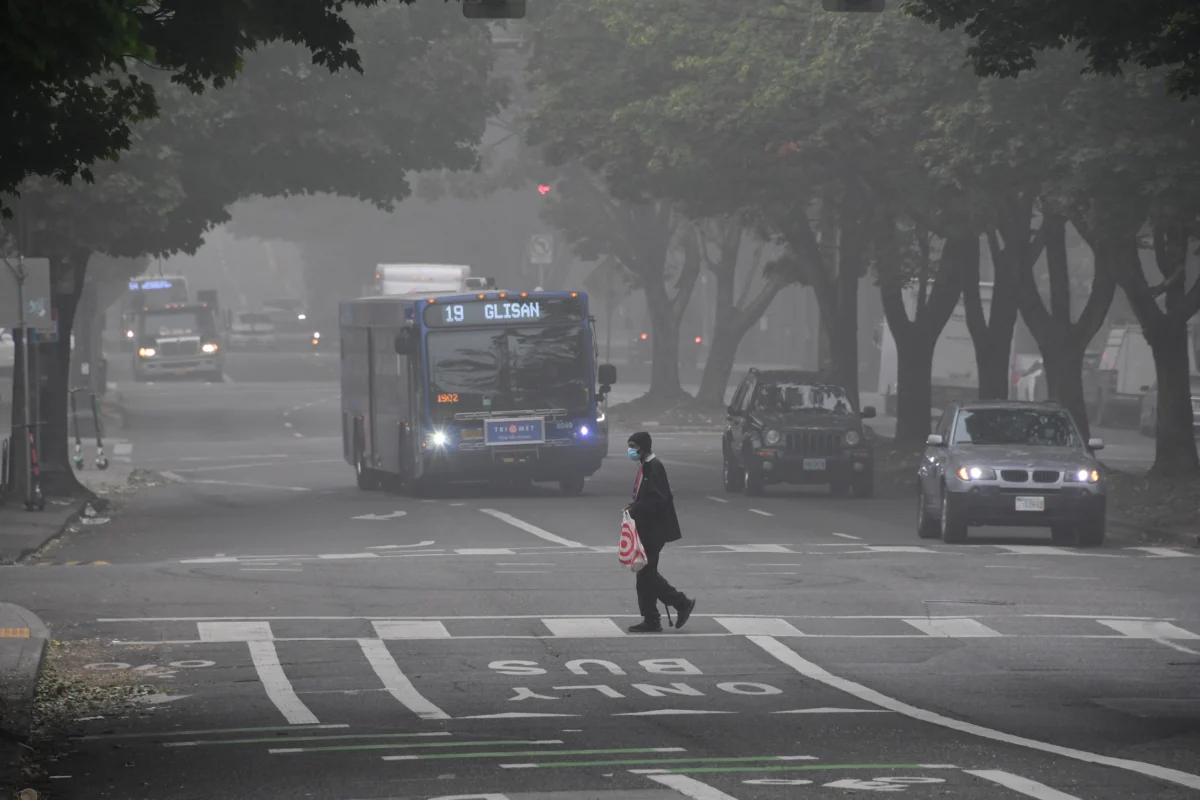
"The persistent smoke from multiple wildfires across Oregon has led to an extended air quality advisory, prompting urgent health warnings for a significant portion of the state. Residents, particularly vulnerable populations, are urged to take precautions as fine particulate matter poses serious health risks."
The Oregon Department of Environmental Quality (DEQ) has once again extended its air quality advisory, now in effect through at least Friday afternoon, July 24, 2026. This latest extension, the third since the initial Monday end date, underscores the ongoing threat posed by widespread wildfire smoke blanketing eastern and central Oregon. The advisory covers a broad swath of counties including Baker, Crook, Deschutes, northern Harney, Grant, Jefferson, northern Malheur, Morrow, Union, southern Umatilla, and Wheeler. Health warnings are active, emphasizing the need for caution due to the presence of fine particulate matter (PM2.5) originating from numerous wildfires burning across the southern, central, and eastern regions of the state. Intermittent smoke conditions are also impacting adjacent areas such as Clackamas, eastern Douglas, northern Jackson, Klamath, Lake, and Wallowa counties. In a separate but related development, the DEQ had previously issued an ozone smog advisory for the Portland metro area, Salem, Hermiston, and Ontario, which was scheduled to conclude Wednesday evening.
The Peril of Wildfire Smoke: Understanding PM2.5
Wildfire smoke represents a distinct and potent form of air pollution, differing significantly from emissions typically associated with traffic or industrial activities. Its primary danger lies in its high concentration of fine particulate matter, specifically PM2.5. These particles, measuring less than 2.5 microns in diameter, are infinitesimally small, enabling them to bypass the body’s natural defenses in the upper respiratory tract. Once inhaled, PM2.5 particles can penetrate deep into the lungs, where they can then enter the bloodstream. From there, these microscopic invaders can travel to vital organs, including the heart and brain, potentially causing widespread systemic effects.
The health implications of PM2.5 exposure are particularly severe for individuals with pre-existing health conditions. For those suffering from asthma, chronic obstructive pulmonary disease (COPD), heart disease, or other cardiovascular or respiratory ailments, even moderate exposure to wildfire smoke can trigger dangerous exacerbations requiring emergency medical intervention. Children, whose lungs are still in the critical stages of development, are also at heightened risk. Furthermore, research has linked PM2.5 exposure during pregnancy to adverse outcomes such as preterm birth and low birth weight. Older adults, even in the absence of diagnosed lung conditions, face an elevated risk of cardiovascular complications from PM2.5 exposure. As the DEQ’s advisory clearly states, air quality in affected regions may reach unhealthy levels, with the potential for rapid deterioration based on shifting wind patterns and evolving fire behavior.
Current Air Quality and Advisory Evolution
As of the afternoon of July 20, 2026, air quality readings in several Oregon communities had already reached "unhealthy" levels. Cities like Prineville, Pendleton, La Grande, and Baker City reported conditions where the general public may begin to experience health effects, and sensitive groups face significant health risks. This designation falls within the DEQ’s six-tier classification system for air quality.
The current advisory began with a more limited scope of counties and was initially slated to end on Monday, July 20. However, the persistent nature of the wildfire smoke and unfavorable weather conditions that have prevented its dispersal have necessitated multiple extensions, first to Wednesday and now through Friday afternoon, July 24. The smoke originates from a confluence of multiple wildfires burning across southern, central, and eastern Oregon. While earlier advisories in July were partly attributed to specific incidents like the East Evans Creek Fire in southern Oregon, the current situation reflects a broader regional fire environment rather than a single dominant blaze.
Geographic Concentration of Risk
The counties currently under the active DEQ advisory – Baker, Crook, Deschutes, northern Harney, Grant, Jefferson, northern Malheur, Morrow, Union, southern Umatilla, and Wheeler – encompass a vast expanse of eastern and central Oregon. This includes densely populated areas and significant communities such as Bend (Deschutes County), La Grande (Union County), Pendleton (Umatilla County), and John Day (Grant County).
Within these affected regions, certain groups face a higher cumulative risk of exposure. Individuals who spend significant time outdoors for work or recreation, those who rely on opening windows for cooling, and residents with limited access to air conditioning or effective air filtration systems are particularly vulnerable. Outdoor workers, including agricultural laborers, construction crews, and utility workers, face unavoidable occupational exposure that cannot be mitigated by simply remaining indoors. The DEQ, in collaboration with partner agencies, continues to monitor smoke conditions closely, and the advisory may be further extended or expanded as wildfire activity and wind patterns evolve.
Expert Guidance and Health Recommendations
Jennifer Horton, a spokesperson for the DEQ, emphasized the importance of staying indoors during peak pollution hours, particularly when ozone levels are highest. "If you’re able to stay indoors during the hottest parts of the day when ozone levels are going to be the highest, that will help alleviate some of those health conditions," Horton advised. This recommendation is crucial for minimizing exposure to harmful pollutants.
For individuals with existing heart or lung conditions, the DEQ suggests consulting a healthcare provider before attempting to use a respirator. The exertion required to breathe through a properly sealed N95 respirator can place additional strain on the cardiovascular system, and professional medical advice is recommended. Furthermore, individuals who rely on inhalers, bronchodilators, or other respiratory medications are urged to ensure they have an adequate supply readily accessible during extended smoke events. Proactive planning can prevent critical medication shortages when air quality is compromised.
Scientific Understanding of Wildfire Smoke Impacts
The health hazards associated with PM2.5 from wildfire smoke are well-documented and supported by decades of rigorous peer-reviewed scientific research. Numerous studies have consistently shown a correlation between short-term spikes in PM2.5 concentrations and an increase in emergency department visits for conditions such as asthma exacerbations, respiratory distress, and acute cardiac events. The severity of these health consequences is directly proportional to the concentration and duration of exposure. Consequently, multi-day advisories affecting broad geographic areas present a more significant cumulative health risk compared to brief, localized pollution spikes.
While the general health risks of PM2.5 are established, pinpointing the precise PM2.5 concentration at any given location in real-time can be challenging. Wildfire smoke levels are dynamic, influenced by factors such as fire intensity, terrain, and prevailing wind conditions, and can fluctuate significantly within hours. The DEQ’s official Air Quality Index (AQI) data offers the most reliable real-time measurements available for assessing current local conditions.
It is crucial to understand that common face coverings such as cloth masks, surgical masks, and dust masks are ineffective at protecting against PM2.5. Only properly fitted NIOSH-approved N95 or P100 respirators can significantly reduce the inhalation of these fine smoke particles. The DEQ’s guidance specifically highlights that standard respirators are not manufactured in sizes appropriate for children, rendering them an inadequate protective measure for young children exposed to smoke outdoors.
Identifying and Mitigating Highest Risks
The groups facing the greatest risk from wildfire smoke exposure include individuals with pre-existing respiratory conditions such as asthma, COPD, and emphysema. These individuals are highly susceptible to the inflammatory effects of PM2.5 on their lungs. Similarly, those with heart disease or a history of heart attack are at an elevated cardiovascular risk, experiencing potential increases in arrhythmia and acute coronary events during periods of high smoke concentration.
Pregnant individuals represent another group with unique concerns. Research has indicated a link between PM2.5 exposure during pregnancy and adverse fetal development, including preterm birth and low birth weight. Pregnant residents in affected counties are strongly advised to treat the air quality advisory as a direct health warning, regardless of their perceived well-being.
The Environmental Protection Agency (EPA) classifies children under the age of 14 and adults over 65 as sensitive groups, meaning they may experience adverse health effects at lower pollutant concentrations than healthy adults. Infants and toddlers are particularly vulnerable due to their ongoing lung development and increased time spent in environments that may rely on natural ventilation.
Outdoor workers in affected counties are exposed to occupational risks that differ from those of indoor workers. Construction crews, farm laborers, utility workers, and others whose jobs necessitate outdoor activity should adhere to employer-provided safety guidelines, including protocols for break frequency, access to clean air spaces, and vigilant symptom monitoring.
Recognizing Symptoms and Warning Signs
Exposure to wildfire smoke can manifest in a range of symptoms, even in otherwise healthy individuals. These may include eye irritation or burning, a runny nose, sore throat, coughing, and shortness of breath. Typically, these symptoms are mild and tend to resolve once the individual moves to an environment with cleaner air.
For individuals with asthma or COPD, smoke exposure can trigger more severe reactions, such as wheezing, chest tightness, increased breathlessness, and a reduction in peak respiratory flow, potentially necessitating the increased use of rescue inhalers or other prescribed medications. Symptoms that do not respond to standard rescue treatments, worsening shortness of breath even at rest, chest pain, rapid heart rate, confusion, or loss of consciousness are critical warning signs that warrant immediate or emergency medical evaluation.
Anyone experiencing new or worsening chest pain, pressure, or tightness during a smoke event, irrespective of a prior diagnosis of heart disease, should seek emergency medical care. Emerging research suggests that wildfire smoke can act as a trigger for acute cardiac events, even in individuals unaware of underlying heart conditions.
Proactive Measures for Air Quality Protection
The most effective strategy for residents in affected counties is to remain indoors as much as possible, ensuring that windows and doors are kept closed. For homes equipped with a central air system, it is recommended to set the system to recirculate indoor air, thereby minimizing the intake of outdoor pollutants. The use of a portable HEPA air purifier in the room where one spends the most time can significantly reduce indoor PM2.5 concentrations.
For essential outdoor activities, wearing a properly fitted NIOSH-approved N95 respirator offers meaningful protection against fine smoke particles. When selecting a respirator, look for designations such as N, R, or P, followed by the number 95, 99, or 100. It is critical to reiterate that surgical and cloth masks do not provide adequate filtration for wildfire PM2.5. For a respirator to be effective, it must create a tight seal against the face, which is why they are not suitable for children.
Residents can stay informed about current air quality conditions by consulting resources such as the Oregon DEQ’s Air Quality Index website, the Oregon Smoke Information Blog, or by downloading the free OregonAIR mobile application. AQI updates are provided in near real-time and serve as the most reliable tool for assessing local air quality.
In situations where individuals experience worsening symptoms and lack access to cleaner air at home, 211info.org provides a directory of clean air shelter locations across Oregon. Users can search for "Wildfire Related Clean Air Shelters" or contact 211 directly during business hours (8 a.m. to 6 p.m.).
Individuals with asthma or COPD should proactively ensure their rescue inhalers and any prescribed controller medications are refilled and readily accessible before and during extended smoke events. Reviewing asthma or COPD action plans with a healthcare provider to include specific guidance for smoke days is also highly recommended.
Cost and Accessibility of Protective Measures
N95 respirators are widely available at hardware stores, home improvement retailers, and online vendors, typically costing between $1 and $4 per mask when purchased in multipacks. For residents facing financial constraints or unable to access respirators, free clean air shelter locations are accessible through 211info.org. In some counties, OHA-certified community health workers can assist residents in connecting with local resources during declared air quality events.
Individuals who rely on prescription inhalers or other respiratory medications and are nearing depletion of their supply should contact their pharmacy or prescriber as soon as possible. Demand for such medications often surges during extended smoke events. Many pharmacies are equipped to provide emergency supplies of maintenance inhalers for patients with active prescriptions.
Outlook and Future Considerations
The DEQ advisory is currently scheduled to remain in effect through at least Friday afternoon, July 24, 2026. However, the duration of this advisory is contingent upon ongoing wildfire activity and prevailing weather patterns, and further extensions are possible. The DEQ and its partner agencies are engaged in continuous monitoring of the situation.
Residents in affected counties are advised to periodically check resources like oregonsmoke.org and the DEQ AQI tool throughout the day, as smoke levels can fluctuate rapidly. Any further advisory extensions or expansions to additional counties will be reported if conditions evolve.
Conclusion: A Call for Vigilance and Protection
Oregon’s air quality advisory due to wildfire smoke remains active, impacting a significant number of counties across the state. For healthy adults, the most effective protective measure is to remain indoors with windows closed. For individuals with pre-existing respiratory or cardiovascular conditions, pregnant individuals, children, and older adults, this advisory serves as a critical health warning. It necessitates limiting outdoor exposure, utilizing HEPA filtration systems indoors, wearing a properly fitted N95 respirator if outdoor activity is unavoidable, and closely monitoring for any worsening symptoms. Prompt emergency medical care should be sought if respiratory or cardiovascular symptoms escalate despite these precautions.
