
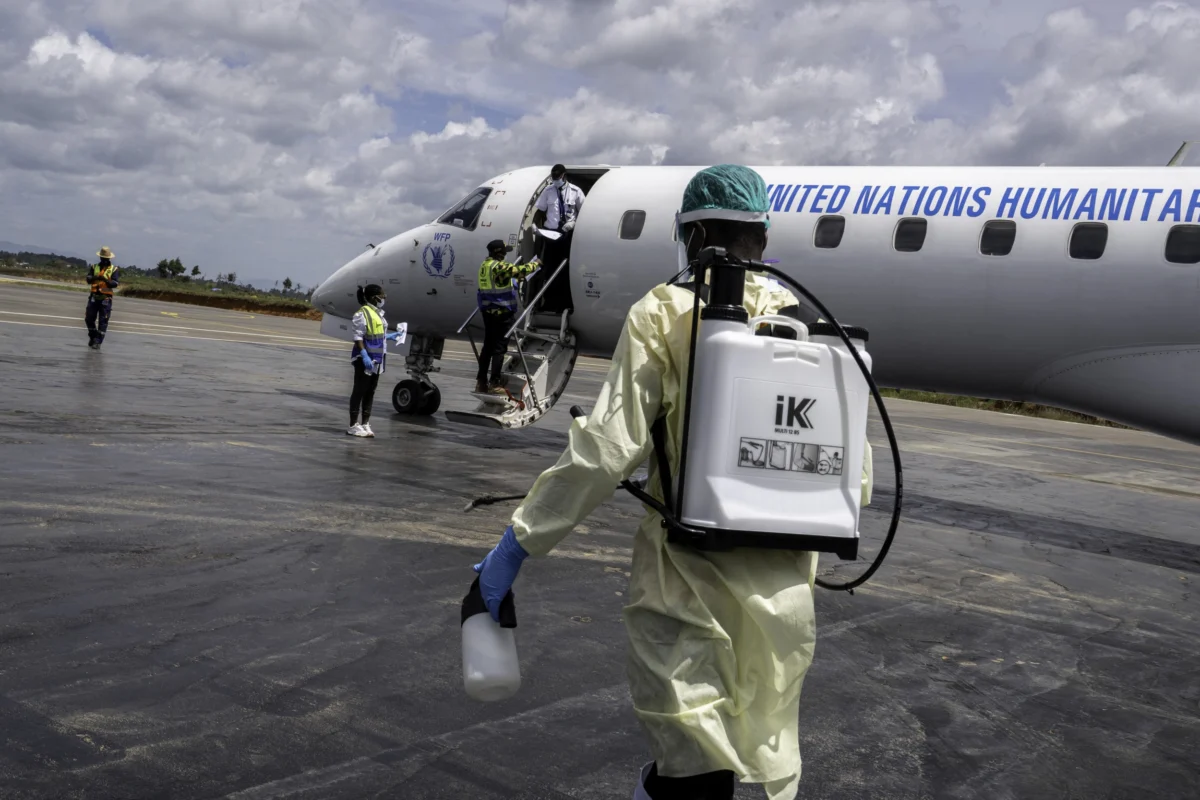
"The persistent and growing Bundibugyo virus outbreak in the Democratic Republic of Congo, coupled with the absence of a targeted vaccine, necessitates continued vigilance and stringent U.S. entry restrictions, underscoring the critical need for international cooperation and robust public health infrastructure."
The Centers for Disease Control and Prevention (CDC) has issued its third consecutive 30-day renewal of U.S. Ebola entry restrictions, a measure that will keep enhanced border and airport screening protocols active through approximately August 12, 2026. This extension, effective from July 13, 2026, targets travelers arriving from the Democratic Republic of the Congo (DRC), Uganda, and South Sudan. The decision reflects the grim reality of an escalating epidemic of Bundibugyo virus disease, a strain of Ebola for which no approved vaccine currently exists. As of July 18, 2026, the DRC has reported a staggering 2,344 laboratory-confirmed cases and 930 deaths, marking the largest Bundibugyo outbreak ever recorded. The virus has spread across five of the DRC’s provinces, and despite ongoing containment efforts, there are no clear signs of stabilization. This persistent threat, compounded by the unique challenges posed by the Bundibugyo strain, highlights a significant public health crisis with far-reaching implications.
The current resurgence of Bundibugyo virus disease, particularly in the Democratic Republic of the Congo, presents a distinct and alarming challenge to global health security. Unlike the devastating Zaire strain of Ebola, which prompted the development and deployment of two licensed vaccines—Ervebo and the Mvabea/Zabdeno regimen—the Bundibugyo strain remains a formidable adversary without a specific countermeasure. The World Health Organization (WHO) has explicitly determined that the evidence supporting the efficacy of existing Ebola vaccines against Bundibugyo is insufficient, leading to a recommendation against their use in this ongoing outbreak. This critical gap in medical countermeasures significantly hampers response efforts, as it eliminates the possibility of ring vaccination—a crucial containment strategy that involves vaccinating close contacts of confirmed cases to create a protective barrier around transmission chains. Without this vital tool, response teams are left to rely solely on traditional public health interventions such as isolation, rigorous contact tracing, and supportive care. These efforts are further complicated by the challenging operational environment in the affected regions, which are often plagued by armed conflict, significant population displacement, and limited laboratory infrastructure, all of which can impede the swift and effective implementation of control measures. The gravity of the situation was further underscored when the WHO declared this outbreak a Public Health Emergency of International Concern (PHEIC) on May 17, 2026, a designation reserved for the most serious international health threats, marking only the eighth such declaration in the history of modern international health regulations.
The epidemiological landscape of the Bundibugyo virus outbreak, as detailed by the National Institute for Communicable Diseases (NICD) of South Africa, paints a stark picture of the epidemic’s relentless advance. As of July 18, 2026, the DRC has recorded a cumulative total of 2,344 laboratory-confirmed cases and 930 deaths attributed to the Bundibugyo virus. In addition, there are 192 suspected cases and 466 individuals who have recovered. The outbreak’s epicenter appears to be Ituri Province, which alone accounts for 2,090 confirmed cases, with the virus impacting 27 of its 36 health zones. The geographical spread extends to four other provinces: North Kivu, South Kivu, Haut-Uele, and Tshopo.
Beyond the DRC, the outbreak has demonstrated its potential for international spread. The European Centre for Disease Prevention and Control (ECDC) confirmed as of July 20, 2026, that Uganda had identified 20 laboratory-confirmed cases, resulting in two deaths. Of these cases, 15 are directly linked to travel from the DRC, while five are considered local transmissions, all occurring within the capital city of Kampala and the surrounding Wakiso district. Uganda’s most recent reported case was on June 21, 2026, and it was travel-related. France also reported one imported case on June 24, 2026, originating from the DRC. Adding to the international dimension, a U.S. citizen working for a humanitarian organization in the DRC tested positive for the Bundibugyo virus on July 10, 2026. This individual was subsequently medically evacuated to Germany on July 13, 2026, according to ECDC reports. Crucially, no cases of Bundibugyo virus disease originating from this specific outbreak have been confirmed within the United States. The CDC continues to maintain that the risk of Ebola spreading within the U.S. remains low, citing the robustness of the nation’s public health infrastructure and the virus’s specific transmission requirements: direct contact with the bodily fluids of an infected, symptomatic individual.
Significant developments have transpired since previous reports, underscoring the dynamic and concerning nature of this outbreak. MedicalDaily’s prior coverage had noted the first and second renewals of U.S. entry restrictions and reported case counts at 1,792 cases and 625 deaths. The latest figures reveal a substantial increase: confirmed deaths have risen by 305, from 625 to 930, and confirmed cases have climbed from 1,792 to 2,344. The issuance of a third restriction order by the CDC further emphasizes the sustained and growing threat. The confirmation of a U.S. citizen contracting the virus in the DRC adds a personal and immediate dimension to the international concern. Dr. Anne Ancia, the WHO Representative to the DRC, conveyed the gravity of the situation on July 8, stating, "We would like to say it is stabilising, but frankly, we cannot say it yet." This candid assessment reflects the overarching reality: despite multiple renewals of international containment measures, the case numbers continue their upward trajectory, signaling an ongoing and unresolved crisis.
The CDC’s entry restriction order, renewed on July 13, 2026, fundamentally suspends the right of specified foreign nationals departing from the DRC to enter the United States. This measure, implemented through a joint initiative with the Department of Homeland Security, may result in certain travelers assessed as posing a risk of transmitting Ebola being placed on a "Do Not Board" list. For individuals who have recently traveled from the DRC, Uganda, or South Sudan, the CDC strongly recommends a 21-day period of self-monitoring, which includes checking their temperature twice daily. Should any symptoms consistent with Ebola emerge—such as sudden fever, severe headache, muscle pain, weakness, vomiting, diarrhea, or unexplained bleeding—travelers are advised against going directly to an emergency room. Instead, they should contact the healthcare facility in advance to alert them of their travel history and potential exposure, and also notify their state or local health department. Current CDC travel guidance for the DRC specifically advises against non-essential travel to Ituri, North Kivu, South Kivu, Haut-Uele, and Tshopo provinces. For all other travel within the DRC, heightened precautions are recommended. Similarly, travel advisories for Uganda and South Sudan exist at an advisory level, urging travelers to exercise caution and monitor for symptoms upon their return.
The Bundibugyo virus, while less lethal on average than some other Ebola strains based on historical data, still presents a significant mortality risk. Previous outbreaks, including the 2007-2008 epidemic in Uganda and a 2012 outbreak in the DRC, estimated the case fatality rate to be between 25% and 50%. While this range is lower than the historically observed mortality rates for the Zaire strain, it remains a cause for serious concern. In response to the current epidemic, a clinical trial evaluating two experimental therapies—the monoclonal antibody MBP134 and the antiviral remdesivir—commenced in the DRC on July 2, 2026. The trial has over 1,200 treatment doses available for enrollment, though no results have been published to date. Currently, treatment for confirmed cases of Bundibugyo virus disease is entirely supportive, focusing on managing symptoms and preventing complications. Compounding the challenges, the WHO has reported a significant funding shortfall, with less than half of the necessary resources secured to combat this outbreak effectively. This deficit directly impacts critical response capabilities, including the capacity for contact tracing, the distribution of essential personal protective equipment (PPE), and the ability to sustain treatment centers across the now five-province outbreak zone.
The populations most directly at risk are those residing in the affected health zones of northeastern DRC, particularly in communities that have limited access to isolation facilities and infection control supplies. Healthcare workers operating in these areas, especially those without adequate personal protective equipment, face an elevated risk of occupational exposure. For American citizens, the direct exposure risk is primarily concentrated among individuals who have recently traveled from the DRC, Uganda, or South Sudan, or those who have had direct contact with a confirmed case of Bundibugyo virus disease. Aid workers, missionaries, journalists, and other humanitarian personnel operating in the affected regions are also at risk of occupational exposure and are strongly advised to verify their organization’s medical evacuation plans and symptom monitoring protocols prior to deployment. For the general American public, particularly those without recent travel to affected areas, the risk posed by this outbreak remains very low. This assessment is based on both the specific transmission mechanism of the virus and the effectiveness of current entry screening and restriction measures.
Clinically, Bundibugyo virus disease presents with symptoms that are largely similar to other forms of Ebola. These include the sudden onset of fever, severe headache, muscle pain, weakness, fatigue, diarrhea, vomiting, and abdominal pain. Some individuals may also develop bleeding or bruising. The incubation period, the time between exposure to the virus and the onset of symptoms, typically ranges from two to 21 days. Anyone who has traveled to an affected province or country within the past 21 days and subsequently develops a fever or other compatible symptoms should, as a critical first step, contact their local health department before seeking in-person medical care. This proactive approach is essential for both the immediate management of the individual patient and for preventing further secondary exposure to healthcare workers and the broader community. Early identification and prompt notification are paramount in controlling the spread of the disease.
Individuals planning travel should adhere to the latest CDC travel health notices, which currently recommend avoiding non-essential travel to the provinces of Ituri, North Kivu, South Kivu, Haut-Uele, and Tshopo in the DRC. Travelers returning from any part of the DRC, Uganda, or South Sudan within the preceding 21 days who develop fever or symptoms consistent with Bundibugyo virus disease are urged to contact their local health department before seeking in-person care. Family members and close contacts of returning travelers should also be aware of this critical 21-day monitoring window. Humanitarian and aid organizations deploying personnel to the affected regions must ensure that comprehensive medical evacuation protocols, adequate PPE supplies, and daily symptom monitoring systems are fully operational before personnel depart for the field.
The current CDC entry restriction order, renewed on July 13, 2026, is set to expire in 30 days, necessitating a renewal decision around August 12, 2026. The results from the ongoing clinical trial evaluating MBP134 and remdesivir are anticipated in the coming weeks to months and will be closely monitored for potential therapeutic advancements. The WHO regularly publishes situation reports that provide ongoing updates on the outbreak’s progression. A key area of focus will be the trajectory of cases in Kampala, Uganda, as the capital city represents the most internationally connected location to have been affected by this outbreak thus far. The ongoing absence of an approved vaccine for the Bundibugyo virus is expected to garner increased attention from international health policy institutions in the months ahead, driving discussions on research priorities and preparedness strategies. MedicalDaily will continue to provide comprehensive coverage of significant developments, including any modifications to the CDC entry restriction order and the release of results from the experimental therapy study.
In conclusion, the Bundibugyo Ebola outbreak in the Democratic Republic of the Congo has reached an unprecedented scale, with 2,344 confirmed cases and 930 deaths—the highest numbers ever recorded for this specific virus strain. In response, U.S. travel restrictions have been renewed for a third consecutive month, extending through mid-August. For the vast majority of Americans who have not traveled to the affected areas, the direct risk remains extremely low. However, for travelers, aid workers, and humanitarian personnel operating in or returning from these regions, the risk is tangible. The critical absence of an approved Bundibugyo vaccine underscores the paramount importance of prevention, which relies entirely on avoiding direct exposure and diligently adhering to CDC monitoring protocols after returning from affected areas.
Developing Story Timeline:
- July 18, 2026: NICD reports 2,344 laboratory-confirmed cases and 930 deaths across five DRC provinces.
- July 13, 2026: CDC issues third 30-day renewal of U.S. Ebola entry restrictions. A U.S. citizen in DRC tests positive and is medically evacuated to Germany.
- July 8, 2026: WHO Representative Dr. Anne Ancia states that the outbreak cannot yet be described as stabilizing.
- July 2, 2026: Clinical trial of experimental therapies MBP134 and remdesivir begins in DRC.
- June 24, 2026: France confirms one imported Bundibugyo case from DRC.
- June 21, 2026: CDC issues second renewal. Uganda’s last reported case confirmed; travel-related from DRC.
- May 18, 2026: CDC implements initial U.S. entry restrictions and airport screening for travelers from DRC, Uganda, and South Sudan.
- May 17, 2026: WHO declares Public Health Emergency of International Concern.
- May 15, 2026: DRC Ministry of Health confirms Bundibugyo outbreak in Ituri Province.
