
"The allure of Yellowstone’s vibrant thermal features can be deceptive; what appears to be solid ground can conceal deadly, scalding waters just inches beneath the surface, a risk underscored by recent breaches of park safety regulations."
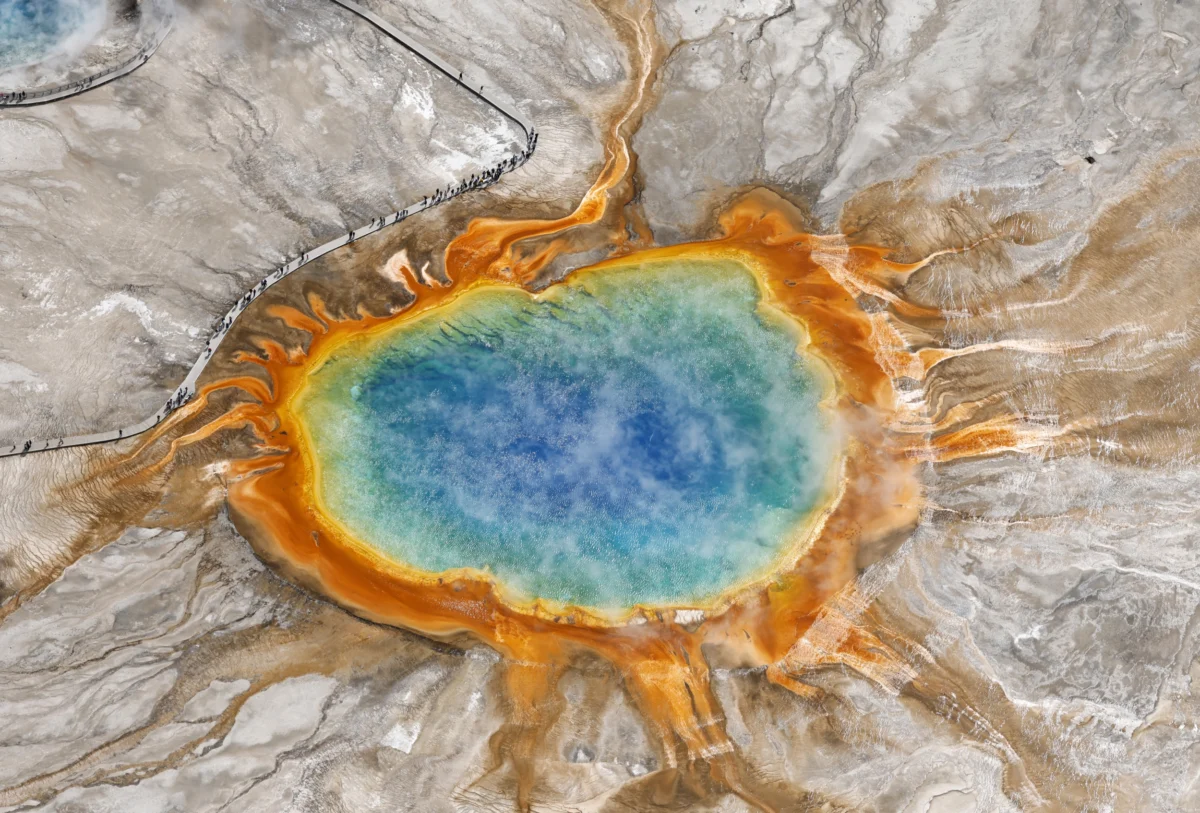
Two tourists have been observed deliberately deviating from designated boardwalks and venturing onto the perilous edges of a volatile hot spring within Yellowstone National Park, Wyoming. This alarming incident, captured on video on July 19, depicts two women walking perilously close to the Grand Prismatic Spring, a renowned yet treacherous geothermal attraction. Park regulations strictly prohibit visitors from leaving established pathways in these areas due to the inherent instability of the ground, which can easily conceal intensely hot water just beneath a thin, deceptive crust. The Grand Prismatic Spring, the park’s largest and most visually spectacular hot spring, boasts an impressive diameter ranging from 200 to 330 feet and plunges to a depth of over 121 feet. Its central waters maintain a staggering temperature of approximately 188 degrees Fahrenheit, a level capable of inflicting severe burns within moments. The seemingly stable ground surrounding Yellowstone’s numerous thermal areas poses a significant and often underestimated hazard, as a misstep can lead to catastrophic burns, severe injuries, or even fatality.
Yellowstone National Park is a testament to the Earth’s dynamic geological processes, resting atop one of the planet’s most extensive and active volcanic systems. This supervolcano fuels an intricate network of hydrothermal features, including an array of hot springs, geysers, mud pots, and fumaroles, each a vivid manifestation of the immense heat and pressure beneath the surface. The very ground that visitors tread upon in these geothermal zones can be deceptively thin, with only a fragile mineral crust separating them from water that is boiling or near-boiling. This precarious geological situation means that what may appear to be a stable, walkable surface can, in reality, be insufficient to support a person’s weight, leading to an immediate and catastrophic plunge into superheated water.
The National Park Service (NPS) issues persistent warnings urging visitors to strictly adhere to marked trails and boardwalks within thermal areas. These designated routes are carefully constructed and maintained to provide a safe viewing experience, minimizing the risk of exposure to the inherent dangers of these environments. Venturing off these paths is not merely a matter of minor transgression; it exposes individuals to unstable ground that can give way without warning, extreme temperatures that can cause rapid tissue damage, and water so dangerously hot that it can prove instantly lethal. Unlike the predictable hazards of conventional bodies of water, the danger in Yellowstone’s thermal areas is often invisible. A seemingly solid mineral crust, formed by the accumulation of dissolved minerals, can conceal water heated to temperatures capable of causing severe and immediate burns, rendering the threat insidious and difficult to perceive.
The consequences of falling into one of Yellowstone’s intensely hot geothermal waters are severe and immediate. Within seconds, a victim can suffer extensive thermal injuries. The primary danger is the rapid destruction of skin and underlying tissue due to the extreme heat. Depending on the temperature of the water and the duration of exposure, burns can range from superficial, affecting only the outermost layers of skin, to deep, full-thickness injuries that damage multiple layers of tissue, including muscle and even bone. The intense pain associated with such burns is often accompanied by shock, a potentially life-threatening physiological response. The victim’s ability to escape the scalding water can be severely compromised by the pain and the physical shock.
Beyond the immediate thermal damage, severe burns disrupt the body’s vital thermoregulatory functions, making it difficult to maintain a stable internal body temperature. This can lead to hypothermia or hyperthermia, both of which can be life-threatening. Furthermore, extensive burns result in significant fluid loss from damaged tissues, leading to dehydration and electrolyte imbalances. If a victim becomes incapacitated by the pain, shock, or the severity of the burns, the risk of drowning becomes a serious secondary concern, particularly in deeper thermal features. Falls can also result in traumatic injuries if the individual strikes rocks, submerged debris, or other hard surfaces during their descent into the water. In the most extreme and tragic circumstances, the confluence of scalding temperatures, severe burns, and potential drowning can prove fatal, underscoring the extreme lethality of these natural phenomena.
Yellowstone’s geothermal features, while undeniably a significant draw for millions of visitors annually, are also among the park’s most hazardous natural environments. The dangers are not confined solely to the hot water itself. Geysers, for instance, can erupt unexpectedly, ejecting superheated water and steam with considerable force. Some acidic pools possess corrosive properties that can cause severe chemical burns upon contact. The ground surrounding these thermal features is often inherently unstable, with subterranean voids and thin crusts that can collapse without any prior warning, leading to sudden falls into hazardous areas. The park’s history is punctuated by tragic incidents that highlight these dangers. In June 2025, a bison, a powerful and typically resilient animal, fell into the Grand Prismatic Spring and was scalded to death, a stark reminder that even the park’s native wildlife is not immune to these risks. While not directly related to violating park rules, another recent incident earlier this month involved a visitor being seriously injured after being thrown into the air by a bison, demonstrating the inherent dangers of wildlife encounters within the park, though this was unrelated to the thermal areas.
The safest and most responsible way to experience the breathtaking beauty of Yellowstone’s hot springs, including the vibrant and mesmerizing Grand Prismatic Spring, is to remain strictly within the confines of designated boardwalks and established overlooks. These meticulously designed viewing areas provide safe vantage points from which to admire the natural wonders without compromising personal safety. Visitors are implored to never cross barriers, step over ropes, or leave marked paths in any of the park’s geothermal areas. Furthermore, it is crucial to avoid any direct contact with thermal water, refrain from standing on fragile ground that may appear solid, and always maintain a respectful and safe distance from all wildlife. The fleeting desire to capture a closer, more dramatic photograph may seem compelling in the moment, but the potential consequences of a single misstep around Yellowstone’s volatile hot springs can be devastating, leading to permanent disfigurement, life-altering injuries, or a tragic loss of life. The park’s natural beauty demands respect, and adherence to safety guidelines is paramount for ensuring a memorable and safe visit.
