
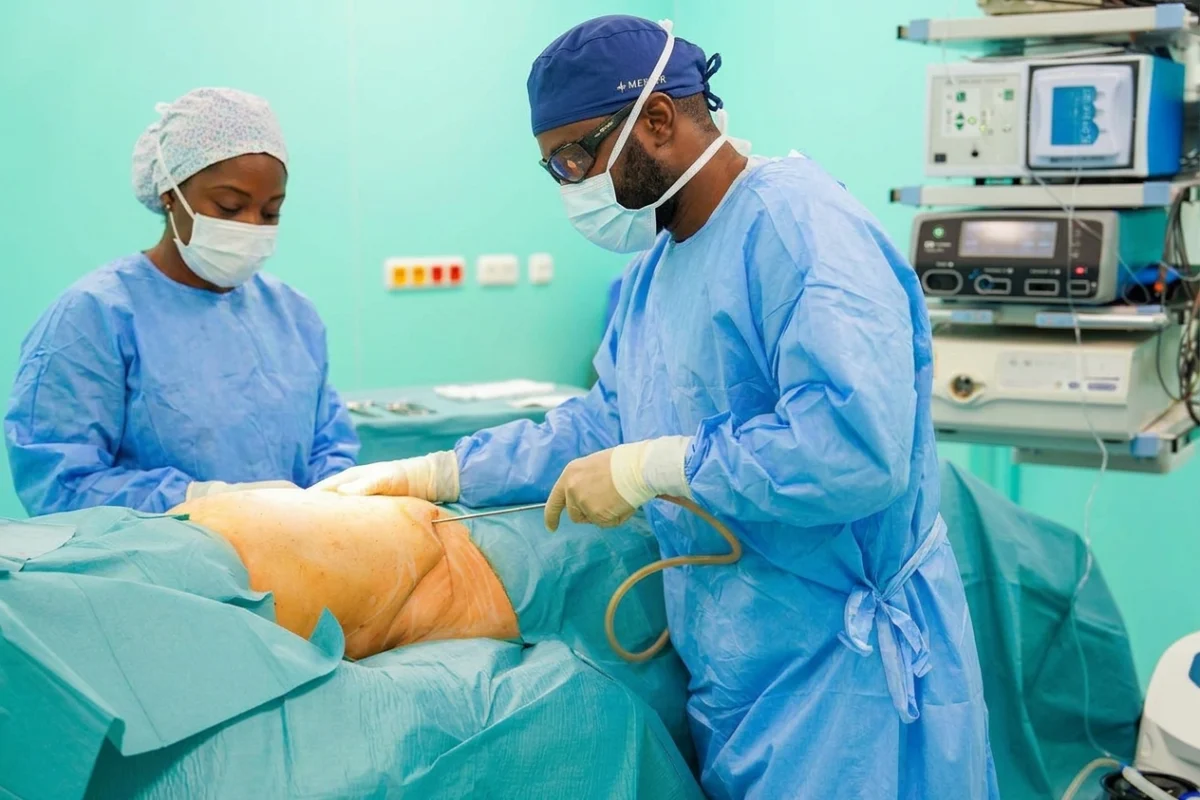
"A remarkable case of a plastic surgeon performing an abdominoplasty on himself, awake under an epidural, highlights both the technical feasibility of complex self-surgery and the profound ethical considerations it raises."
In an unprecedented medical event, a 40-year-old plastic surgeon in Damascus, Syria, made the drastic decision to operate on himself, undergoing an abdominoplasty – commonly known as a tummy tuck – to address significant loose skin following substantial weight loss. This extraordinary act, detailed in the International Journal of Surgery Case Reports, stemmed from repeated refusals by other surgeons due to his complex cardiac history. The procedure, while described as technically feasible, has ignited a robust discussion about medical ethics, patient advocacy, and the boundaries of self-treatment.
From Morbid Obesity to a Self-Performed Cosmetic Procedure
The surgeon’s medical narrative is one of significant health challenges and a subsequent dramatic turnaround. He previously battled morbid obesity, with a Body Mass Index (BMI) of 45.8, alongside a constellation of related health issues including high blood pressure, diabetes, and a history of heavy smoking. A pivotal moment in his health journey occurred four years prior to his self-surgery when he suffered an inferior wall heart attack, necessitating the placement of stents in two coronary arteries.
Following this critical event, the surgeon embarked on a rigorous weight loss regimen, shedding an impressive 55 kilograms (approximately 121 pounds). This brought his weight down from 145 kilograms (about 320 pounds) to 90 kilograms (around 198 pounds), reducing his BMI to 28.4. This substantial weight loss yielded significant health benefits, including improved blood pressure and blood sugar control. However, it also resulted in a considerable amount of loose, sagging abdominal skin. This excess skin, according to the published report, caused him considerable physical discomfort and significant psychological distress, prompting his desire for a cosmetic solution.
The surgeon’s predicament is becoming increasingly common in the contemporary medical landscape. The widespread availability and effectiveness of weight-loss interventions, such as GLP-1 medications and bariatric surgery, have led to a surge in individuals achieving remarkable weight loss. Consequently, a growing number of patients are presenting with the challenge of excess, hanging skin, a common sequela of rapid or significant weight reduction. Cosmetic surgeons are increasingly encountering patients seeking procedures like abdominoplasty to restore a more contoured physique and alleviate the physical and emotional burdens associated with redundant skin.
Despite his personal medical expertise, the surgeon found himself in a challenging position. Several qualified plastic surgeons declined to operate on him, citing his pre-existing cardiac conditions as a prohibitive risk factor for elective surgery. This refusal left him with few options, ultimately leading him to consider the highly unconventional path of performing the surgery on himself.
Navigating the Procedure: Anesthesia and Self-Operation
To mitigate the risks associated with general anesthesia, the surgical team, which included an anesthesiologist, devised a plan to perform the abdominoplasty under a thoracic epidural. Ropivacaine, a local anesthetic chosen for its favorable cardiac profile, was administered to numb the surgical area, effectively avoiding the systemic effects of general anesthesia. The surgeon was admitted to the hospital the day before the procedure. Prior to the epidural, he received intravenous fluids and ondansetron, an anti-nausea medication. His initial vital signs were recorded as blood pressure of 140/85 and a pulse of 74. The abdominal skin was further anesthetized with lidocaine mixed with adrenaline to minimize discomfort and bleeding. In a crucial safeguard, hospital administrators arranged for another plastic surgeon to be present, ready to intervene in the event of any unforeseen complications.
The surgeon then proceeded to perform a standard abdominoplasty on himself. The procedure involved making an incision along the lower abdominal crease, freeing the umbilicus (belly button), lifting the abdominal skin and underlying fat up to the sternum, excising the excess tissue, and then repositioning the navel. Notably, the surgeon performed the operation while in a sitting position. The authors of the report observed that this posture can reduce venous blood return to the heart, a factor that may have contributed to subsequent physiological responses.
Approximately 20 minutes after the epidural was administered, the surgeon experienced a significant drop in blood pressure to 85/46 and a decrease in heart rate to 48 beats per minute. These episodes, attributed by the authors to the effects of the epidural anesthesia and his seated position, were managed with medications such as atropine and ephedrine, along with additional fluids. He also lay flat for a brief period to aid recovery. Later in the procedure, at the 45-minute mark, he experienced a milder episode of dizziness, with his blood pressure dropping to 100/65. This was also resolved by lying flat for a few minutes. Despite these physiological fluctuations, the authors emphasized that neither episode significantly interfered with the surgical progression.
Following the successful completion of the abdominoplasty, the surgeon was discharged from the hospital just six hours later. He returned to work within five days and had his surgical staples removed on the tenth day post-operation. The published report includes before-and-after photographs, but it does not specify the duration of the surgery, the volume of tissue removed, or the amount of blood loss. Furthermore, follow-up beyond the initial ten-day period was not detailed.
Ethical Stances and the Implications for Patient Care
The act of self-surgery, while exceedingly rare, has historical precedents, often driven by dire necessity. The authors reference the legendary cases of Leonid Rogozov, a Soviet physician who famously removed his own appendix in Antarctica in 1961, and Dr. Jerri Nielsen, who performed a breast tumor biopsy on herself during a similar isolated posting. Earlier still, Dr. Evan O’Neill Kane of Pennsylvania demonstrated the efficacy of local anesthesia by operating on his own appendix in 1921. However, the Damascus surgeon’s case stands apart as it was an elective, cosmetic procedure, undertaken not in an emergency but by choice.
The authors of the report acknowledge that this self-performed surgery contravened established professional ethical standards. They cite the World Medical Association’s Declaration of Geneva and the American Medical Association’s (AMA) code of medical ethics. The AMA’s opinion on physicians treating themselves explicitly warns against the potential for personal involvement to impair a physician’s objectivity. It generally limits self-treatment to emergency situations, isolated settings where no other medical professional is available, or for minor, short-term ailments. The report highlights that physicians who engage in self-treatment risk compromised judgment, inadequate oversight, and the inherent conflict of simultaneously playing the roles of both physician and patient.
Beyond the ethical implications for the individual surgeon, the authors use this case to advocate for a broader re-evaluation of how patients with significant medical histories are assessed for elective cosmetic surgery. They argue that individuals with complex medical backgrounds should not be automatically disqualified from procedures like abdominoplasty, provided a thorough and comprehensive anesthesia consultation is conducted. They call for the development of evidence-based guidelines for managing such patients, drawing on the expertise of anesthesiology, surgery, and psychology, rather than resorting to blanket refusals. The report also stresses the importance of institutional safeguards to prevent physicians from undertaking self-surgery outside of genuine emergencies, concluding that the potential harms and ethical breaches associated with such actions far outweigh any perceived individual benefit.
This singular case, while extraordinary, cannot definitively settle the ongoing debate surrounding the management of patients with cardiac conditions undergoing elective procedures. Abdominoplasty remains a major surgical undertaking. The American Society of Plastic Surgeons outlines ideal candidates as being in good physical health, maintaining a stable weight, and being non-smokers. MedlinePlus lists potential risks associated with tummy tucks, including excessive scarring, skin loss, nerve damage, and fluid accumulation, in addition to the general risks inherent in any anesthetic procedure. Individuals with pre-existing heart disease who are contemplating any elective surgery are strongly advised to engage in detailed discussions with their cardiologist and a board-certified surgeon to ensure a thorough understanding of the risks and benefits.
