
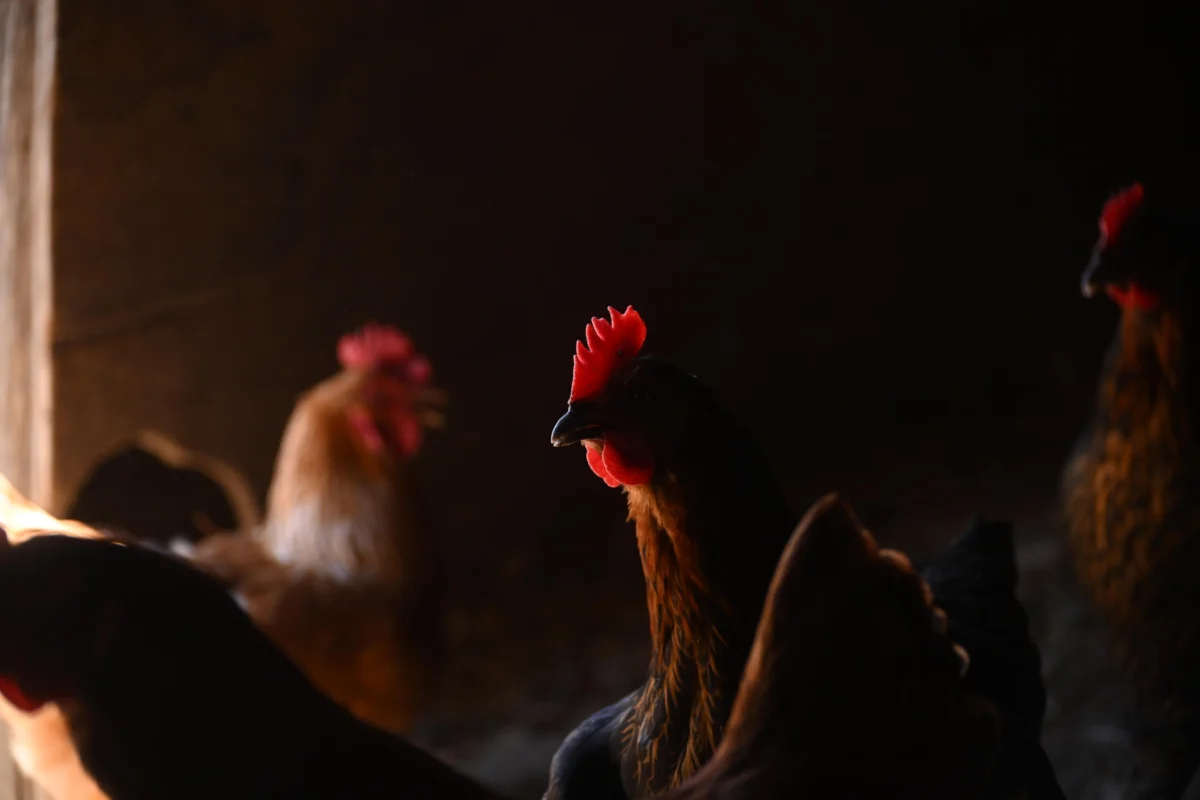
"Even healthy-looking backyard poultry can carry and spread Salmonella, posing a significant risk, particularly to young children, with some infections showing potential antibiotic resistance."
The Centers for Disease Control and Prevention (CDC) has officially declared the end of the 2026 backyard poultry-associated Salmonella outbreaks. This multi-state investigation, spanning 46 states and Puerto Rico, ultimately resulted in 1,253 reported illnesses, 256 hospitalizations, and tragically, two fatalities. The final report, released on September 24th, highlights the persistent threat posed by Salmonella transmission from domestic fowl, even from birds that appear outwardly healthy. This extensive outbreak underscores the critical need for public awareness and stringent hygiene practices for individuals interacting with backyard poultry, especially in light of emerging concerns about antibiotic resistance in the pathogen.
The final tally of 1,253 illnesses makes this the second-largest backyard poultry Salmonella outbreak recorded by the CDC, surpassed only by the 2020 outbreak which sickened 1,722 individuals. This concerning trend indicates a growing public engagement with backyard poultry, coupled with a persistent risk of zoonotic disease transmission. Children under the age of five constituted a significant portion of those affected, accounting for 22% of all reported cases. This demographic is particularly vulnerable due to their developing immune systems and their tendency to engage in behaviors, such as hand-to-mouth contact, that increase exposure risk.
The CDC’s investigation, which began in April 2026, initially focused on a single strain, Salmonella Saintpaul, identified in 34 illnesses across 13 states, with a disproportionately high rate of infection among young children (41%). As the investigation broadened, it ultimately encompassed seven distinct Salmonella strains: Altona, Enteritidis, Indiana, Infantis, Kedougou, Mbandaka, and Saintpaul. This expansion underscores the complex nature of outbreaks linked to backyard flocks, where multiple strains can circulate simultaneously.
The period of illness onset for the reported cases spanned from January 20 to August 6, 2026. The age range of affected individuals was broad, from infants under one year to a 99-year-old, with a median age of 36. Among the 812 individuals for whom detailed information was available, a substantial 256, or 32%, required hospitalization. This high hospitalization rate underscores the severity of some Salmonella infections and the potential for serious complications.
The investigation’s final report revealed that some of the Salmonella strains identified in this outbreak exhibited predicted resistance to commonly used antibiotics. Genetic analysis of bacteria isolated from patients indicated that 185 samples were predicted to be not fully susceptible to ciprofloxacin, a first-line antibiotic for Salmonella infections. Additionally, smaller numbers of samples showed predicted resistance to ampicillin (eight samples) and ceftriaxone (six samples). While fosfomycin and tetracycline also showed instances of predicted resistance, a significant portion of samples (419) displayed no predicted resistance. The CDC noted that this potential for antibiotic resistance could complicate treatment, potentially necessitating alternative antibiotic choices for some infected individuals. While most Salmonella infections resolve without antibiotic intervention, vulnerable populations, including young children, the elderly, and immunocompromised individuals, are at higher risk of severe illness and may require medical treatment.
The two reported deaths were attributed to infections in Georgia and Washington. These fatalities serve as a stark reminder of the potentially life-threatening consequences of Salmonella infection, particularly in vulnerable individuals.
The CDC emphasizes that the conclusion of an official investigation does not equate to the elimination of risk. Backyard poultry, regardless of their appearance or perceived cleanliness, can harbor Salmonella bacteria. These germs can be shed in feces and contaminate feathers, feet, cages, bedding, feed, and the surrounding environment. Transmission to humans typically occurs through direct contact with the birds or their environment, followed by touching the mouth. Young children are particularly susceptible due to their exploratory behaviors and less developed hand hygiene habits. In the Saintpaul strain investigation, a significant majority of patients (81%) reported contact with chicks or chickens, and 44% with ducklings or ducks. Notably, among those who specified duck breeds, Pekin ducks were frequently implicated.
A significant number of affected individuals acquired their poultry from agricultural retail stores, while others obtained them through personal connections, hatcheries, or local farms. The CDC linked the outbreak strains to eight hatcheries but did not publicly disclose their identities.
The persistent presence of Salmonella in backyard poultry populations necessitates ongoing public health vigilance. The CDC’s comprehensive guidance for backyard poultry owners is crucial for mitigating risks. Key recommendations include rigorous handwashing with soap and running water immediately after handling birds or their living areas, and ensuring thorough handwashing for children. The CDC strongly advises that children younger than five years old should not handle chicks, ducklings, or other poultry. Furthermore, the agency discourages kissing or cuddling birds, consuming food or beverages in poultry living spaces, and allowing poultry inside the home. The presence of live poultry in schools and childcare facilities with young children under five is also not recommended.
Practical measures for preventing contamination include designating separate footwear for use in the coop and leaving it outside the home. Cleaning of equipment, such as feeders and waterers, should be conducted outdoors. Proper egg handling is also paramount; cracked eggs should be discarded, and all eggs should be refrigerated after collection and cooked thoroughly until both the yolk and white are firm.
Salmonella infection symptoms typically manifest between six hours and six days after exposure and can persist for four to seven days. Common symptoms include diarrhea, abdominal cramps, and sometimes nausea, vomiting, or headache. The CDC advises seeking medical attention for diarrhea or vomiting that lasts more than two days, the presence of bloody stools, a fever exceeding 102 degrees Fahrenheit, or signs of dehydration, such as reduced urination, dry mouth, or dizziness. Dehydration can progress rapidly in young children, requiring close parental observation.
While the 2026 outbreak investigation is officially closed, the CDC reiterates that backyard poultry can serve as a source of Salmonella transmission at any time. Consistent adherence to fundamental public health measures, including diligent handwashing, keeping young children away from poultry, and informing healthcare providers about any recent contact with birds, remains the most effective strategy for protection against these persistent zoonotic threats. The findings regarding potential antibiotic resistance also highlight the growing public health imperative to monitor and address antimicrobial resistance in foodborne pathogens.
