
"While Irish Sea moss offers a dense profile of essential minerals, its transition from a traditional folk remedy to a multi-billion-dollar wellness staple currently outpaces the rigorous clinical evidence required to validate its mainstream health claims."
The global wellness industry is frequently punctuated by the emergence of "superfoods" that promise transformative health benefits, often propelled by celebrity endorsements and social media virality. Irish Sea moss, a species of red algae, has recently ascended to the forefront of this movement, with market projections estimating its value will reach nearly $4 billion by the end of the decade. As consumers increasingly pivot toward plant-based supplementation, understanding the intersection of traditional use, nutritional density, and the current limitations of clinical research is essential for making informed dietary choices.
The Rise of a Marine Staple
Every few years, a specific natural product captures the collective imagination of the health-conscious public. Irish Sea moss, known scientifically as Chondrus crispus, is the latest to experience this "health halo" effect. While it may seem like a modern fad, this seaweed has deep historical roots, particularly in Ireland, where it was utilized as a source of nutrients during the potato famine of the 1840s. Today, it is no longer a survival food but a luxury wellness additive. Advertisements and influencers tout its ability to support everything from joint mobility and skin elasticity to immune resilience.
The economic data underscores this surge in popularity. The global sea moss market is on a trajectory to hit an estimated $3.99 billion by 2030. This growth is driven by a broader consumer shift toward "functional foods"—ingredients that offer health benefits beyond basic nutrition. However, as the market expands, the gap between marketing claims and scientific validation becomes a critical area of investigation.
What is Irish Sea Moss?
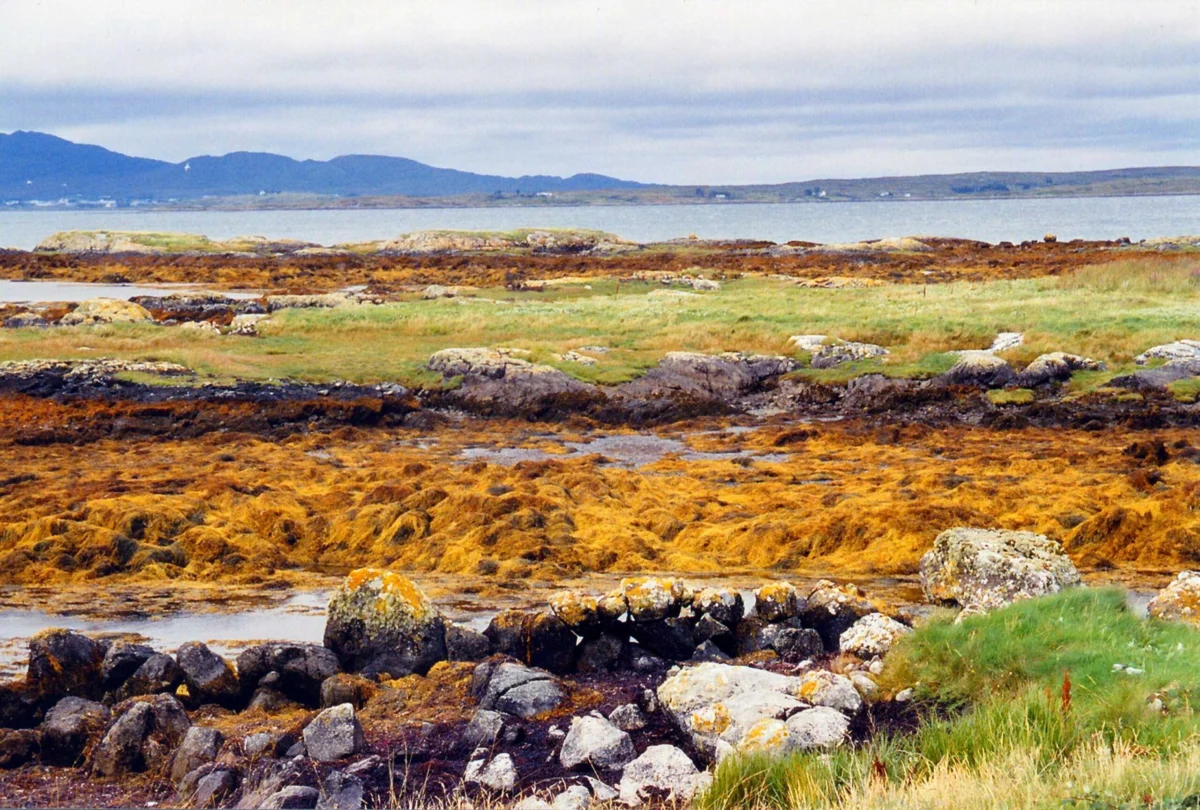
Irish Sea moss is a type of red seaweed or algae found predominantly along the rocky Atlantic coasts of North America and Europe, including the United States, Canada, and Ireland. In New England, it is a frequent sight for coastal harvesters. While sea moss can appear in various hues—including green, yellow, and purple—the species Chondrus crispus belongs specifically to the red algae family.
In the industrial world, this algae is perhaps best known as the primary source of carrageenan, a polysaccharide used extensively as a thickening and stabilizing agent in everything from almond milk and ice cream to toothpaste and infant formula. However, the wellness community focuses on the whole plant or its gelatinous "gel" form, rather than the isolated extract. Today, consumers can find Irish Sea moss in an array of formats: raw dried fronds, powders, capsules, and even fruit-flavored gummies.
The Nutritional Profile: A Mineral Powerhouse
The primary draw of Irish Sea moss is its concentrated mineral content. Johna Burdeos, RD, a registered dietitian, notes that the algae is a significant source of iodine, iron, magnesium, phosphorus, zinc, and copper.
- Iodine: This is perhaps the most critical nutrient found in sea moss. Iodine is essential for thyroid function, as the thyroid gland uses it to produce hormones that regulate metabolism, bone health, and immune response.
- Magnesium and Phosphorus: Both minerals play vital roles in bone density and muscle function. Magnesium, in particular, is involved in over 300 biochemical reactions in the human body, including energy production and nervous system regulation.
- Iron: Essential for the production of hemoglobin, iron helps transport oxygen throughout the blood. For those on plant-based diets, finding bioavailable sources of iron is a constant priority.
- Antioxidants: Irish Sea moss contains various phytochemicals that act as antioxidants, which help the body neutralize free radicals—unstable molecules that can cause cellular damage and contribute to chronic inflammation.
The Science: Hype vs. Human Data
Despite the impressive list of nutrients, the scientific community remains cautious. "There are not many studies showing the effects of sea moss on human health," explains Burdeos. While in vitro (test tube) and animal studies have shown that extracts of Chondrus crispus may possess anti-inflammatory and neuroprotective properties, these results do not automatically translate to humans.
Much of the evidence cited by proponents is actually extrapolated from general seaweed research. Seaweed, as a broad category, has been studied more extensively than Irish Sea moss specifically. For instance, the high fiber content in most seaweeds is known to act as a prebiotic, supporting the growth of healthy gut bacteria. Similarly, the link between seaweed consumption and reduced heart disease risk is well-documented in populations with high-seaweed diets, such as those in Japan. While it is logical to assume Irish Sea moss shares these benefits, clinical trials specifically targeting Chondrus crispus supplements in humans remain scarce.

Assessing the Risks: Iodine and Heavy Metals
As with any supplement, more is not necessarily better. The risks associated with Irish Sea moss are largely tied to its environment and its most prominent nutrient: iodine.
The Iodine Paradox
While the body requires iodine, excessive intake can lead to thyroid dysfunction, including hyperthyroidism or goiters. The National Institutes of Health (NIH) recommends a daily intake of approximately 150 mcg for adults. A single serving of seaweed can contain around 116 mcg. If a person is consuming sea moss alongside other iodine-rich foods like iodized salt, dairy, or fish, they could quickly approach the upper tolerable limit of 1.1 milligrams per day.
Heavy Metal Bioaccumulation
Seaweeds are highly efficient at absorbing minerals from their environment, but they do not discriminate between "good" minerals and toxic ones. "Seaweed can absorb heavy metals from the waters where it grows," Burdeos warns. This includes lead, arsenic, mercury, and cadmium. Chronic exposure to these metals is linked to kidney damage, liver issues, and increased cancer risk.
The challenge for consumers is that the nutrient and contaminant levels in sea moss are highly variable, depending on the seasonality, water temperature, and the specific ecology of the harvesting location. Furthermore, because the FDA does not regulate supplements with the same rigor as pharmaceuticals, there is no universal heavy-metal limit for edible seaweed products.
Navigating the Supplement Market
For those interested in incorporating Irish Sea moss into their routine, the lack of FDA oversight makes "buyer beware" the golden rule. The FDA has food safety policies, but it does not approve supplements for safety or efficacy before they hit the shelves.
Burdeos recommends looking for brands that utilize third-party lab testing. Organizations like NSF International, USP, or Informed Choice provide independent verification that what is on the label matches what is in the bottle. More importantly, these tests check for the presence of impurities like heavy metals and harmful bacteria. Transparency is key; reputable companies should be able to provide a Certificate of Analysis (COA) upon request.
Is Supplementation Necessary?
The fundamental question remains: do you actually need Irish Sea moss? From a clinical perspective, there is no such thing as a "sea moss deficiency." While you can be deficient in the minerals it provides, such as magnesium or iodine, these are easily obtainable through a balanced diet.
"If you are already eating a varied diet that includes fruits, vegetables, whole grains, lean proteins, and healthy fats, there is no reason to incorporate a supplement, including Irish Sea moss, unless your doctor advises you to do so," Burdeos says. For most people, a diet rich in leafy greens, nuts, seeds, and occasional seafood provides all the micronutrients found in sea moss without the risk of heavy metal contamination or iodine overdose.
However, for those who choose to proceed, moderation is vital. A safe adult serving is generally considered to be about four grams per day. Before starting any new supplement regimen, individuals—especially those with pre-existing thyroid conditions or those who are pregnant—should consult with a healthcare professional to ensure the supplement will not interfere with medications or exacerbate underlying health issues.
Conclusion
Irish Sea moss represents a fascinating intersection of ancient maritime tradition and modern wellness culture. While it is undeniably rich in essential minerals and holds potential as an antioxidant-rich functional food, it is not a panacea. As the market grows toward its $4 billion peak, consumers should approach the "superfood" label with a healthy dose of skepticism, prioritizing whole-food nutrition and third-party verification over social media trends. The ocean offers many treasures, but in the case of Irish Sea moss, science is still catching up to the tide of public enthusiasm.
