
"Fashion is what you make it, but style is how you feel; true masculinity is found in the confidence to prioritize personal comfort over the pressure of fleeting seasonal trends."
The collaboration between legendary supermodel Tyson Beckford and the global footwear brand Ugg marks a significant pivot in the landscape of men’s fashion, moving away from the purely aesthetic toward a fusion of archival heritage and functional luxury. By reviving the Birch Boot II—a rugged, lug-soled silhouette from 1999—the "Born to Feel" campaign challenges the stereotypical perception of Ugg as a brand limited to sheepskin loungewear, instead positioning it as a cornerstone of the modern man’s outdoor and lifestyle wardrobe.
The Evolution of an Icon: Tyson Beckford and the "Born to Feel" Campaign
Tyson Beckford, now 55, remains one of the most recognizable faces in the history of modeling. Emerging in the 1990s as the face of Ralph Lauren’s Polo line, Beckford broke barriers as one of the first Black male supermodels to achieve global "A-list" status. His career has been defined by a rugged, athletic masculinity that perfectly aligns with the current direction of menswear—a sector increasingly focused on "quiet luxury" and the "gorpcore" aesthetic, where outdoor utility meets high-fashion sensibilities.
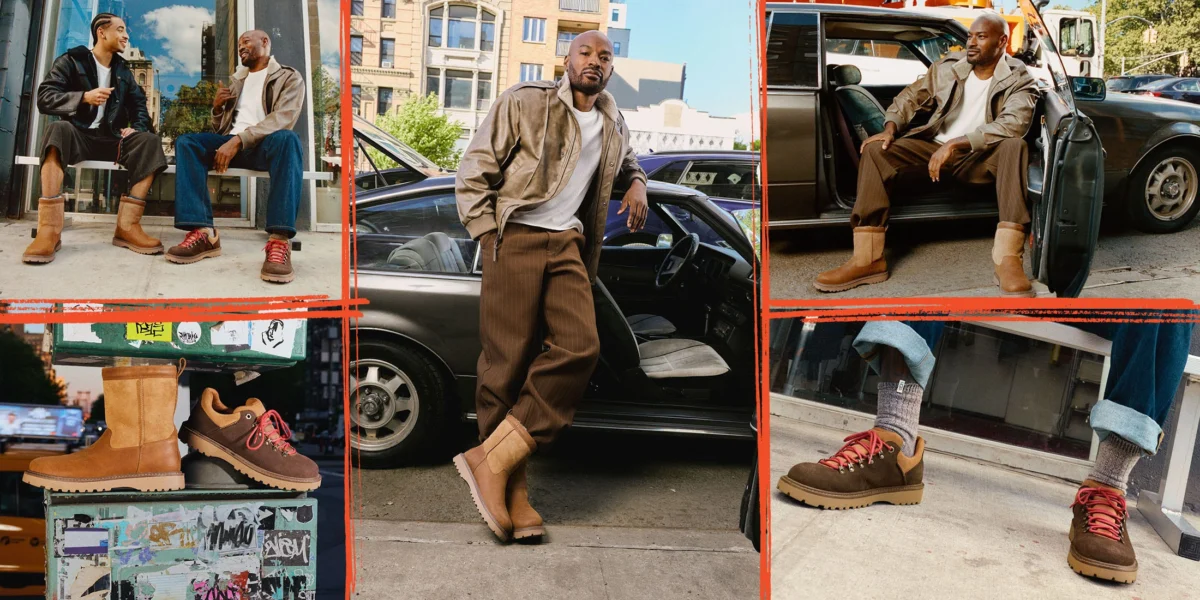
In Ugg’s "Born to Feel" campaign, Beckford serves as more than just a model; he acts as a bridge between the high-octane fashion of the 1990s and the comfort-first mentality of the 2020s. The campaign highlights the Birch Boot II, a design pulled directly from Ugg’s 1999 archives. This revival is timely, as the fashion industry is currently obsessed with "Y2K" aesthetics, yet the Birch Boot II avoids the flashier pitfalls of that era. With its rich chestnut uppers and a heavy-duty lug sole, the boot offers a utilitarian alternative to the brand’s classic soft-soled slippers, signaling that Ugg is ready to compete in the rugged boot category alongside heritage brands like Timberland or Red Wing.
The Birch Boot II: Merging Archive and Utility
The decision to bring back a 25-year-old design speaks to the cyclical nature of fashion and the enduring appeal of functional footwear. The Birch Boot II features a chunky, pull-on construction that eliminates the fuss of laces while providing the structural integrity required for autumn and winter weather. Its aesthetic is deeply rooted in the "workwear" trend that has dominated menswear for several seasons.
Styling such a boot requires a balance of proportions. In the campaign, Beckford demonstrates a "rom-com hero" vibe—a look that is approachable yet elevated. By tucking roomy, pinstriped brown trousers into the boots and pairing them with a simple white T-shirt and a relaxed taupe jacket, Beckford showcases a foolproof autumn uniform. This ensemble works because it plays with textures and tones: the ruggedness of the leather and rubber sole is softened by the drape of the trousers and the neutrality of the jacket. It is a lesson in effortless dressing: choosing pieces that feel good on the body and look cohesive without appearing over-engineered.
The Philosophy of Personal Style: Beyond the Trends
When asked about the common mistakes men make when getting dressed, Beckford’s response is rooted in a veteran’s perspective of the industry. He posits that there are no "wrongs" in fashion because style is inherently subjective. This philosophy is a departure from the rigid "style rules" of previous decades. In an era where social media often dictates a homogenized look, Beckford encourages men to lean into what makes them feel comfortable.
His own "off-duty" uniform—workout shorts and a tank top for relaxation, or jeans and Air Jordans for errands—reflects a life lived in the public eye where comfort has become the ultimate luxury. Even his occasional choice of cowboy boots suggests a willingness to experiment with different archetypes of masculinity. This fluidity is what has allowed Beckford to remain relevant for over thirty years; he isn’t chasing a trend, he is inhabiting a lifestyle.

The Cultural Resonance of "Hoochie Daddy" Shorts
One of the more lighthearted yet culturally relevant aspects of the conversation around Beckford’s style is his embrace of "hoochie daddy" shorts—a term popularized on social media to describe men’s shorts with an inseam of five inches or less. While younger generations may view this as a new trend, Beckford points out its historical roots. Growing up in the 1970s, short shorts were the standard for men’s athletic and casual wear.
The return of the shorter inseam is a significant shift in menswear, moving away from the long, baggy board shorts of the early 2000s. Beckford’s take on this trend is practical: "You can’t skip leg day." The shorter length celebrates the male physique and reflects a broader cultural shift toward body positivity and fitness. For Beckford, being a father didn’t necessitate a move toward "dad style" in the traditional sense; rather, he maintained his commitment to the athletic aesthetic he has championed since his youth.
Lessons from the 1990s: What to Leave Behind
Reflecting on his decades in the industry, Beckford is quick to identify the trends that should remain in the past. Specifically, he cites the 1990s obsession with shiny spandex shirts paired with oversized, baggy jeans and Timberland boots. This era was defined by a jarring contrast in silhouettes—extremely tight on top and extremely loose on the bottom.
This "shiny spandex" phase was a byproduct of the burgeoning tech-wear movement of the late 90s, where synthetic fabrics were seen as futuristic. However, from a modern perspective, the look lacks the timelessness of natural fibers like wool, cotton, and shearling. Beckford’s rejection of this trend underscores a broader movement in menswear toward "honest" materials and balanced silhouettes. Today’s style favors a more harmonious flow between the upper and lower body, emphasizing quality of construction over the gimmickry of synthetic sheen.
The Great Ugg Debate: To Sock or Not to Sock?
Perhaps the most divisive topic in the world of Ugg footwear is whether they should be worn with socks. The brand’s original intent, rooted in Australian surf culture, was for the sheepskin to be worn against bare skin. Genuine shearling is a thermoregulator; it wicks away moisture and keeps feet at body temperature regardless of the external environment.
Beckford firmly sides with the purists. "I normally don’t wear socks with my Uggs," he admits, citing the superior comfort of the furry interior. This choice isn’t just about feel; it’s about the technical performance of the material. When a sock is introduced, it creates a barrier that can interfere with the shearling’s ability to breathe, often leading to overheating. For those looking to emulate Beckford’s rugged-meets-relaxed aesthetic, going sockless in a pair of Birch Boot IIs is the ultimate endorsement of the brand’s "Born to Feel" mantra.
Conclusion: The Future of Masculine Style
Tyson Beckford’s partnership with Ugg is a testament to the brand’s successful rebranding and Beckford’s enduring influence. By highlighting the Birch Boot II, the campaign successfully argues that comfort does not have to come at the expense of a "tough" or "masculine" aesthetic.
As menswear continues to evolve, the focus is shifting away from what looks good on a screen to what feels good in daily life. Beckford’s insights—from the importance of leg day to the rejection of ’90s spandex—provide a roadmap for the modern man. Style is not about following a manual; it is about the confidence to wear a revived 1999 archive boot with pinstriped trousers, the bravery to wear short shorts, and the wisdom to know that sometimes, the best way to wear a boot is with nothing but the shearling against your skin. In the end, the "guarantees" of life may include death and taxes, but as Beckford proves, timeless style is a very close third.
