
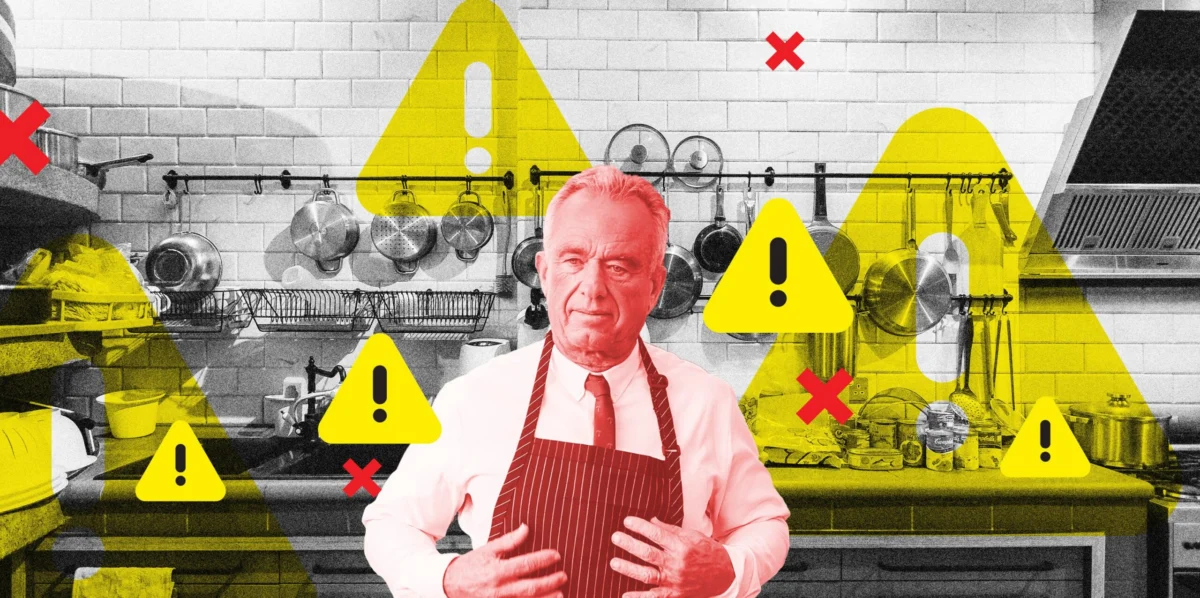
"While promoting home cooking is vital for public health, the efficacy of government-led initiatives is undermined when they prioritize nutritional misinformation and ‘wellness’ trends over evidence-based science and the economic realities of low-income Americans."
The recent launch of "The Real Food Show," a YouTube-based culinary series produced by the U.S. Department of Health and Human Services (HHS) under the leadership of Secretary Robert F. Kennedy Jr., represents a significant shift in federal health communication. By utilizing high-production digital media to advocate for home-cooked, "real" food, the initiative seeks to combat the rising tide of chronic disease and obesity in the United States. However, a closer examination by nutritional professionals reveals a troubling disconnect between the show’s populist messaging and the established body of nutritional science. While the program’s stated goal is to provide accessible, healthful meal solutions for under $5 a serving, the content frequently leans on controversial dietary theories—such as the demonization of seed oils and shelf-stable foods—that may ultimately complicate, rather than simplify, the public’s relationship with nutrition.
The Rise of the "Real Food" Narrative in Federal Policy
For decades, federal health guidelines have been disseminated through dense documents and static infographics like the Food Pyramid or MyPlate. Under Secretary Robert F. Kennedy Jr., the HHS has signaled a preference for more direct, lifestyle-oriented engagement. "The Real Food Show" is the flagship of this strategy, featuring Kennedy alongside celebrity chefs to demonstrate recipes that emphasize whole ingredients. The first two episodes—featuring Chef Andrew Gruel of the Slapfish franchise and Food Network veteran Geoffrey Zakarian—focus on wild salmon cakes and French omelettes, respectively.
On the surface, the show fills a critical void. Millions of Americans live in "food deserts" or lack the culinary literacy required to prepare fresh meals. By showcasing techniques for cooking inexpensive proteins like eggs and canned fish, the HHS aims to democratize healthy eating. Yet, as health experts scrutinize the episodes, they find a pattern of "wellness" rhetoric that often contradicts peer-reviewed evidence and ignores the socioeconomic barriers faced by the very population the show purports to serve.
The Seed Oil Debate: Science vs. Rhetoric
One of the most prominent themes in the series is a vigorous opposition to seed oils (such as canola, soybean, and sunflower oils). In the debut episode, Chef Gruel characterizes these oils as "addictive" and links them to personal gastrointestinal issues, suggesting that a "normalized ratio" of omega-3 to omega-6 fatty acids is the key to metabolic health.
However, the clinical consensus provides a different perspective. Large-scale observational studies and randomized controlled trials have consistently shown that polyunsaturated fats, including the linoleic acid found in seed oils, are associated with a lower risk of heart disease when they replace saturated fats. The claim that seed oils are addictive lacks neurobiological evidence; while hyper-palatable ultra-processed foods (which often contain seed oils, sugar, and salt) can trigger reward centers in the brain, the oils themselves do not possess addictive properties in isolation.
Furthermore, the show’s promotion of beef tallow as a superior cooking fat raises concerns among cardiologists. Beef tallow is high in saturated fat, which has a well-documented relationship with elevated LDL cholesterol—a primary risk factor for atherosclerotic cardiovascular disease. By prioritizing "ancestral" eating trends over established lipid science, the program risks guiding viewers toward dietary choices that could exacerbate the heart disease epidemic it claims to be fighting.
The Misunderstanding of Ultra-Processed and Shelf-Stable Foods
The series also takes a hardline stance against ultra-processed foods (UPFs) and shelf-stable ingredients. Chef Zakarian suggests that "shelf-stable" is synonymous with "nutrient unstable," advising viewers to "run" from products designed for longevity. This broad-brush condemnation ignores the nuance of food processing.
The term "ultra-processed" is a broad category under the NOVA classification system. While it includes sodas and packaged snacks, it also encompasses nutrient-dense staples like tofu, fortified high-fiber cereals, and protein powders. By labeling the entire category as "addictive" or "toxic," the show may inadvertently discourage the consumption of affordable, healthy options.
Similarly, the dismissal of shelf-stable foods ignores the realities of food security. Canned beans, frozen vegetables, jarred tomato sauces, and dried grains are processed specifically to lock in nutrients at their peak and extend their usability. For a family living on a tight budget or with limited transportation, these items are not "chemicals"; they are essential pillars of a balanced diet. Shaming these ingredients creates a "perfectionist" barrier to entry for healthy eating, suggesting that if food isn’t fresh from a Huntington Beach kitchen, it isn’t worth eating.
The Economic Paradox of "Affordable" Cooking
Perhaps the most significant critique of "The Real Food Show" lies in its financial calculations. The show frequently displays on-screen graphics suggesting that meals cost roughly $3.00 to $5.00 per serving. However, these figures often reflect "unit pricing" (the cost of a single tablespoon of oil) rather than the "upfront cost" required to stock a kitchen.
To follow the recipes presented, a consumer must first purchase bottles of extra virgin olive oil, avocado oil, and specialized mayonnaise. For a low-income family, the initial $40 to $60 investment required to buy these "pantry staples" can represent a significant portion of their monthly food budget. The USDA Thrifty Food Plan, which serves as the basis for SNAP (Supplemental Nutrition Assistance Program) benefits, allots approximately $2.75 to $3.00 per person per meal. When a recipe calls for "regenerative" eggs—which can cost upwards of $8.00 per dozen—it moves beyond the reach of the average American.
Chef Zakarian’s French omelette, for example, requires a dozen eggs for four servings (utilizing eight whole eggs and four additional yolks). While he claims the cost is $3.15 per serving, the reality of purchasing premium, regenerative eggs makes the meal significantly more expensive than traditional protein sources. This "wealth-coded" approach to nutrition can alienate the 13% of U.S. households that are food insecure, reinforcing the myth that healthy eating is an exclusive luxury.
Public Health Implications and the Path Forward
When a federal agency like the HHS produces content, it carries the weight of governmental authority. Viewers often perceive this advice not as a personal opinion, but as a sanctioned medical recommendation. When that content includes 32 factual errors or unsubstantiated claims in just two episodes—as identified by clinical dietitians—it risks eroding public trust in health institutions.
The "Make America Healthy Again" movement has the potential to address the systemic issues of the American food system, such as agricultural subsidies and food marketing to children. However, effective public health policy must be rooted in the "Social Determinants of Health." This means acknowledging that people eat what they can afford, what they have time to cook, and what is available in their neighborhoods.
A truly inclusive "Real Food Show" would emphasize the nutritional value of non-organic canned beans, the safety of standard supermarket eggs, and the utility of frozen produce. It would teach viewers how to read labels to avoid excess sodium and added sugars without fear-mongering about "chemicals" or "addiction."
Conclusion
The debut of "The Real Food Show" highlights a commendable desire to bring health education into the digital age. Promoting home cooking and whole foods is a necessary step in addressing the nation’s chronic health crisis. However, the program currently suffers from a "credibility gap." By blending helpful culinary instruction with fringe nutritional theories and unrealistic economic projections, the series risks becoming a platform for "wellness" elitism rather than a tool for public empowerment.
For federal health initiatives to be successful, they must bridge the gap between the science of the laboratory and the reality of the American dinner table. Nutrition is not merely a matter of "willpower" or "real food" vs. "fake food"; it is a complex intersection of biology, economics, and access. As the HHS continues its media outreach, the integration of registered dietitians and public health economists into the production process will be essential to ensure that the "real food" being promoted is both scientifically sound and financially attainable for all.
