
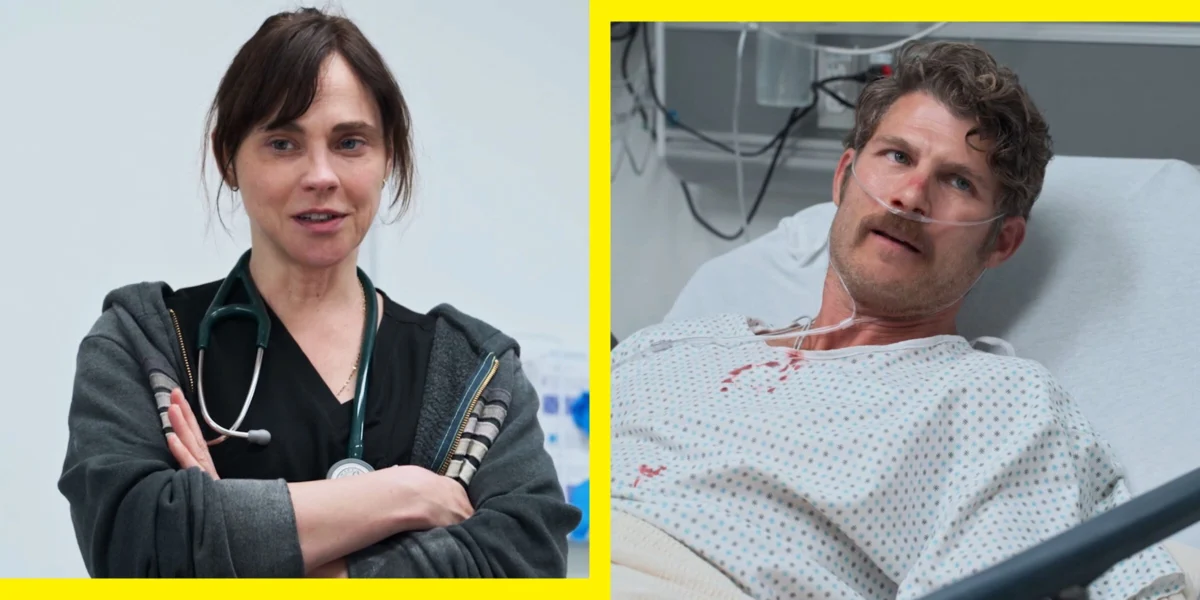
"The emergency department is a high-stakes environment where the line between caregiver and victim is dangerously thin, reflected by the fact that over 80 percent of ER nurses experience physical assault annually."
In the latest episode of the medical drama The Pitt, titled "6:00 P.M.," the narrative shifts from the routine chaos of an urban emergency room to a harrowing exploration of workplace violence. By introducing the internal slang "Code Hula Hoop," the series sheds light on a systemic crisis in modern healthcare: the frequency of physical assaults against frontline staff. This storyline, supported by expert medical commentary, serves as both a dramatic climax for the season and a sobering reflection of the psychological and physical risks inherent in emergency medicine.
The Catalyst: Anatomy of an Assault
The tension in Season 2, Episode 12, "6:00 P.M.," picks up immediately following the cliffhanger of the previous hour. Curtis Larson (played by Travis Van Winkle), a patient initially brought in for what appeared to be simple alcohol intoxication following a golf outing, suffers a violent "confusional awakening." As he emerges from his stupor, he enters a state of acute psychosis, attacking Nurse Emma (Laëtitia Hollard).
The phrase that ripples through the department—"Code Hula Hoop"—is a piece of internal jargon that the show’s protagonist, Dr. Robby (Noah Wyle), and his team recognize instantly. It signals a patient-on-staff assault. The reaction is immediate and practiced: Nurse Dana (Katherine LaNasa) leaps into action, not only as a senior staff member but as a protector of her protégé, Emma. The situation is resolved through a combination of physical restraint and the administration of a sedative, leaving the staff to grapple with the adrenaline and trauma of the encounter.

The Chemistry of Violence: Cocaethylene and Psychosis
One of the most praised aspects of The Pitt is its commitment to clinical accuracy, particularly regarding the physiological triggers of patient aggression. Following the assault, Dr. McKay and the team run toxicology screens on Curtis. While his companion claimed he was merely "overly drunk," the labs reveal a more volatile truth: the presence of both alcohol and cocaine.
In medical terms, the simultaneous ingestion of these substances creates a unique metabolite in the liver known as cocaethylene. Dr. Robert Glatter, an Assistant Professor of Emergency Medicine at Lenox Hill Hospital and advisor for the series, notes that this combination is significantly more toxic than either substance alone. Cocaethylene has a longer half-life and is associated with a marked increase in impulsivity, paranoia, and violent outbursts.
"The show accurately captures a clinical phenomenon known as post-intoxication emergence agitation," Dr. Glatter explains. When patients regain consciousness rapidly, particularly when their system is processing a cocktail of stimulants and depressants, they often experience a "confusional awakening." In this state, the brain’s amygdala—the center for the fight-or-flight response—is hyper-reactive, while the prefrontal cortex—responsible for logic and restraint—remains offline. To the patient, the nurse attempting to check their vitals is not a caregiver, but a perceived threat that must be neutralized.
The Epidemic of Workplace Violence in Healthcare
While the assault on Nurse Emma makes for gripping television, the statistics provided by healthcare professionals suggest that such incidents are a daily reality. According to data cited by Dr. Glatter, the risk faced by nursing staff is staggering. Studies have indicated that in a single year, up to 100 percent of emergency department nurses experience verbal abuse, and approximately 82 percent face physical battery.
This reality challenges the traditional "hero" narrative often seen in medical procedurals. In The Pitt, the aftermath of the assault is not brushed aside to make room for the next "medical mystery." Instead, the show focuses on the "debrief"—a critical clinical and psychological process where Dr. Robby checks in on Dana and Emma. This reflects modern hospital protocols designed to mitigate the long-term effects of workplace trauma.

The episode also enriches the character of Nurse Dana by referencing her history with a Season 1 patient, Doug Driscoll, who had previously punched her in the face. This callback highlights the "cumulative psychological impact" on healthcare workers. For veteran nurses, a "Code Hula Hoop" is rarely an isolated incident; it is often another layer of scar tissue on a career defined by high-stress encounters.
The Institutional Response: Safety and De-escalation
A significant portion of "6:00 P.M." is dedicated to how an institution handles a violent patient once the immediate threat is neutralized. The show highlights the dual role of the Charge Nurse. Dana is depicted as being simultaneously an advocate for the patient’s health and a guardian for her staff. Her anger toward Curtis is palpable, yet she must maintain a professional standard of care while ensuring he is secured and sedated.
Effective management of such incidents requires more than just physical strength; it requires an institutional culture of safety. This includes:
- De-escalation Training: Teaching staff to recognize the early signs of agitation before they escalate into violence.
- Rapid Response Teams: Organized groups of security and medical personnel who can arrive within seconds of a code being called.
- Simulation Training: Preparing staff for the "confusional awakening" scenarios that are common in toxicology cases.
In the case of Curtis Larson, the show avoids the trope of the "misunderstood" patient. Despite his intoxication, the narrative holds him accountable. When he awakens, he is unrepentant, dismissive of the medical staff, and resistant to suggestions of rehabilitation. This sets the stage for a legal consequence that is often missing from medical dramas: the transition from a medical case to a criminal one.
The Legal and Ethical Pivot
As the episode concludes, the medical duty of care for Curtis ends, and the legal repercussions begin. Dr. McKay informs a defiant Curtis that while he may not remember the assault, the hospital has documented the event and contacted law enforcement. The arrival of police officers to take Curtis into custody serves as a powerful statement on the rights of healthcare workers.

For years, violence in the ER was often viewed as "part of the job." However, there has been a growing movement in the real world to prosecute patients who assault medical staff, regardless of their state of intoxication. By showing the officers waiting to take Curtis to "the clink," The Pitt aligns itself with the contemporary push for the Safety from Violence for Healthcare Employees (SAVE) Act and similar legislative efforts aimed at protecting those on the front lines.
Conclusion: The Psychological Toll of the "Frontline"
The "6:00 P.M." episode of The Pitt is more than a story about a golfer who took too many substances; it is a clinical study of the vulnerability of the modern nurse. Through the lens of Emma’s trauma and Dana’s protective fury, the series illustrates that the ER is a place where lives are saved, but also where spirits are often broken.
By integrating the expertise of professionals like Dr. Glatter, the show ensures that the "Code Hula Hoop" is not merely a plot device, but a call to action. It reminds the audience that behind every "heroic" doctor or nurse is a human being navigating a workplace that can, in a heartbeat, turn hostile. As the season progresses, the ripples of this assault will likely continue to affect the team’s dynamics, proving that in the ER, the wounds that aren’t visible are often the hardest to heal.
