
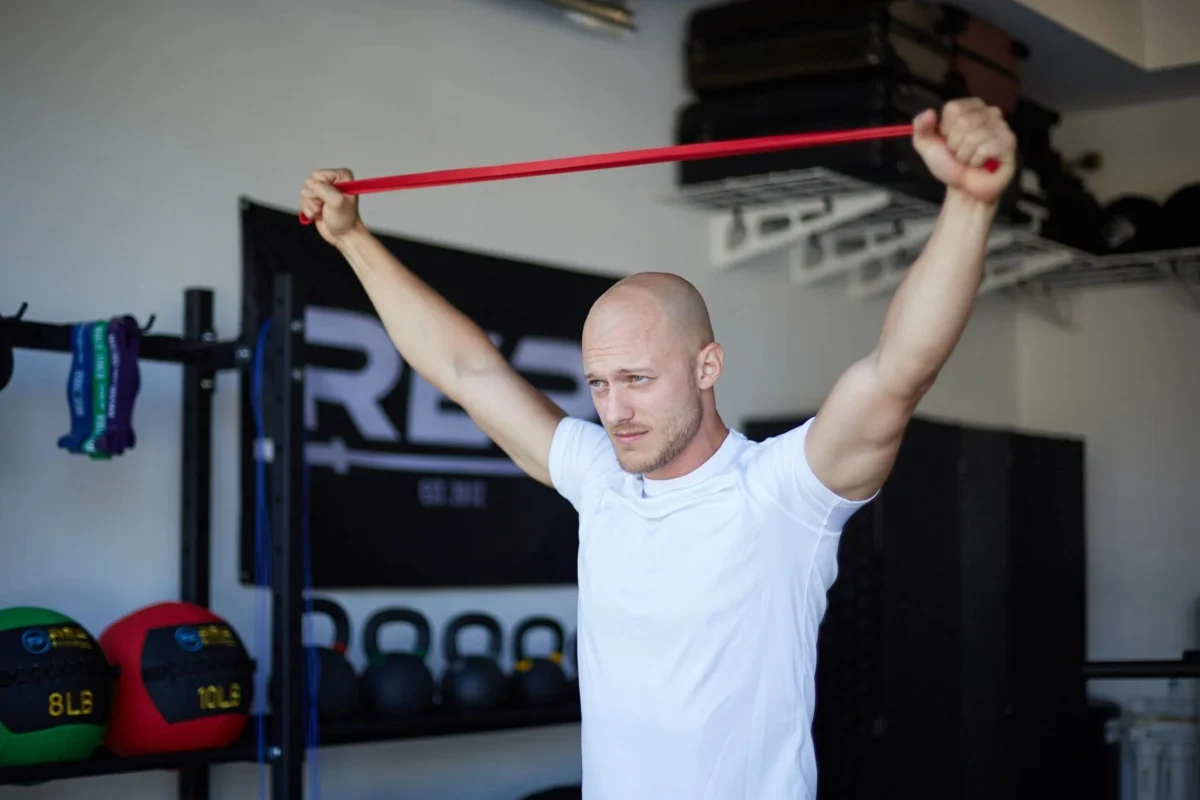
"Modern resistance bands have transcended their origins in rehabilitation to become essential high-performance tools, offering variable tension profiles that challenge the muscle throughout the entire range of motion."

The fitness landscape has undergone a dramatic shift over the last decade, moving away from a reliance on heavy, static machinery toward portable, versatile, and high-efficiency equipment. At the forefront of this movement is the resistance band, a tool once relegated to physical therapy clinics that has now been re-engineered for elite strength and conditioning. By providing variable resistance—where the tension increases as the band is stretched—these tools offer a unique physiological stimulus that traditional free weights cannot replicate, making them indispensable for everything from assisted pull-ups to high-load deadlift reinforcements.
The Engineering of Elasticity: Loop Bands and Longevity
For many lifters, the "looped" band is the gold standard for versatility. Unlike tube bands with handles, looped bands can be anchored to power racks, wrapped around the body, or stood upon for a variety of compound movements. REP Fitness has emerged as a leader in this category by focusing on the material science of the band itself. Their looped bands utilize a layered elastic construction with smoothed edges, a design choice specifically intended to prevent the micro-fraying that eventually leads to snapping.

The tension range offered by REP Fitness—starting at a "3X-Light" five pounds and scaling up to a staggering "X-Heavy" 150 pounds—allows for a concept known as progressive overload. In a traditional gym, this is achieved by adding plates to a bar; with bands, it is achieved by moving to a thicker color-coded band or adjusting the "slack." While their 38-inch length is optimized for assisted pull-ups, experienced users often employ "double-looping" or widening their stance to manage the length during bicep curls or Romanian deadlifts.
In the budget-conscious segment of the market, brands like Leekey have democratized access to this technology. For under $40, these sets often include door anchors, turning any standard door frame into a cable-style machine. While budget bands require more frequent inspection for wear and tear, the social proof is undeniable; with over 11,500 reviews and a 4.6-star average, users are successfully integrating these tools into high-load environments, such as adding resistance to 400-pound deadlifts to peak the tension at the lockout phase of the lift.

The Hybrid Approach: Bow Systems and High-Tension Kits
As the demand for home-based strength training grew, manufacturers began to look for ways to bridge the gap between the tactile feel of a barbell and the portability of a band. The Gorilla Bow represents the pinnacle of this hybrid engineering. Constructed from aircraft-grade aluminum, the bow provides a rigid frame that allows users to perform chest presses, squats, and overhead presses with a hand position that mimics traditional gym equipment.
The Gorilla Bow system supports up to 300 pounds of tension, utilizing double-wall latex bands to ensure durability under high stress. This system addresses one of the primary complaints regarding standalone bands: the discomfort of thin rubber digging into the palms during heavy presses. By transferring that load to a knurled or smooth bar, the "bow" style allows for higher intensity training without the ergonomic drawbacks of raw rubber.

For those who prefer a more traditional "cable machine" feel, HPYGN and WHATAFIT offer comprehensive tube-band kits. These systems rely on heavy-duty metal carabiners that allow users to "stack" bands. By clipping three or four bands onto a single handle, a trainee can reach upwards of 300 pounds of resistance. This modularity is essential for compound movements like rows or lat pulldowns, where the muscle groups involved require significantly more tension than a single band can typically provide.
Specialized Performance: Mini Bands and Braided Cords
While heavy-duty bands focus on raw strength, "mini bands" focus on the nuances of joint stability and muscle activation. Titan Fitness has reimagined the mini band—typically a thin, disposable loop—into a heavy-duty training tool. Originally designed as attachments for their Vice Grip Trainer, these 12-inch bands provide up to 120 pounds of resistance. This is an outlier in the industry; most mini bands top out at 20 or 30 pounds.

The implications for athletes are significant. High-tension mini bands are used to cue glute medius activation during squats or to provide intense resistance during lateral monster walks. Because Titan’s bands are thicker and more durable, they avoid the common "rolling" effect where a thin band bunches up and pinches the skin during movement. This "buy once, cry once" philosophy targets the serious trainee who views bands not as accessories, but as core components of their kit.
Safety and durability also drive innovation in the "tube" category. SPRI’s Braided Xertube utilizes a four-strand braided design. This is not merely an aesthetic choice; the braiding provides a redundant safety system. If one strand of the braid were to suffer a micro-tear, the other three would prevent a catastrophic snap-back, protecting the user’s face and eyes. While these braided cords typically offer lower peak resistance (peaking around 27 pounds), their comfort and safety make them the preferred choice for high-repetition metabolic conditioning and physical therapy.

The Professional Standard: Ergonomics and Material Quality
In the professional strength and conditioning world, the "feel" of the equipment can dictate the quality of the workout. Rogue Fitness, a brand synonymous with the CrossFit Games and professional sports, has applied its "overbuilt" philosophy to tube bands. The standout feature of the Rogue Tube Band is the handle: a textured, knurled-style rubber that ensures a secure grip even when the athlete is sweating profusely.
Rogue’s bands are slightly longer than the industry standard, measuring 48 inches of elastic length. This extra foot of material is crucial for tall athletes or for specific movements like the overhead press, where a shorter band might reach its elastic limit before the arms are fully extended. By offering bundle pricing that separates "Light," "Heavy," and "Full" collections, they allow users to scale their investment as their strength increases.

Navigating the Market: Material Science and Maintenance
As consumers choose between these various systems, understanding the underlying materials is vital. Most high-quality bands are made from natural latex or layered rubber. Natural latex offers superior "stretch memory"—the ability to return to its original shape without deforming—but it is susceptible to degradation from UV light and body oils.
The WHATAFIT system, which has garnered over 34,000 reviews, serves as a benchmark for the "all-in-one" kit. It includes handles, ankle straps, and door anchors, effectively providing a total-body gym in a small carrying pouch. However, the brand notes that while their latex is high-quality, it is "serviceable" rather than "premium." For the average user, this means the bands will perform excellently for several years, but may eventually need replacement if used daily in high-intensity settings.

The evolution of the resistance band from a simple rubber loop to the Gorilla Bow or Rogue’s knurled-handle tubes marks a new era in fitness. Whether the goal is to supplement a powerlifting routine with variable resistance, assist in achieving the first unassisted pull-up, or maintain a rigorous training schedule while traveling, the modern resistance band offers a solution that is scientifically sound and increasingly durable. As material science continues to advance, the gap between the "heavy iron" of the gym and the "heavy elastic" of the home kit continues to close.
