
A man’s persistent scrotal wound, a byproduct of a prior medical procedure, unexpectedly became an audible escape route for air that had caused both his lungs to collapse, highlighting a rare and complex medical phenomenon where air under the skin can signal serious internal distress.
A 72-year-old man presented to a small emergency department with a constellation of alarming symptoms: profound shortness of breath, significant facial swelling, and an unusual, audible "whistling" sound emanating from his scrotum. While the whistling was the most striking and perhaps the most bizarre complaint, it was the least life-threatening aspect of his condition. Medical investigations revealed a critical internal emergency: both of his lungs had collapsed, a condition known as bilateral pneumothorax. This collapse allowed air to escape into the mediastinum, the central compartment of the chest, and from there, it spread extensively beneath the skin, a phenomenon called subcutaneous emphysema. Physicians could palpate a crackling sensation, known as crepitus, in the skin extending from the man’s head down to his thighs. The source of this widespread air dissemination, and the reason for the audible escape, was traced to an unhealed wound in his scrotum, a consequence of a surgical procedure performed five months prior.
This extraordinary case, documented by physicians affiliated with Wright State University in Dayton, Ohio, was published in the American Journal of Case Reports in 2022. The report highlighted the unprecedented nature of air escaping through a scrotal wound in conjunction with extensive subcutaneous emphysema. While the report itself is several years old, its underlying anatomical principles remain highly relevant. A more recent pediatric case, published in July of the current year, further illustrates how air can travel through specific anatomical pathways to reach the scrotum, underscoring why clinicians treat pneumoscrotum – the presence of air in the scrotum – as a critical diagnostic clue that necessitates a thorough investigation into its underlying cause.
The patient’s medical history provided a backdrop of significant pre-existing conditions. He suffered from diabetes and coronary artery disease, having undergone heart bypass surgery two years earlier. He had also previously had his thyroid removed. Despite never having smoked and having no prior history of lung disease, his respiratory distress was acute. For over a year leading up to his emergency visit, he had been plagued by recurrent epididymitis, an inflammation of the epididymis, the coiled tube located at the back of the testicle. This condition had proven resistant to multiple courses of antibiotic treatment.
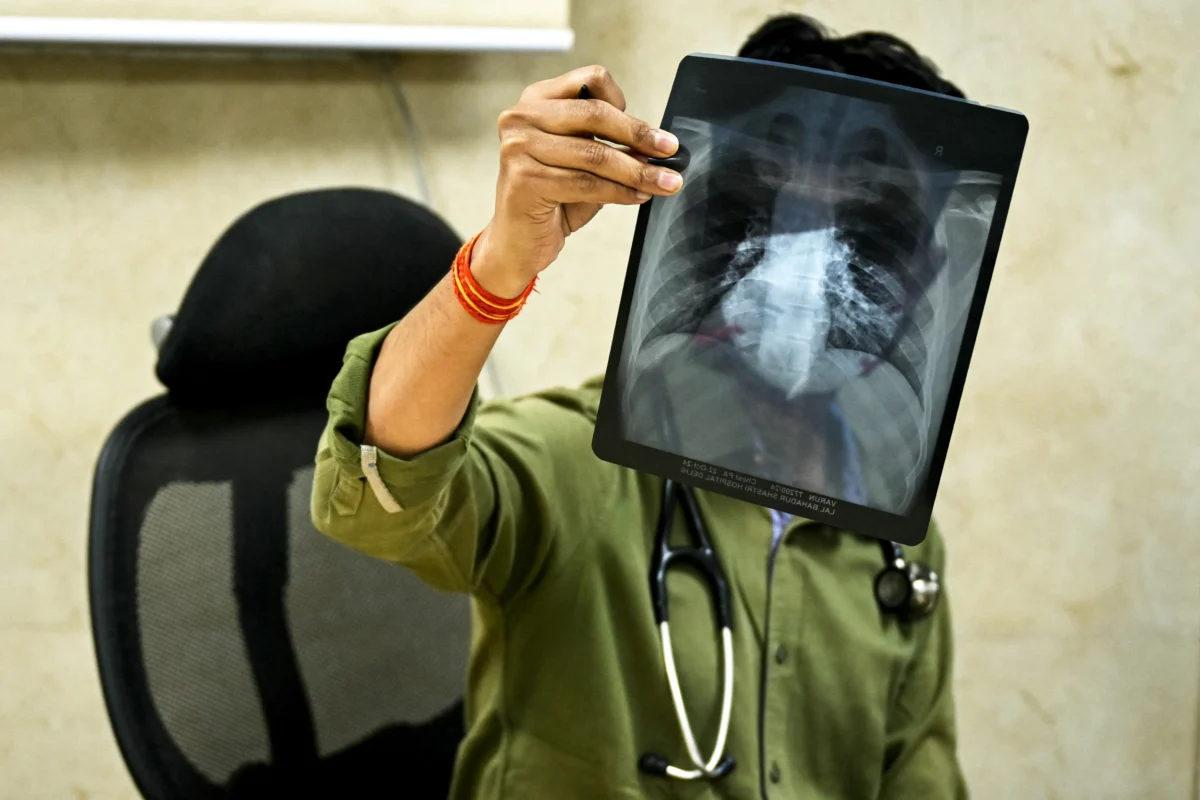
The immediate precursor to his current crisis was an incision and drainage procedure on the left side of his scrotum, performed five months before his emergency department presentation. Critically, this surgical wound had failed to heal and remained open. Upon arrival at the emergency department, his respiratory rate was alarmingly high at 36 breaths per minute, indicative of severe respiratory distress. The subcutaneous emphysema was so pronounced that the air trapped around his eyes, particularly the left, obscured his left pupil, making visual assessment difficult. The chest X-ray confirmed the dire situation: bilateral pneumothorax, air within the mediastinum (pneumomediastinum), and widespread subcutaneous emphysema extending from his head to his lower extremities. While his scrotum was tender to the touch, and the open wound on the left side was evident, it was not notably swollen at that point.
The anatomical connections that allowed air to travel from the chest to the scrotum are intricate and often overlooked. The mediastinum, the space in the chest housing the heart and major blood vessels, is not an isolated cavity. It is interconnected through fascial planes and connective tissue with the neck, the retroperitoneal space (behind the abdominal organs), the flanks, and the pelvis. This extensive network allows air that enters the mediastinum to potentially spread to virtually any part of the body, including the scrotum. Furthermore, another significant anatomical pathway exists: the processus vaginalis. This is a remnant of fetal development, a pouch of peritoneum that descends into the scrotum. In approximately 15% to 30% of adult men, this processus vaginalis may remain partially or fully open, creating a direct communication between the abdominal cavity and the scrotal sac. In this particular patient, the pre-existing open scrotal wound provided a direct egress for the air that had accumulated, explaining the audible whistling sound he experienced.
The precise origin of the air that led to the lung collapses remained somewhat uncertain, even after thorough investigation. The medical team presumed the pneumothoraces were spontaneous, despite the patient lacking several typical risk factors. Spontaneous pneumothorax typically affects younger individuals, those who are tall and thin, and smokers. This patient was over 40, of average height, and a lifelong non-smoker. The authors considered the possibility of undetected small air blisters on the lung surface, known as blebs or bullae, which could rupture and lead to air leakage. Spontaneous pneumomediastinum, which can occur independently of lung collapse, was also considered, though it more commonly affects younger demographics. The patient’s prior surgical history, including thyroid surgery and heart bypass, was also hypothesized to have potentially altered pressure gradients within tissue layers, contributing to the dramatic facial swelling observed. Ultimately, the exact mechanism initiating the air leakage from the lungs remained elusive.
A more personal question for the patient was also addressed: whether he had intentionally injected air into his scrotum. He adamantly denied any such action. Furthermore, over a follow-up period of more than three years, the medical team observed no behaviors indicative of a factitious disorder, a condition where an individual feigns illness. It remains unknown whether the presence of the open scrotal wound facilitated the escape of air and thus eased his overall condition, or conversely, whether it allowed for a more rapid accumulation of subcutaneous air.
The immediate medical intervention involved the placement of two chest tubes to re-expand the collapsed lungs and drain the accumulated air. The patient was then transferred to a larger regional hospital for further management. A subsequent CT scan revealed that one of the chest tubes was not effectively draining the air surrounding the lung, and the right-sided pneumothorax had worsened. Consequently, an additional chest tube was inserted. Drains were also employed to remove the air trapped beneath his skin. By the third day of hospitalization, his lungs had successfully re-expanded, the chest tubes were removed, and he was discharged in stable condition.
However, the resolution of the air within his scrotum, perineum, and thighs proved to be a far more protracted and complex issue. The authors noted that the clearance of this air took an "abnormally long time." The persistent open wound in his scrotum necessitated multiple urological procedures. In the end, the situation unfortunately led to the removal of both of his testicles. It was not until nearly two years after his initial presentation to the emergency department that CT imaging confirmed the complete resolution of the trapped air. This clearance ultimately occurred within two months of his final urological procedure.
The presence of air within the scrotum, or pneumoscrotum, is a rare clinical finding. A comprehensive literature review cited by the Ohio-based research team identified only 59 previously documented cases. Approximately one-third of these arose spontaneously. Among the spontaneous cases, a significant portion (46%) could be traced back to issues within the digestive tract, such as a perforated organ or a gas-producing infection. Another 18% of spontaneous cases were linked to a collapsed lung. Other reported causes included chest trauma, surgical interventions, and endoscopic procedures.
The recurring theme across these cases is the predictable pattern of anatomical pathways through which air can migrate. In one earlier report, an 82-year-old man who sustained four fractured ribs after a fall developed subcutaneous air extending from his head to his scrotum. More recently, in July 2026, physicians described a case involving a 7-year-old boy who was kicked in the chest by an ox. Despite neither of his lungs collapsing, he developed air in his face, neck, chest, abdomen, and scrotum. Notably, this child remained hemodynamically stable and experienced no significant breathing difficulties. Surgeons in Qatar have issued a warning that pneumoscrotum following a perineal injury can be an ominous sign, potentially indicating life-threatening intra-abdominal injuries or severe soft tissue infections.
The advice from the Ohio authors is clear and imperative: when air is detected in the scrotum, it is crucial for clinicians to rapidly identify the source. This is because the underlying cause may necessitate urgent surgical intervention or stabilization. While their specific report details the experience of one man and cannot definitively quantify how often an open scrotal wound might transform a collapsed lung into an audible symptom, the practical takeaway for the general public is straightforward. A surgical wound that fails to heal properly, or a sudden onset of shortness of breath, should be considered serious medical events warranting prompt and thorough medical evaluation.
