
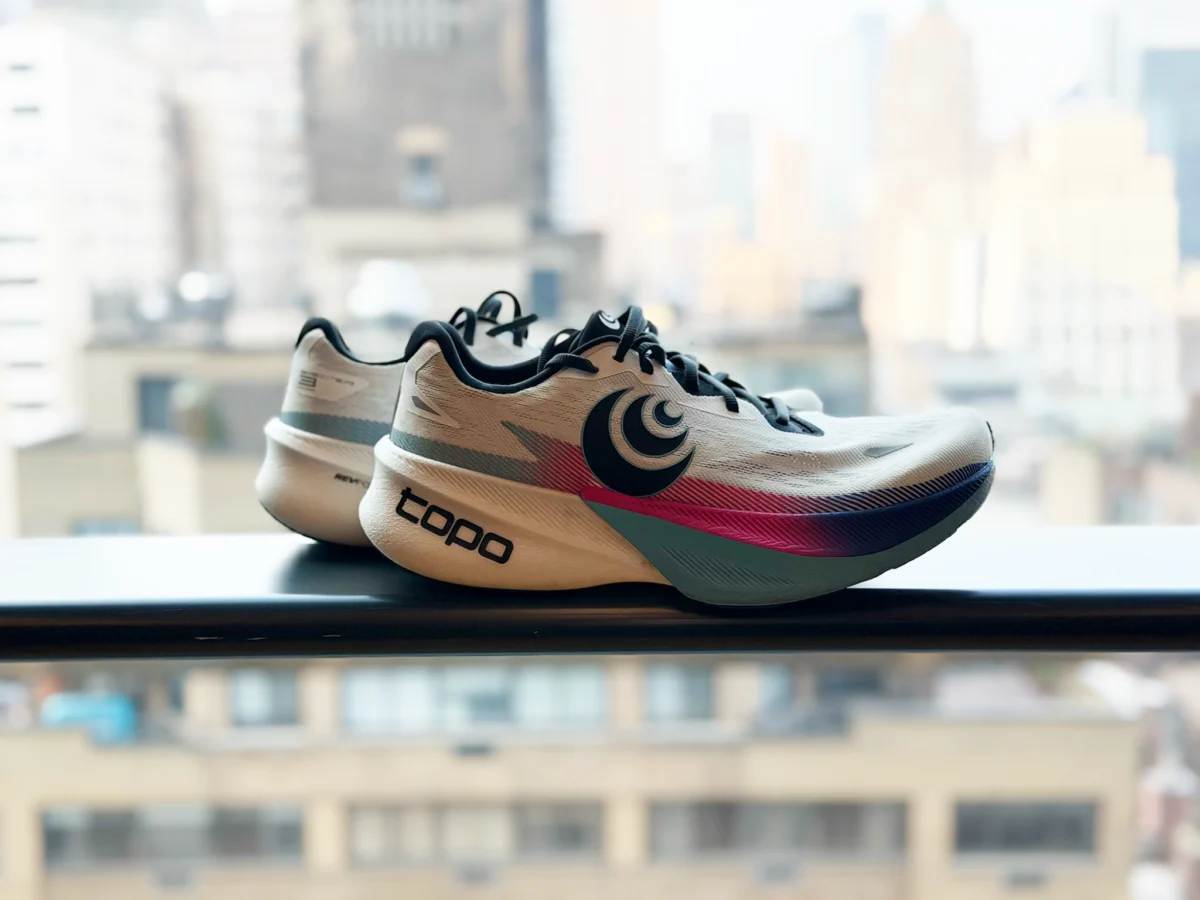
"The Topo Specter 3 marks a significant evolution for the brand, proving that a foot-health-first design doesn’t have to sacrifice the explosive energy return and lightweight agility of a modern super trainer."
This review explores the technical architecture and real-world performance of the Topo Athletic Specter 3, a shoe that attempts to reconcile the often-conflicting demands of anatomical comfort and competitive speed. By integrating advanced foam chemistry with a geometry that respects the natural splay of the human foot, the Specter 3 positions itself as a versatile "super trainer" capable of handling both high-intensity workouts and high-mileage recovery runs.
The Evolution of the Performance Trainer
For much of the last decade, the running shoe industry has been defined by a binary choice. On one side are the "maximalist" and "speed" shoes—engineered with narrow lasts, aggressive carbon plates, and ultra-responsive foams designed to shave seconds off a marathon time, often at the expense of toe comfort and natural foot mechanics. On the other side are "natural" or "foot-health" brands, which prioritize wide toe boxes and zero-drop platforms to mimic barefoot mechanics, often resulting in shoes that feel flat or sluggish during speed work.
Topo Athletic, founded by former Vibram CEO Tony Post, has long occupied the middle ground, but with the release of the Specter 3, the brand has firmly entered the "super trainer" category. This category represents a new breed of footwear: shoes that utilize the high-performance foams found in $250+ racing elites but package them in a more durable, stable, and comfortable chassis suitable for daily training. The Specter 3 is not merely a comfort shoe that happens to be light; it is a performance tool designed to compete with the industry’s most established speed models while maintaining the brand’s core commitment to foot mechanics.

Technical Specifications: The Architecture of Speed
The most striking feature of the Specter 3 is its midsole. Topo has utilized a 39-millimeter stack height—just one millimeter shy of the legal limit set by World Athletics for competitive racing—of their proprietary RevFoam. This is an ATPU (Accelerated Thermoplastic Polyurethane) formulation. In the world of shoe chemistry, ATPU is a significant step up from traditional EVA (Ethylene Vinyl Acetate). It offers a higher percentage of energy return and maintains its "bouncy" feel over hundreds of miles, whereas EVA tends to pack down and lose its life more quickly.
Despite this massive stack of foam, the shoe remains remarkably lightweight. Weighing in at 7.7 ounces for a men’s size 9, the Specter 3 is lighter than many dedicated racing flats from a decade ago. This weight-to-cushion ratio is achieved through a streamlined mesh upper that provides breathability without unnecessary overlays, and a strategic outsole design that places rubber only in high-wear areas.
The geometry of the shoe is equally specialized. It features a 5-millimeter heel-to-toe drop. While Topo is famous for its zero-drop models, a 5mm drop is often considered the "sweet spot" for performance trainers. It provides enough of a lift to reduce strain on the Achilles tendon during fast transitions without the aggressive, unnatural pitch found in 10mm or 12mm traditional trainers. This is paired with a pronounced rocker shape—a curved sole design that encourages a smooth "roll" from midfoot strike to toe-off, reducing the workload on the lower leg muscles.
Anatomical Advantage: The Wide Toe Box
The defining characteristic of any Topo shoe is the anatomical toe box. In standard high-performance running shoes, the forefoot is often tapered, forcing the toes into a narrow, cramped position. Biomechanically, this is counterproductive; the big toe plays a crucial role in stabilization and propulsion. When the toes are allowed to splay naturally, the runner gains a more stable base and a more powerful "lever" for pushing off the ground.
In the Specter 3, this wide toe box is integrated into a high-performance silhouette. It allows for the natural swelling of the foot that occurs during long-distance runs (especially beyond the 10-mile mark) without causing the friction or "hot spots" common in narrower shoes. This makes the Specter 3 an outlier in the speed category: a shoe that feels as roomier and more comfortable than a recovery shoe while possessing the engine of a racer.

On-Road Performance and Road Feel
Testing the Specter 3 reveals a "livewire" personality. From the first stride, the RevFoam provides a distinct rebound that feels more sophisticated than standard cushioning. It doesn’t just absorb impact; it feels as though it is actively returning energy to the runner. The combination of the lightweight build and the rocker geometry makes maintaining a high cadence feel effortless.
During tempo runs and interval sessions, the shoe excels. It responds well to increased force, feeling snappier as the pace quickens. However, unlike some carbon-plated shoes that can feel stiff or "harsh" at slower speeds, the Specter 3 remains compliant and comfortable during easy aerobic miles. This versatility is the hallmark of a true daily trainer; it is a shoe that a runner can reach for regardless of what is on the training calendar for the day.
There is, however, a trade-off for such a high, soft stack of foam. At walking speeds or when standing still, the shoe can feel slightly unstable. This is a common trait among high-stack performance shoes; the high center of gravity and the soft foam mean the foot has more "play" side-to-side. Once the runner is in motion, the forward momentum and the wide forefoot base provide the necessary stability, but those looking for a shoe for casual walking or gym work may find the Specter 3 a bit too "tippy."
Market Context and Comparisons
The Specter 3 enters a crowded market of "super trainers." Its closest competitors include the Adidas Adizero EVO SL and the Skechers Aero Razor. The Adidas model leans more heavily into the racing aesthetic with its ultra-thin upper and stiff foam, while the Skechers Aero Razor offers a similar lightweight, nitrogen-infused experience at a slightly lower price point ($140).
Where the Topo Specter 3 wins is in its fit-forward philosophy. Most competitors in this weight class still utilize a traditional, narrow shoe shape. For runners who have struggled with bunions, neuromas, or general forefoot discomfort, the Specter 3 is essentially in a class of its own. It also draws comparisons to the RAD UFO, a breakout model known for its high energy return and "fun" ride. For those who enjoyed the "pop" of the RAD UFO but require a more anatomically correct fit, the Specter 3 is the logical progression.

Value Proposition and Conclusion
At a retail price of $169.95, the Specter 3 is an investment. While this may give pause to beginner runners accustomed to $110 daily trainers, the price is competitive within the context of high-performance footwear. When compared to $250 "super shoes" that may only last 100 to 200 miles, the Specter 3 offers superior durability and a similar—albeit non-plated—energy return for significantly less money.
The launch colorways are bold and eye-catching, signaling Topo’s intent to move away from the "earthy," utilitarian look of their trail-running roots and toward a more modern, athletic aesthetic. While the bright palettes might not suit everyone for casual wear, they fit perfectly in the ecosystem of the local 5K or marathon starting line.
Ultimately, the Topo Specter 3 is a triumph of functional design. It successfully bridges the gap between the "natural" running movement and the "super foam" revolution. It proves that a runner does not have to sacrifice their foot health to achieve their personal best. For the experienced racer looking for a workhorse trainer that can do it all, or the comfort-seeking runner looking to inject some speed into their routine, the Specter 3 is a highly compelling, top-tier option.
