
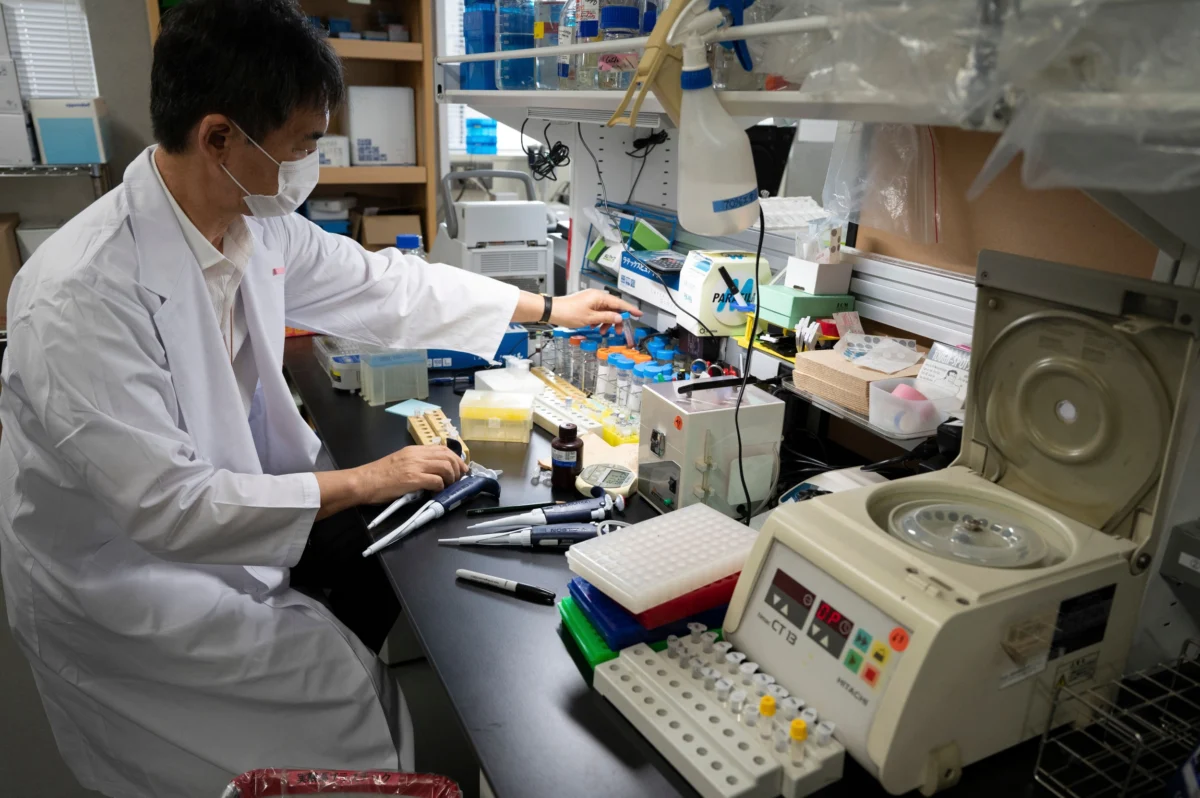
"Scientists have identified a crucial molecular switch, a complex interplay between TRPV2 and CB2R receptors, that dictates how infection-fighting neutrophils are directed to sites of inflammation and, critically, how they remain quiescent in healthy tissue. This discovery opens the door to potentially developing highly targeted anti-inflammatory therapies."
A groundbreaking discovery by researchers at the University of Bath and UMass Chan Medical School has illuminated a sophisticated molecular mechanism that governs the movement of neutrophils, the body’s most abundant white blood cells and the vanguard of the immune system. Published in Science Advances and announced on July 30th, this work unveils a molecular switch that appears to precisely control where these infection-fighting cells travel within the body and, equally importantly, when they are instructed to hold still. This intricate biological process has long puzzled immunologists, and its elucidation offers a promising candidate target for future therapeutic interventions aimed at inflammatory conditions.
Neutrophils, while essential for combating pathogens, are inherently potent. Their function involves releasing a barrage of destructive enzymes and reactive chemicals to eliminate microbes. This destructive capacity raises a fundamental question: how do these cells navigate vast expanses of healthy tissue in organs like the gut and lungs to reach an infection site without causing collateral damage? The research led by Professor Randy Mrsny at the University of Bath’s Center for Drug Discovery and Professor Beth McCormick at UMass Chan Medical School provides a compelling answer, detailing a multistep sequence orchestrated by a specific molecular signaling pathway.
The research centers on a short-lived fatty molecule known as hepoxilin A3, which is released by cells at an infection site. This molecule acts as a chemical breadcrumb, a signal that is detected by a sensor protein on the neutrophil surface called TRPV2. Upon detection, TRPV2 engages with another receptor, the type 2 cannabinoid receptor (CB2R), forming a signaling complex. This complex is the key to the neutrophils’ directional guidance, effectively steering the cell specifically towards the source of hepoxilin A3.
What makes this finding particularly significant is the dual role of the CB2R receptor. Previous research from the same collaborative team had established that activation of CB2R by the body’s own endocannabinoids acts as a "brake," suppressing neutrophil movement driven by hepoxilin A3 when no infection is present. The new work, therefore, describes the TRPV2 and CB2R complex as the mechanism that releases this brake, enabling neutrophils to initiate their journey towards inflammation. The researchers aptly compare this arrangement to the simultaneous engagement of an accelerator and a brake pedal, allowing for precise control over neutrophil motility. Furthermore, the study reports that during their migration, neutrophils refrain from discharging their potent contents, a behavior that would explain their ability to traverse healthy tissue without inflicting harm. Professor Mrsny eloquently described neutrophils as "cells that can act like bombs" once they arrive at an infection, underscoring the importance of controlled deployment.
This latest discovery builds upon decades of foundational research into hepoxilin A3. Professor Mrsny and Professor McCormick first identified hepoxilin A3 as a chemoattractant for neutrophils in a 2004 publication in the Proceedings of the National Academy of Sciences. At that time, they described it as the signal that draws neutrophils across intestinal epithelial barriers. Subsequent studies from their laboratories and others extended this finding to airway epithelium infected with Pseudomonas aeruginosa, a common opportunistic pathogen. The current work significantly advances this understanding by linking a specific receptor mechanism—the TRPV2/CB2R complex—to this well-studied chemical signal. This represents an incremental yet crucial advance on a known pathway, providing a deeper insight into a system that has been under investigation for over two decades.
The role of TRPV2 in neutrophil function has also been a subject of independent research. A 2025 paper published in the FASEB Journal by researchers at Hannover Medical School provided evidence that TRPV2 is implicated in cytokine expression and transmigration in human neutrophils, identifying the channel as a potential drug target for regulating neutrophil activity. This independent line of inquiry aligns with and strengthens the direction of the new findings, suggesting a convergence of scientific understanding regarding the critical role of TRPV2 in neutrophil behavior.
While the findings are promising, it is important to acknowledge certain limitations and ongoing scientific discourse surrounding the underlying mechanisms. The role of hepoxilin A3 in neutrophil transepithelial migration has been a subject of debate within the scientific community. In 2020, biochemist Alan R. Brash published a letter in the American Journal of Physiology formally challenging the evidence that hepoxilin A3 acts as the primary mediator of neutrophil epithelial transmigration. This challenge addresses the foundational basis upon which the new receptor findings are built. While the current work may serve to bolster the case for hepoxilin A3’s involvement, it is pertinent for readers to be aware that this underlying pathway has active critics and remains an area of ongoing scientific discussion.
Another aspect that requires careful consideration is the experimental systems employed in the research. Publicly available announcements do not specify the precise experimental models used, such as isolated human neutrophils, cultured epithelial barriers, animal models, or a combination thereof. The level of confidence in interpreting the findings can vary significantly depending on these methods. For instance, results derived from cells in a laboratory dish may not always directly translate to the complex biological environment of a living organism. Therefore, claims regarding how neutrophils move "through the body" should be viewed with this methodological gap in mind until further details are elucidated through examination of the full methodology.
The journey from a fundamental discovery of a receptor mechanism to a clinically approved medicine is a long and arduous one. The researchers themselves have not overstated the immediate implications of their work, acknowledging the substantial gap between their current findings and a tangible therapeutic. Their stated next step involves investigating how the hepoxilin A3 pathway could be blocked, which represents the nascent stage of drug discovery rather than its culmination.
Several critical stages must be navigated before this research could potentially benefit patients. Firstly, a specific molecule capable of blocking the identified pathway must be discovered and rigorously tested for efficacy in animal models. Subsequently, a comprehensive safety profile must be established. Suppressing neutrophil navigation, while potentially beneficial in reducing inflammation, carries an inherent risk of increased susceptibility to infection, a factor that any candidate therapeutic would need to meticulously manage. Following successful preclinical studies, the compound would then proceed through a sequential series of human clinical trials, a process that is often lengthy and fraught with challenges. It is important to note that many compounds that show promise in early-stage research do not ultimately survive the rigorous testing required for regulatory approval, and timelines for such developments are typically measured in many years.
Despite these hurdles, the therapeutic rationale behind this research is undeniably appealing. Current anti-inflammatory drugs often operate on a broad, systemic level, which contributes to their widespread side effects. In principle, a treatment that targets only a locally released inflammatory signal, such as hepoxilin A3, could spare the rest of the body from these unwanted effects. This represents a compelling hypothesis for a drug that does not yet exist.
For individuals living with chronic inflammatory conditions such as inflammatory bowel disease (IBD), chronic obstructive pulmonary disease (COPD), or other neutrophil-driven disorders, the appropriate response to this news is one of informed interest rather than immediate expectation. Nothing in this current research alters existing treatment protocols, and patients should not discontinue or modify any prescribed medications based on these early-stage laboratory findings. MedicalDaily will continue to monitor the progress of this research pathway should candidate molecules advance into animal or human testing.
