
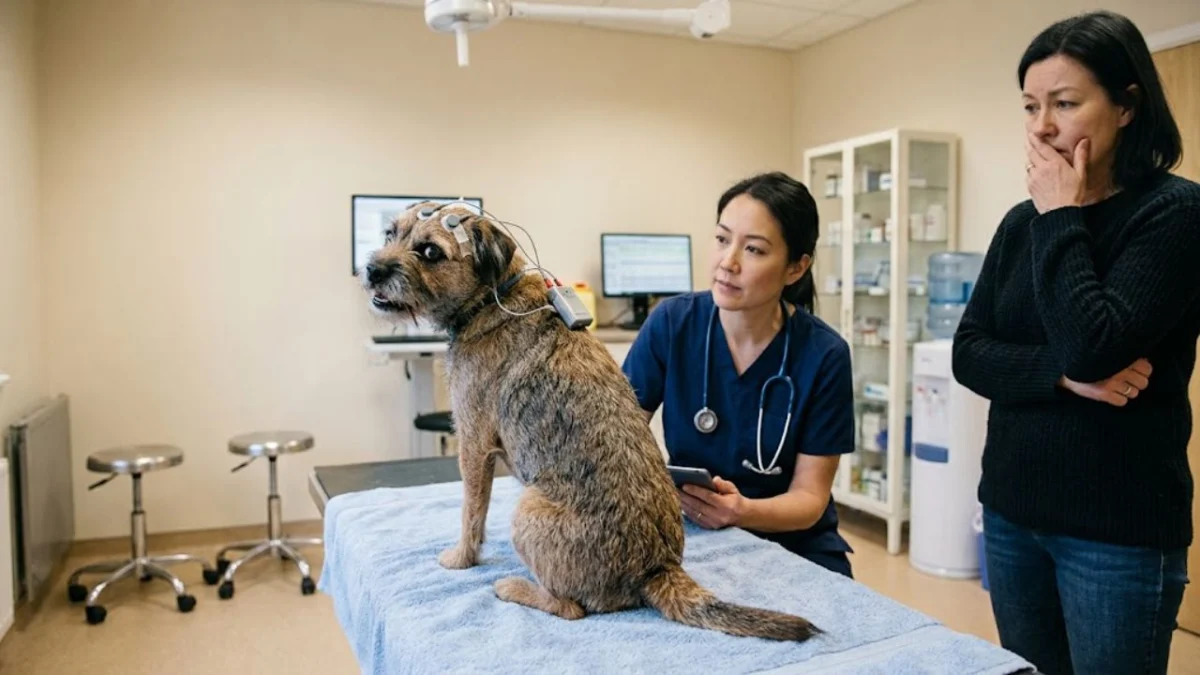
"Subtle behavioral changes in dogs, often dismissed as anxiety or quirks, may in fact be indicators of focal seizures originating in specific brain regions, according to new research."
New research emerging from veterinary neurology suggests that seemingly inexplicable behavioral episodes in dogs, such as sudden fear, staring spells, or repetitive mouth movements, might be manifestations of focal seizures rather than purely behavioral issues. A recent case series published in Frontiers in Veterinary Science details the experiences of three dogs whose unusual behaviors, when subjected to advanced diagnostic testing, revealed underlying epileptic activity in their brains. This study challenges conventional interpretations of such episodes, highlighting the crucial role of electroencephalography (EEG) in uncovering seizures that do not involve convulsions, thereby urging a re-evaluation of how canine behavioral changes are diagnosed and treated.
The unsettling behaviors observed in the three canine subjects presented a diagnostic puzzle. A two-year-old Border Terrier exhibited a peculiar habit of constantly whipping his head around as if reacting to unseen stimuli, occasionally snapping at the air. He would then retreat, stare into space, and appear to momentarily disconnect from his surroundings. Similarly, a one-year-old poodle mix displayed a pattern of lip-licking, intense staring, and snapping at invisible targets. A four-year-old mixed-breed dog developed pronounced anxiety, became unusually clingy, engaged in repetitive mouth movements, and drooled clear saliva exclusively from the right side of his mouth, visibly wetting the fur on that lip. Crucially, none of these dogs experienced convulsions, the hallmark symptom typically associated with epileptic seizures. However, all three exhibited abnormal epileptic activity on their brain recordings, a finding that significantly altered the diagnostic trajectory.
The case series, meticulously documented by Adriana Czerwik and her colleagues from the Small Animal Clinic at Justus Liebig University in Giessen, Germany, in collaboration with Agnieszka Olszewska of a specialist veterinary center in Cologne, was published in August. The episodes themselves were relatively brief, lasting only a few minutes. For the Border Terrier and the poodle mix, these occurrences were nearly daily, while the mixed-breed dog experienced them every one to two weeks. A significant challenge for the owners was the inability to interrupt or distract their pets during these episodes, which also lacked any discernible warning signs beforehand or grogginess afterward.
Comprehensive clinical and neurological examinations yielded unremarkable results across all three dogs. Standard bloodwork and cerebrospinal fluid analysis were within normal limits, and even advanced imaging techniques like brain MRI failed to reveal any structural abnormalities. Furthermore, a blood panel designed to detect neuronal antibodies associated with autoimmune encephalitis in humans returned negative results for all dogs. While this did not entirely rule out an autoimmune process, it rendered it less probable. The sole abnormal finding that emerged from the extensive diagnostic workup was detected on the electroencephalogram (EEG).
The pivotal diagnostic tool in these cases was the wireless EEG system. Each dog was fitted with the device for periods ranging from 1.5 to four hours. Sedation was administered solely for the precise placement of the electrodes, ensuring minimal disruption to the dogs’ natural state. The EEG recordings were initially reviewed by a veterinary neurologist and subsequently re-analyzed by a second neurologist in a blind setting, minimizing potential bias.
The EEG data revealed a consistent pattern of interictal epileptiform discharges in all three dogs. These discharges represent the electrical signature of an epileptic brain between seizure events. In the Border Terrier, these discharges were localized to both temporal lobes and the right parietal region. For the poodle mix, the discharges originated from the left temporal lobe, and in the mixed-breed dog, they emanated from the left parietal region.
Understanding the significance of these findings requires an appreciation of brain anatomy and function. In humans, the temporal lobe is the most common site for focal epilepsy. Seizures originating in this area are particularly associated with a constellation of symptoms that closely mirror the behaviors observed in these dogs, including feelings of fear, confusion, repetitive mouth movements, and autonomic signs, rather than generalized convulsions. The behavioral and autonomic episodes documented in the dogs mapped onto this pattern with striking similarity, leading the authors to propose temporal lobe involvement as a strong possibility.
The classification of human focal seizures further illuminates this connection. These seizures are categorized based on whether awareness is preserved. Individuals experiencing such seizures may exhibit vacant stares, appear disoriented, or smack their lips. In veterinary neurology, the concept of an "aura" – a subjective warning sensation experienced before a seizure – is deliberately avoided because dogs cannot verbally report such internal experiences. This gap in subjective reporting contributes to why such episodes are often miscategorized as behavioral issues.
The research team also candidly acknowledged the limitations inherent in their methodology. The absence of a standardized electrode placement system for dogs, comparable to the established 10-20 montage used in humans, presents a challenge. The significant variations in skull shape and muscle thickness across different breeds mean that anatomical localization in dogs remains presumptive. Despite these limitations, the findings offer a compelling glimpse into a potential underdiagnosed neurological phenomenon.
The therapeutic response to anti-epileptic medication provided further insights. All three dogs were initiated on phenobarbital, a common first-line treatment for epilepsy, and all demonstrated improvement. The Border Terrier experienced a complete cessation of his episodes after four months of treatment. The mixed-breed dog achieved complete seizure freedom, a status maintained at a three-month follow-up appointment.
The poodle mix, however, proved to be an exception. His episodes resurged after three months, despite dosage adjustments and therapeutic drug levels. The addition of levetiracetam, another anti-epileptic drug, managed to reduce the intensity of his episodes but not their frequency. This outcome is not uncommon, as approximately one-third of dogs with idiopathic epilepsy develop drug-resistant epilepsy, a figure closely mirroring that observed in human epilepsy.
Given the persistence of the fly-catching behavior in the poodle mix, the team introduced fluoxetine, an antidepressant. This decision was informed by earlier multicenter evaluations suggesting that "fly-catching syndrome," a behavioral anomaly often linked to neurological issues, might respond better to antidepressants than to phenobarbital. In this particular dog, fluoxetine produced a brief, modest reduction in the intensity of his episodes, which unfortunately faded within a month. Ultimately, his owners opted to continue with the combination of phenobarbital and levetiracetam, which had reduced his nearly daily episodes to approximately one per week.
It is crucial to emphasize that this study is a case series and not a definitive diagnostic rule. Three dogs are insufficient to establish the prevalence of seizures presenting as behavioral episodes in the canine population. The authors are explicit about what the study did not capture: no actual seizure episode occurred during any of the EEG recordings. Therefore, the findings are based on interictal discharges, not direct observation of a seizure event. They also acknowledge that potential residual effects of the sedative used for electrode placement cannot be entirely excluded from the initial portions of the EEG recordings, and they did not quantify the frequency of the discharges.
Despite these limitations, the practical implications of this research are significant. Existing veterinary consensus documents on epilepsy classification in companion animals already recognize the possibility of focal and non-convulsive seizures. Furthermore, a recent large-scale survey aimed at characterizing canine seizure semiology identified episodes of impaired awareness as one of four distinct seizure categories. These are precisely the types of events that are most likely to be misattributed to anxiety, phobias, or simple quirks.
The authors also draw attention to a separate report describing four related Labrador retrievers who experienced panic-attack-like episodes linked to a specific gene variant. While those dogs did exhibit visible MRI abnormalities, unlike the dogs in the Giessen study, both reports converge on a similar argument: behavior can be the primary manifestation of a seizure, rather than a mere accompanying symptom.
This research underscores the importance of careful observation and comprehensive diagnostic evaluation. Dog owners who notice recurring episodes of staring, air snapping, sudden onset of fear, or unilateral drooling should meticulously document these behaviors, ideally with video recordings, and discuss them with their veterinarian. While this case series does not suggest that such behaviors are always epileptic in nature, nor does it alter current treatment guidelines, it serves as a critical reminder for clinicians and owners alike to consider neurological causes when faced with perplexing behavioral changes in their canine companions. The potential for misdiagnosis carries significant implications for a dog’s quality of life and well-being, making this a crucial area for continued research and veterinary awareness.
