
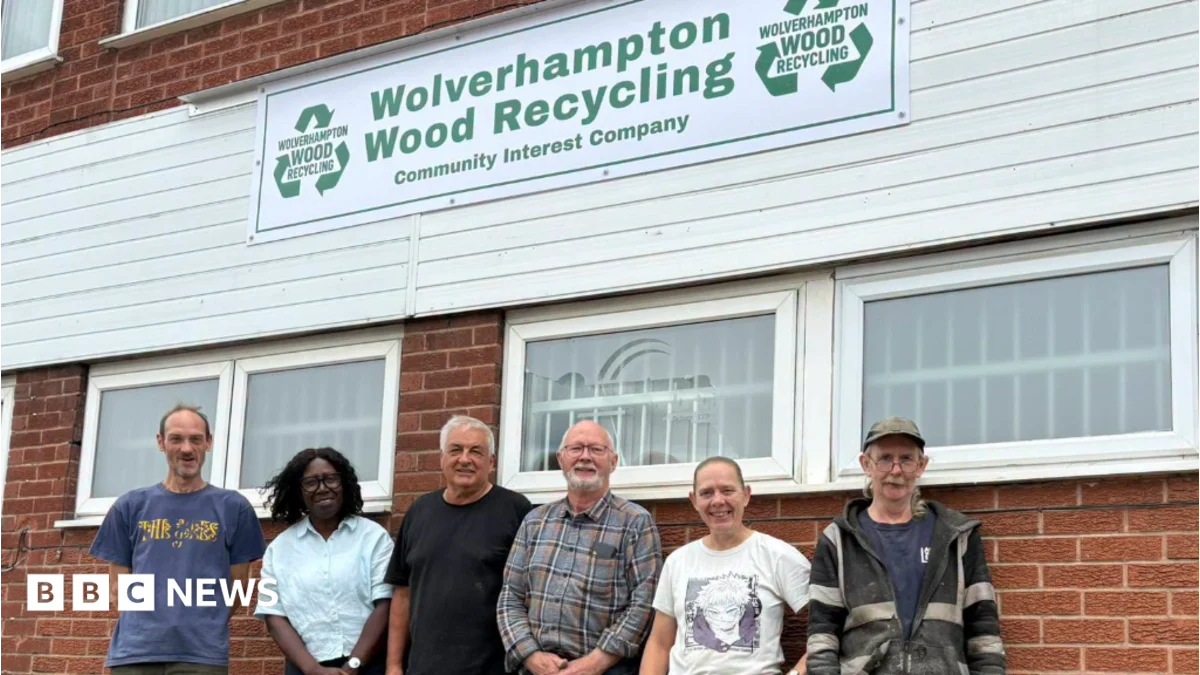
"Beyond diverting waste from landfill, Wolverhampton Wood Recycling’s expanded premises signal a profound commitment to fostering community resilience, offering vital skills, and creating a sense of belonging for individuals seeking purpose and connection."
Wolverhampton Wood Recycling (WWR), a pioneering social enterprise, has significantly amplified its capacity for both environmental stewardship and social impact with a strategic relocation to larger premises within the Webner Industrial Estate. This pivotal move enables the organisation to substantially increase its wood waste processing capabilities while simultaneously broadening its scope as a vibrant community hub. By transforming discarded timber into valuable products and services, WWR addresses critical ecological concerns related to waste management, all while cultivating a supportive environment for volunteers to learn new skills, combat social isolation, and actively contribute to their local community.
The expansion of Wolverhampton Wood Recycling (WWR) marks a significant milestone in the city’s journey towards a more sustainable and inclusive future. Founded by Jim Brennan and Eimert De Graff as a Community Interest Company (CIC) late last year, WWR was conceived with a dual mandate: to tackle the pressing issue of wood waste and to leverage this environmental mission as a catalyst for profound community benefit. Their new, larger facility on the Webner Industrial Estate is not merely an increase in square footage; it represents an exponential leap in potential, allowing WWR to deepen its commitment to both ecological regeneration and human flourishing.
In an era increasingly defined by environmental consciousness and the urgent need for circular economy models, WWR stands as a beacon of practical innovation. Annually, vast quantities of wood waste, from construction and demolition sites to commercial enterprises, end up in landfill. This not only represents a significant loss of valuable resources but also contributes to greenhouse gas emissions, particularly methane, as organic matter decomposes in anaerobic conditions. WWR directly intercepts this waste stream, collecting, sorting, and meticulously preparing timber for a new lease of life. From crafting bespoke furniture and garden items like benches and planters to offering raw reclaimed wood for purchase, the organisation champions the principles of reuse and repurposing, drastically reducing the environmental footprint of wood consumption. The larger premises mean a greater volume of wood can be handled, significantly amplifying their positive environmental impact across the Wolverhampton region.
However, WWR’s vision extends far beyond environmental conservation. Central to its ethos is the profound belief in the power of community and the transformative potential of purposeful engagement. Jim Brennan articulates this vision succinctly: "We want this to be a place where people can come along, learn, share their skills, meet others and feel that they belong." This statement underscores the organisation’s understanding that societal challenges, such as loneliness, skill gaps, and the need for meaningful post-retirement activities, are as critical as environmental ones. The expanded space is meticulously designed to facilitate this social mission, providing dedicated areas for workshops, community gatherings, and collaborative projects.
The Community Interest Company (CIC) model adopted by WWR is instrumental in achieving this delicate balance between commercial viability and social purpose. As a CIC, WWR operates as a business, generating income from the sale of its recycled products and bespoke services. Crucially, however, its primary objective is not to maximise profit for shareholders, but to reinvest any surplus back into its social and environmental mission. This structure ensures that every successful sale or commissioned project directly fuels the organisation’s capacity to offer more volunteer opportunities, develop new community programmes, and expand its reach to those who need it most. It exemplifies a growing global trend towards enterprises that consciously integrate social value creation into their core operations, proving that business can be a powerful force for good.
The new facility will serve as a launchpad for several exciting community initiatives, most notably a Repair Café and a Men’s Shed. These concepts, though distinct, share a common goal: to foster skill-sharing, reduce waste, and build robust community bonds. A Repair Café embodies the spirit of the circular economy, inviting individuals to bring broken household items – from toasters to textiles, bikes to small electronics – for repair with the help of skilled volunteers. This not only prevents items from heading to landfill but also empowers individuals with practical knowledge, reduces consumerism, and creates invaluable intergenerational connections as skills are passed down.
The Men’s Shed movement, which has gained significant traction worldwide, addresses the specific challenges of social isolation and mental wellbeing among men, particularly those in retirement or facing significant life changes. These sheds provide a safe, inclusive, and practical space where men can engage in woodworking, metalworking, or other craft projects. It offers a powerful antidote to loneliness by fostering camaraderie, purpose, and a sense of shared endeavour, often leading to significant improvements in mental and physical health. Eimert De Graff highlights the untapped potential within the community, stating, "There are so many people in our communities who have incredible practical skills and experience but don’t always have somewhere to use them. We want to create that space." The synergy between WWR’s core wood recycling activities and these new initiatives is palpable, creating a holistic ecosystem where waste wood becomes the raw material for both tangible products and intangible social capital.
The human element is truly at the heart of WWR’s operation. The organisation actively seeks to support individuals who may be experiencing loneliness, navigating retirement, or living with health conditions that impact their daily lives. For many, volunteering offers a lifeline – a structured environment that provides routine, purpose, and a vital social network. Gordon, a volunteer since WWR’s inception, offers a compelling testament to this impact. A skilled wood machinist whose health conditions limit his ability to pursue paid employment, Gordon found in WWR not just "something to do and to get out of the house," but a profound sense of belonging and contribution. His experience of meeting people, laughing, learning, and feeling productive underscores the often-underestimated therapeutic power of meaningful work and community engagement. Such narratives are not isolated; they represent the core impact WWR strives to achieve, offering dignity and purpose to those who might otherwise feel marginalised.
The expanded premises offer practical advantages that will significantly enhance WWR’s operational efficiency and capacity. Larger storage areas mean more incoming wood can be processed systematically, reducing logistical bottlenecks. Dedicated workshop spaces allow for a wider array of projects and more simultaneous activities, catering to a larger volunteer base and expanding the range of products and bespoke services offered. The ability to accommodate more volunteers is critical for scaling up both their environmental and social missions, creating a virtuous cycle where increased capacity leads to greater impact, which in turn attracts more support and participation.
Collaboration remains a cornerstone of WWR’s model. By liaising directly with businesses and construction companies, WWR provides a valuable service by diverting their wood waste, often saving these organisations disposal costs and helping them meet their environmental sustainability targets. This symbiotic relationship ensures a steady supply of raw material for WWR while offering an environmentally responsible solution for industrial waste. As the organisation grows, there is significant potential to forge deeper partnerships with local authorities, educational institutions, and healthcare providers to create integrated programmes that address broader community needs, from skill-building workshops for young people to therapeutic activities for vulnerable adults.
Looking ahead, the "bigger ambitions" articulated by Jim Brennan suggest a future where WWR could evolve into an even more comprehensive community resource. This might include developing formal training programmes, creating pathways to employment for volunteers, or even inspiring the replication of their successful model in other towns and cities. By proving the viability of a social enterprise that simultaneously tackles environmental challenges and fosters community wellbeing, Wolverhampton Wood Recycling is not just recycling wood; it is actively building a more connected, resilient, and sustainable society, one plank at a time. Its expansion is a clear signal that the future of community development lies in integrated solutions that honour both ecological imperatives and human needs.
