
"My Medicaid is still active, but when are they gonna cut that off from me? I can’t get employed. How am I supposed to survive?" This poignant question from Tywon Pugh encapsulates the profound anxiety and uncertainty facing millions of Medicaid beneficiaries under new federal work requirements. The regulations, designed to incentivize employment, risk jeopardizing access to essential healthcare for individuals grappling with complex challenges such as homelessness, chronic illness, and addiction.
The recent finalization of federal regulations mandating work, volunteer, or educational participation for millions of Medicaid beneficiaries presents a significant shift in healthcare policy, with states like Montana, Arkansas, and Nebraska already beginning to implement these changes. While proponents argue these measures offer a "path to prosperity" by encouraging self-sufficiency, critics and advocates express grave concerns that the stringent requirements will disproportionately affect the most vulnerable populations. These new rules, set to be broadly enforced by January, are poised to create substantial barriers to healthcare access for individuals whose circumstances make traditional employment an insurmountable hurdle, threatening to increase the ranks of the uninsured and exacerbate existing health disparities.
Tywon Pugh, a 46-year-old resident of Missoula, Montana, exemplifies the challenges posed by these evolving Medicaid policies. His life has been profoundly impacted by seizures, a condition that has historically made securing and maintaining employment difficult. Recalling a past experience, Pugh recounted how a manager at a fast-food restaurant deemed him a "liability to the job site" after a seizure, leading to his termination. For years, his wife, who passed away last year, provided financial stability, covering their rent and managing their household while he sought work. Her death, however, proved to be a devastating blow, depleting his support system and contributing to his descent into homelessness. The stress and instability of his situation exacerbated his pre-existing struggle with alcohol, further complicating his ability to manage his seizures.
Medicaid currently provides Pugh with essential prescription medications that help control his seizures. This government-subsidized health coverage would also be instrumental in facilitating his entry into an addiction treatment program, an avenue he has actively sought. However, he faces significant hurdles, including a lengthy waitlist for such programs, further compounding his anxieties about his future. Pugh’s primary objective is to regain his health and re-enter the workforce. Yet, he harbors deep apprehension about his continued eligibility for the Medicaid coverage that is vital to achieving this goal.
The federal government’s new regulations, finalized in the spring, stipulate that millions of Medicaid recipients must demonstrate engagement in work, volunteering, or education to retain their benefits. States are mandated to commence these verification processes by January. Montana, along with Arkansas and Nebraska, has proactively begun implementing these requirements. The Trump administration’s framework for these work requirements includes several exemptions, notably for individuals with disabilities, those over 64, pregnant individuals, and Native Americans. However, for those who do not fit these clear-cut categories, proving medical inability to work is required.
Crucially, the administration has explicitly stated that homelessness is not considered a medical condition and therefore does not automatically exempt individuals from the work requirement mandate. This stance has drawn considerable criticism, as many conservative policymakers have long advocated for such measures, and several states, including Montana, Arizona, Kentucky, and Utah, had previously proposed including homelessness as a valid exemption. Despite these state-level considerations, federal officials maintain that states must adhere to the federally defined list of exemptions. The Centers for Medicare & Medicaid Services (CMS) declined to provide an official on-the-record comment but confirmed that state adherence to the federal exemption list is mandatory. This policy overlooks the significant increase in homelessness across the United States, which rose by 27% between 2013 and 2025, affecting approximately 746,000 individuals last year, according to the Department of Housing and Urban Development.
Quantifying the precise number of homeless individuals enrolled in Medicaid is challenging. However, data from 2023 indicates that a substantial 55% of patients receiving medical or behavioral health services through Health Care for the Homeless programs nationwide were enrolled in Medicaid. This highlights the critical role Medicaid plays in providing healthcare access to a population already facing immense socioeconomic barriers.
Jennifer Tolbert, deputy director of KFF’s Program on Medicaid and the Uninsured, remarked that the federal regulations are considerably more stringent than many states anticipated, even those supportive of work requirements. "It took everyone by surprise," Tolbert stated. Mehmet Oz, leading CMS at the time, promoted the regulations as a "path to prosperity" during a press conference in June, emphasizing the need to encourage individuals to seek employment. However, in June, 25 states, predominantly led by Democrats, filed a lawsuit against the Trump administration, arguing that the medical frailty standard would be excessively difficult for enrollees to meet and for states to administer. Projections from the Congressional Budget Office suggest these work requirements could lead to an increase of over 5 million uninsured individuals nationwide by 2034.
Most states are scheduled to initiate their Medicaid work requirement implementation in January. Montana, however, plans to begin disenrolling Medicaid beneficiaries who fail to demonstrate compliance with the work requirement as early as October. Pugh’s uncertainty mirrors the anxieties of many: "My Medicaid is still active, but when are they gonna cut that off from me? I can’t get employed. How am I supposed to survive?"
The discrepancies between state and federal exemption lists extend beyond homelessness. Montana’s lawmakers had intended to exempt individuals fleeing domestic violence and caregivers of hospitalized family members, categories absent from the federal list. Republican state Rep. Ed Buttrey, in 2019, supported Montana’s initial Medicaid work requirement bill, stating that these individuals "simply cannot meet those requirements" due to various conditions. Federal officials have suggested that many individuals experiencing homelessness might qualify for exemptions based on medical inability to work. However, Montana’s system for automatically verifying medical exemptions through existing records is still under development, although a health department spokesperson indicated it is expected to be operational by October. Those not automatically exempted will have a 30-day window to provide proof of their case.
Pugh may potentially qualify for an exemption based on his seizure disorder. Nevertheless, accessing medical appointments has proven difficult over the past year. The recent anniversary of his wife’s death has compounded his challenges. He often faces the necessity of finding a new place to sleep outdoors each night. A recent incident where he lost his wallet and crucial documents while camping further disrupted his efforts. With addiction treatment centers accepting Medicaid patients operating at full capacity, Pugh has been forced to rely solely on his willpower to abstain from alcohol. "I’m taking it one day at a time," he shared.
In Kalispell, approximately two hours north of Missoula, Dustin Goss, a case manager at Samaritan House, a homeless shelter, voiced concerns that individuals who qualify for exemptions may become ensnared in bureaucratic complexities. "You can’t really worry about getting paperwork done when you don’t know where you’re eating today," Goss explained, highlighting the immediate survival needs that overshadow administrative tasks for those experiencing homelessness.
Cassidy Kipp, director of Samaritan House, noted that while many clients find employment once they secure shelter and stabilize, meeting the new work requirements can still be challenging. Many clients initially take on temporary or informal jobs, such as assisting with storage unit cleanouts, which often do not provide formal pay stubs, making it difficult to document employment for Medicaid compliance.
Kaitlyn Bosshardt, a social worker at Partnership Health Center in Missoula, has observed a growing number of individuals struggling with rising housing costs, which are outpacing wage growth. The scarcity of affordable housing and rental assistance exacerbates this crisis, pushing more people into precarious living situations.
Partnership Health Center is one of approximately 1,400 federally funded health centers across the nation that provide care on a sliding scale based on patient income. These centers can continue to serve patients even if they lose Medicaid coverage. However, organizations representing these health centers have warned that a significant loss of Medicaid enrollees could create substantial financial deficits for some clinics. Furthermore, these clinics often lack the capacity to provide specialized medical services.
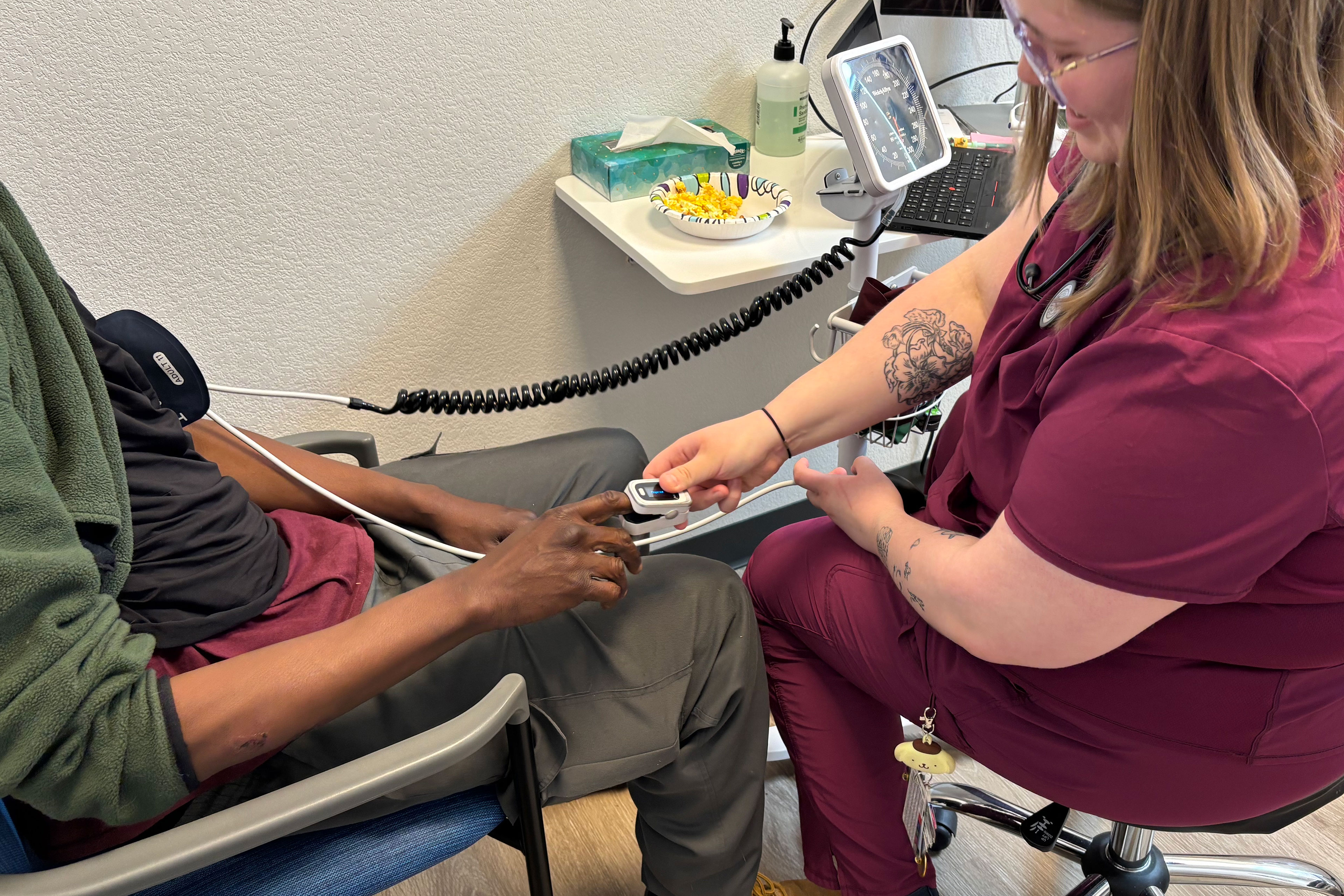
During a particularly hot June day, Pugh visited the Watershed Navigation Center, a refuge operated by Partnership for individuals experiencing homelessness. There, he could access meals and medical consultations. His doctor, Atarah Sidey, informed Pugh that the neurology clinic managing his seizures had discharged him after he missed three appointments. Sidey referred him to another neurologist in town and discussed potential avenues for addiction treatment. "It’s just that if I don’t make the effort at changing, it ain’t gonna happen and I’m gonna end up found on the side of the road somewhere," Pugh confided to Sidey. "You got this, though, Tywon," she responded encouragingly. "You can do this."
Pugh has since connected with a social worker to assist him in maintaining his Medicaid coverage. By late July, he was awaiting an opening at a Missoula addiction treatment center and had applied for two jobs. In moments of difficulty, Pugh draws strength from memories of his wife, envisioning her urging him to remain calm and optimistic. "I just don’t wanna lose hope in the meantime," he expressed, underscoring the persistent struggle for hope amidst profound adversity.
