"You get placed in a facility like this to be taken care of, not to be murdered." The tragic death of Attilio Cecchetto underscores a pervasive and often overlooked crisis in long-term care: resident-on-resident violence, fueled by complex factors including dementia, inadequate staffing, and systemic neglect.
The harrowing case of Attilio Cecchetto, a 92-year-old resident of Sunrise Post Acute in Banning, California, who died from blunt force facial trauma inflicted by his roommate, Sam Ato Timaloa, serves as a stark reminder of the dangers lurking within some long-term care facilities. Timaloa, a paroled sex offender with a history of attempted murder, suffered from dementia and an acute sensitivity to noise. Despite his known behavioral challenges, he was repeatedly moved between rooms at the facility, ultimately landing in a shared space with Cecchetto, whose own dementia caused him to frequently moan, mumble, and yell. This fatal placement, detailed in a state investigative report, highlights a critical breakdown in facility protocols and raises profound questions about the safety and care provided to vulnerable individuals in nursing homes and assisted living facilities across the nation.
The incident at Sunrise Post Acute is not an isolated event, but rather a symptom of a larger, systemic issue within the long-term care industry. Federal inspection reports reveal a disturbing pattern of altercations between residents, ranging from shoves and punches to more severe assaults. These incidents are often perpetrated by residents with cognitive impairments, such as dementia, whose diseases can impair impulse control and threat perception, increasing the likelihood of aggressive behavior. In fact, residents with Alzheimer’s disease and other dementias constitute a significant portion of the population in these settings, many of whom reside in specialized memory care units.
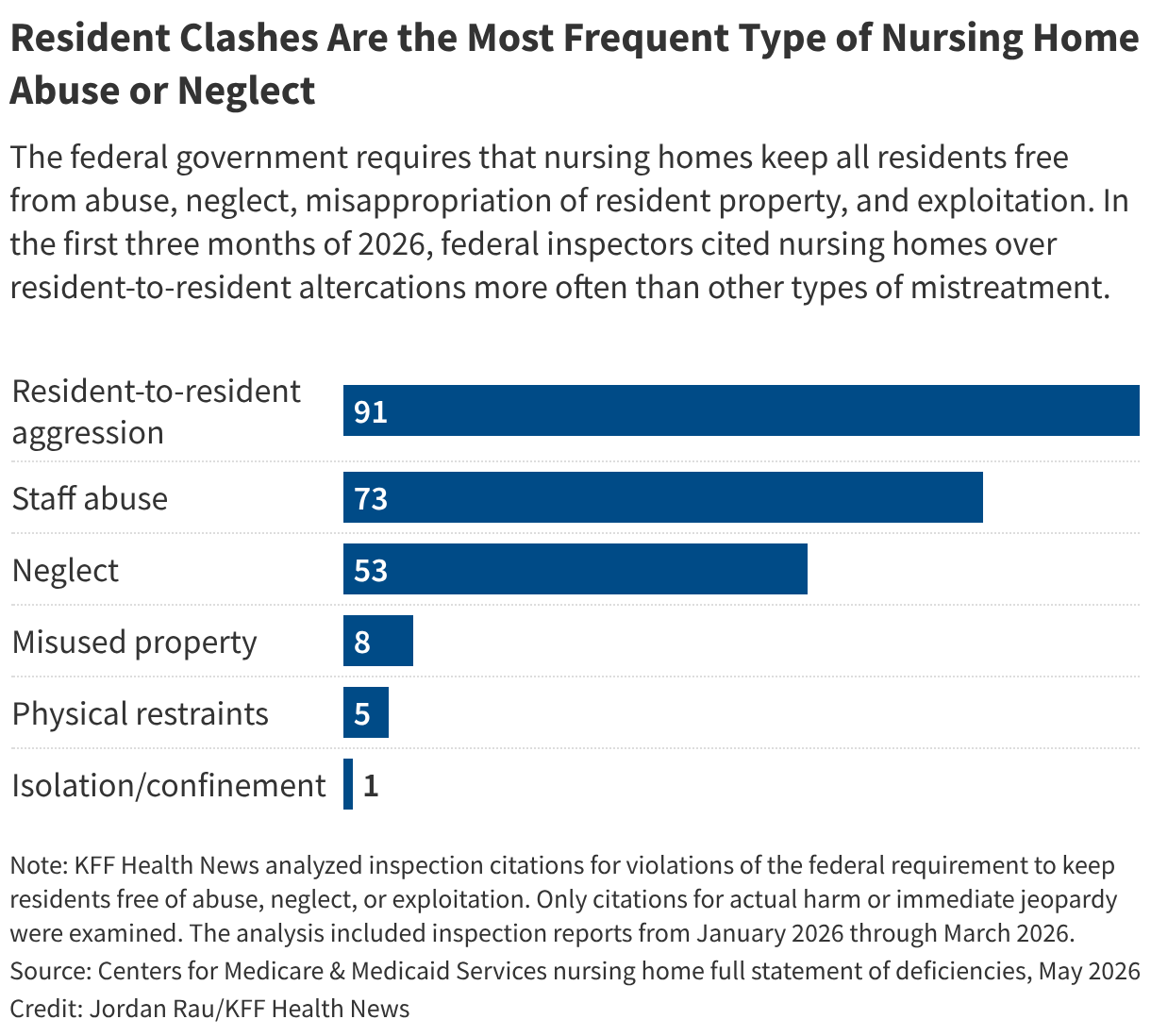
A KFF Health News examination of court records, police reports, and state and federal inspection reports indicates that altercations involving residents with dementia frequently occur when danger signals are missed or inadequately addressed. Since the start of 2024, the Centers for Medicare & Medicaid Services (CMS) has cited nursing homes at least 700 times for failing to protect residents from physical, sexual, or verbal abuse by other residents. Notably, in the first three months of 2026, CMS cited nursing homes more often for resident-to-resident abuse than for any other type of abuse, neglect, or exploitation, surpassing even instances of abuse by employees.
The long-term care industry acknowledges the complexity of managing residents with advanced dementia, noting that behaviors can be unpredictable. However, experts like Eilon Caspi, a dementia consultant and researcher, argue that these altercations are rarely spontaneous. "In the vast majority of incidents," Caspi stated, "there are warning signs in the months, weeks, days, hours, and sometimes minutes and seconds prior." These warning signs, he asserts, often stem from an unmet need experienced by the resident.
The underlying causes of aggression in individuals with dementia are multifaceted. A prominent psychological theory suggests that as the brain’s networks deteriorate in diseases like Alzheimer’s, the balance shifts between the prefrontal cortex, responsible for judgment and self-control, and limbic regions, involved in processing fear and threat responses. This cognitive decline can lead to a reduced ability to understand surroundings and articulate distress. Consequently, physical or emotional discomfort, such as pain, infection, or medication side effects, may manifest as shouting, intimidating gestures, or physical aggression. Long-term care facilities themselves can become triggering environments, characterized by close quarters, noise, rigid routines, and intimate care provided by unfamiliar staff, all of which can heighten resident anxiety and lead to interactions that escalate into conflict.
Studies by Cornell University researchers have shed light on the prevalence of these altercations. An in-depth study of 14 assisted living facilities in New York estimated that one in seven residents experienced aggression within a month, encompassing verbal, physical, or sexual acts. A separate study of 10 New York nursing homes estimated that one in five residents experienced an altercation in a month. While verbal altercations were the most common, an estimated 4% of assisted living residents and 5% of nursing home residents in their studies experienced physical assaults within a month. Further analysis of CDC data indicated that nearly 8% of residents in assisted living facilities engaged in physical aggression or abuse toward other residents or staff members.
The physical aggressions identified in CMS inspection reports are frequently perpetrated by residents with diagnoses of dementia, schizophrenia, or other cognitive disorders. In some cases, both residents involved are aggressors, while in others, the assault is one-sided. The proximity of roommates can exacerbate these situations, as seen in the Cecchetto case. Laura Mosqueda, a geriatrician and advisor to the National Center on Elder Abuse, expressed concern that the focus often falls solely on the individuals with cognitive impairment or mental health issues, overlooking the responsibility of the environment designed to ensure their safety.
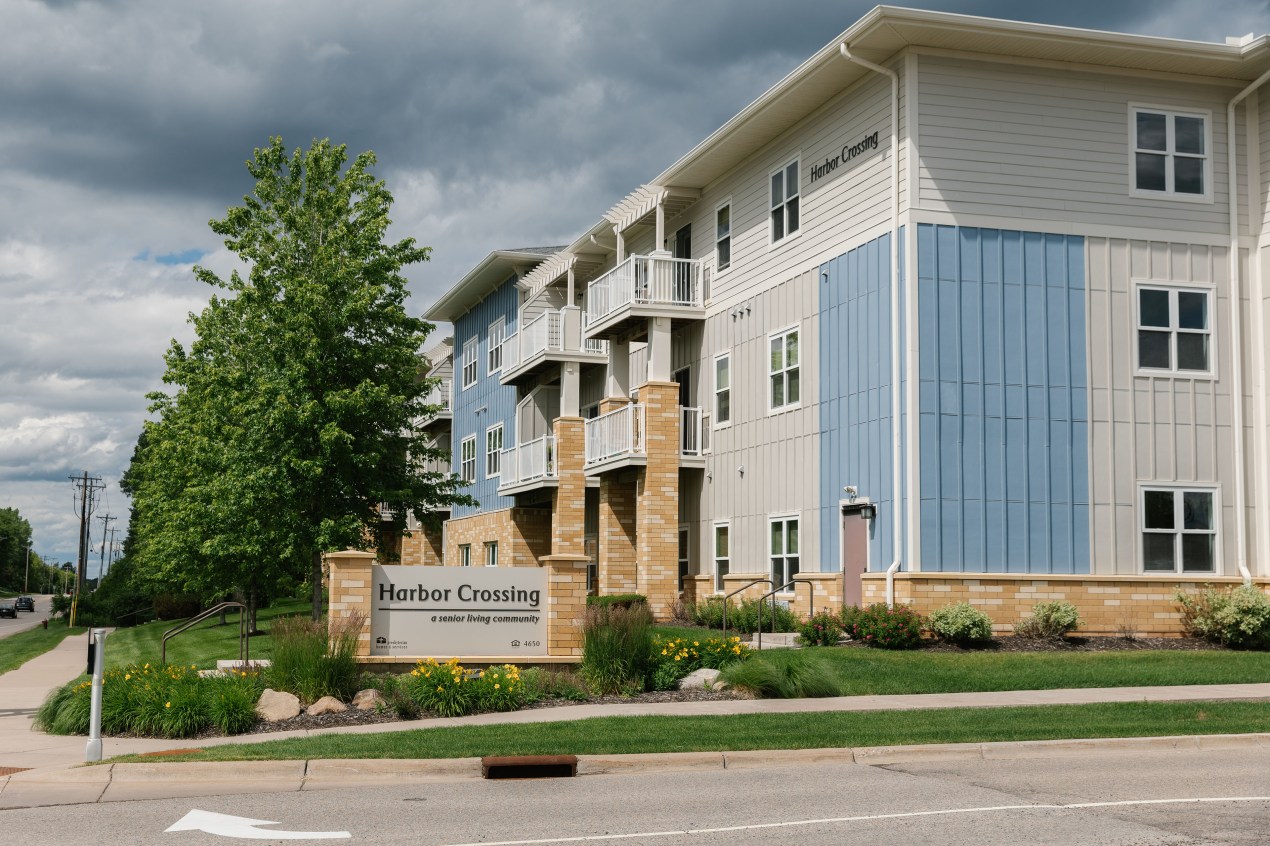
The tragic case of Gladys Lynch, a 96-year-old resident of Harbor Crossing, a memory care unit in Minnesota, further illustrates the consequences of inadequate oversight. Her daughter, Rebecca Norton, installed web cameras and observed another resident repeatedly entering Lynch’s room, harassing her, and using her belongings. Despite repeated notifications to the facility’s administration, the other resident, diagnosed with Alzheimer’s and severe dementia with agitation, continued to exhibit aggressive behavior, including wandering into other residents’ rooms. Aides had expressed concerns to the resident’s doctor, warning that it was "only a matter of time before she hurts another resident." This warning proved prescient when, after multiple intrusions into Lynch’s room, the other resident assaulted Lynch, causing a brain hemorrhage and fractures, leading to her death and the medical examiner declaring it a homicide. A subsequent state investigation concluded Harbor Crossing was responsible for neglect due to its awareness of the aggressive behavior and failure to implement effective interventions.
In response to such incidents, experts advocate for proactive strategies to mitigate the risk of altercations. These include enhanced supervision of high-risk residents, relocating them closer to nursing stations, separating residents with a history of conflict, and carefully adjusting roommate assignments. Comprehensive care plans that identify resident triggers and train staff to intervene promptly are also crucial. However, the reality of understaffing in many facilities can make dedicated, one-on-one supervision a luxury rather than a standard practice. Some assisted living facilities resort to requiring families to hire private aides, adding significant financial burdens, or, in extreme cases, discharging residents, a practice that raises concerns about vulnerable individuals being moved from one potentially unsafe environment to another.
The financial implications for residents and families are substantial, with monthly costs for memory care units often exceeding $10,000. In the case of Linda Twiddy, a resident at The Vero at Chesapeake in Virginia, a severe leg injury sustained from a kick by another resident with dementia resulted in her never being able to walk again. The family’s lawsuit against the facility alleged that the other resident had a history of aggressive behavior documented at a previous facility, yet The Vero allegedly failed to adequately protect its residents from him. Virginia regulators cited The Vero for failing to assume responsibility for resident well-being, though the facility denied negligence and claimed Twiddy’s injuries were due to her own actions or those of others. The lawsuit was eventually settled under confidential terms.
The financial practices of large nursing home chains also draw scrutiny. PACS Group, the owner of Sunrise Post Acute, where Attilio Cecchetto died, is a publicly traded company with hundreds of facilities. A lawsuit filed by the Cecchetto family accuses the company’s founders of draining resources from nursing homes to fund expansion and personal wealth, citing significant stock sales and luxury purchases. California regulators fined Sunrise $120,000 for failing to protect Cecchetto and for not considering Timaloa’s noise sensitivity in room assignments. Medicare also issued a substantial fine. In its legal defense, PACS denied negligence and challenged the state’s fine, asserting it acted reasonably. The Cecchettos’ lawsuit seeks to mandate stricter procedures for admissions, staff training, room changes, and incident reporting across PACS homes, along with a court-appointed monitor to oversee compliance.
The recurring theme in these tragic narratives is a potential imbalance between profit motives and patient care. Camille Russell, a former long-term care ombudsman, observed that staff are often "woefully undertrained" in basic dementia care. She lamented that decision-making has "gotten too far away from making caring decisions," with the balance shifting too heavily towards profit. This perspective suggests that while the complexities of dementia are undeniable, the ultimate responsibility lies with facilities to implement robust safety protocols, ensure adequate staffing, and foster a culture of care that prioritizes resident well-being above financial gain. The pursuit of justice and systemic change, as exemplified by the Cecchetto family’s ongoing lawsuit, is crucial to preventing future tragedies and ensuring that individuals entrusted to long-term care facilities receive the safety and dignity they deserve.