
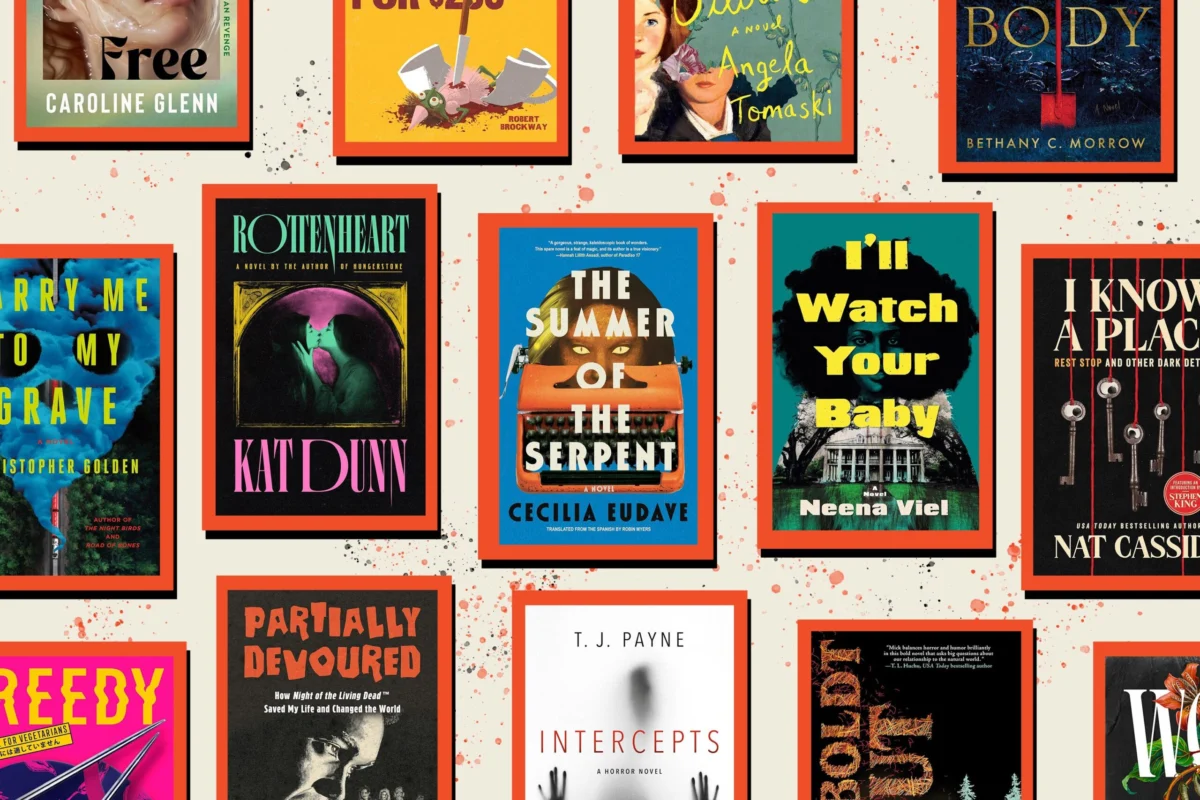
"Modern horror is evolving beyond simple jump scares to explore the terrifying intersections of ancestral trauma, corporate malevolence, and the high price of human vanity. This year’s literary slate proves that the most enduring ghosts are often those we carry within ourselves or manufacture in the name of progress."

The landscape of horror literature in 2026 reflects a profound cultural shift, moving away from traditional monster tropes and toward a more nuanced, psychological exploration of the "everyday" made malevolent. From the claustrophobic confines of corporate laboratories to the desolate expanse of the Oregon wilderness, these upcoming releases tap into contemporary anxieties regarding body image, the ethics of technology, and the inescapable weight of family history. By blending classic gothic elements with modern social commentary, this year’s authors are redefining what it means to be truly terrified in an increasingly complex world.

The Return to Haunted Roots
A recurring theme in the 2026 lineup is the inevitable return to one’s origins, where the past is rarely buried as deeply as we hope. Simone St. James, the celebrated author of The Sun Down Motel, returns with A Box Full of Darkness. The narrative follows siblings who are beckoned back to their childhood home decades after their brother’s mysterious death. St. James excels at weaving atmospheric dread into the fabric of a town that feels as though it is breathing alongside its inhabitants. Here, the haunting is not merely a spectral presence but a manifestation of decades-old secrets that refuse to remain dormant.

Similarly, Angela Tomaski’s The Infamous Gilberts leans into the gothic tradition, drawing comparisons to the works of Shirley Jackson. When a wealthy family’s English manor is converted into a hotel, the renovation process physically and metaphorically unearths the family’s dark lineage. This "Addams Family-esque" read balances the macabre with a sense of playfulness, suggesting that some houses are not meant to be renovated, but rather respected for the shadows they keep.

In the American South, Yah Yah Shofield’s On Sundays She Picked Flowers explores the intersection of desire and violence in the woods of Southern Georgia. The protagonist, Judith, finds her hard-won peace shattered by the arrival of a mysterious woman who triggers a latent, ancestral urge for brutality. It is a stark look at how bloodlines can dictate behavior, forcing characters to confront the "ills" of their heritage.

Body Horror and the Cult of Perfection
The horror of the physical self remains a potent theme, particularly in stories that critique the modern obsession with aesthetics and health. Luke Dumas’s Nothing Tastes as Good is a timely exploration of the weight-loss industry. The protagonist, Emmett, utilizes an experimental drug that yields miraculous results but at a terrifying cost: blackouts and a burgeoning, insatiable appetite. As a cannibalistic killer begins to haunt his city, the line between Emmett’s aspirations and his baser instincts blurs. This novel serves as a visceral metaphor for the "all-consuming" nature of societal beauty standards.

Caroline Glenn’s Cruelty Free takes this concept into the world of high-end skincare and celebrity culture. An A-list actress, desperate to reclaim her public image after a personal tragedy, discovers a "secret ingredient" that fuels both her business empire and a vengeful killing spree. The novel examines the lengths to which individuals will go to maintain a facade of perfection, suggesting that the industry of "wellness" is often built on a foundation of exploitation and blood.

In a more historical context, T. Kingfisher’s Wolf Worm takes readers to the late 19th century. A scientific illustrator discovers that her reclusive employer is conducting ghastly experiments within his mansion. The "mad scientist" trope is revitalized here through the lens of a woman who realizes she is no longer an employee, but a potential specimen. Kingfisher’s ability to blend period-accurate detail with skin-crawling body horror makes this a standout for the year.

Psychological Fragmentation and Domestic Dread
Several of 2026’s most anticipated titles find horror in the domestic sphere and the breakdown of the mind. Bethany C. Morrow’s The Body deals with the insidious nature of gaslighting and religious trauma. Mavis, a woman who has left her family’s church, begins to suffer from bizarre physical attacks that lead her to question the stability of her marriage and her own sanity. It is a chilling look at how the institutions meant to protect us can become the sources of our greatest fears.

Jacquie Walters’s Turn Off the Light presents a unique take on the "haunted house" subgenre. As Claire returns home to care for her dying father, she realizes the house itself is a sentient, listening entity. The story bridges the gap between the present and the past, as Claire finds an ally in a woman who lived in the same house centuries prior. This temporal connection suggests that the walls do indeed talk, provided one knows how to listen.

Monika Kim’s Molka addresses the modern nightmare of digital voyeurism. Following a hidden camera scandal, the protagonist is abandoned by her support system and begins to see visions of her deceased sister. The novel uses the supernatural to amplify the real-world trauma of being watched, turning a contemporary social issue into a ghost story for the digital age.

Corporate Evil and Scientific Overreach
The "evil corporation" is a mainstay of horror, but T.J. Payne’s Intercepts provides a fresh, harrowing perspective. The story centers on a government facility where human subjects are tortured to allow them to "intercept" the senses of others. The protagonist, Joe, justifies the brutality as a necessary tool for national security—until the experiments begin to haunt his own family. Payne’s work is a sobering reminder that when we turn humans into tools, we lose our own humanity in the process.

In space, Adam Christopher’s Crawlspace utilizes the inherent isolation of the cosmos to tell a tale of trapped explorers. On a mission to expand humanity’s reach, the crew finds their ship filled with mysteries that defy logic. The "cold, dark, and isolating" setting of space serves as the ultimate pressure cooker for psychological collapse and extraterrestrial dread.

Slashers, Short Stories, and Meta-Horror
For those who prefer the visceral thrill of a slasher, Stephen Graham Jones returns with Night of the Mannequins. Following his recent successes, Jones delivers a teen slasher with a high-concept twist: a movie theater prank involving a mannequin turns deadly when the doll comes to life. Jones continues to be a master of the genre, proving that even the most inanimate objects can be imbued with a terrifying sense of purpose.

Short story enthusiasts have much to look forward to in Nat Cassidy’s I Know a Place: Rest Stop and Other Dark Detours. With an introduction by Stephen King, the collection ranges from haunted tech-millionaire mansions to desert yoga retreats gone wrong. Cassidy’s ability to establish dread in a condensed format makes this an essential read for those who enjoy "bite-sized" terrors.

Finally, for the non-fiction enthusiast, Daniel Kraus offers Partially Devoured, a deep-dive analysis of George A. Romero’s Night of the Living Dead. Kraus, the author of Whalefall, provides a frame-by-frame love letter to the film that birthed the modern zombie. It is an intellectual’s guide to horror, examining how a single independent film changed the cultural landscape forever.

Conclusion
The horror offerings of 2026 are as diverse as they are disturbing. Whether through the lens of historical famine in Maria Turead’s This House Will Feed, the supernatural camping trip in Adam Nevill’s Monumental, or the Craigslist-job-gone-wrong in Marcus Kliewer’s The Caretaker, these stories all point to a singular truth: the genre is at its best when it reflects our deepest, most uncomfortable realities. As these authors push the boundaries of the macabre, readers are invited to face their fears—one page at a time.
