
"In facilities meant for care, residents are being harmed, often by those with cognitive impairments, highlighting systemic failures to ensure safety and prevent predictable tragedies."
This report delves into the escalating crisis of violence within nursing homes and assisted living facilities, where residents, particularly those with dementia, are increasingly becoming victims and perpetrators of aggression. Tragic incidents, like the death of 92-year-old Attilio Cecchetto at Sunrise Post Acute, underscore a disturbing pattern of systemic failures in managing residents with cognitive impairments, leading to preventable harm and loss of life. The complex interplay of dementia-related behaviors, facility management practices, and regulatory oversight is creating fertile ground for altercations, raising urgent questions about accountability and the very definition of care in these settings.
A Fatal Confrontation Fueled by Noise and Neglect
The brutal death of Attilio Cecchetto in a Banning, California, nursing home serves as a stark illustration of the dangers lurking within some long-term care facilities. Cecchetto, a 92-year-old retired tile installer battling dementia, was sharing a room at Sunrise Post Acute with Sam Ato Timaloa, a 77-year-old parolee with a history of sex offenses and attempted murder. Timaloa, also suffering from dementia, had a severe intolerance to noise, particularly from his roommates. Over a four-month period in 2025, Timaloa was moved eight times, with his final assignment placing him alongside Cecchetto, whose dementia-induced vocalizations—moans, mumbling, and yelling—became a trigger.
A night nurse’s discovery of blood splattered throughout the room painted a gruesome scene. Cecchetto’s face was described as "twisted and smashed." Timaloa confessed to a Banning police officer that he had punched Cecchetto twice, stating, "He just kept saying that Attilio was being too loud: ‘He talks too much.’" Cecchetto succumbed to his injuries two days later, his death attributed to blunt force facial trauma. His son, Gino Cecchetto, lamented, "You get placed in a facility like this to be taken care of, not to be murdered. This was completely preventable at many different points."
Timaloa pleaded not guilty to assault, a charge later upgraded to murder. He is currently awaiting a mental health evaluation to determine his competency to stand trial. PACS Group, the parent company of Sunrise Post Acute, denied negligence, stating, "We strive to provide quality care to everyone we serve, and our hearts continue to go out to the Cecchetto family for their loss."
The Pervasive Threat of Resident-to-Resident Aggression
The incident at Sunrise Post Acute is not an isolated event. Across the nation, in both subsidized and luxury assisted living facilities, agitated residents are exhibiting aggressive behaviors, including shoving, punching, biting, and kicking. Weapons have ranged from canes and walkers to everyday objects like plates and shoe buckles. Federal inspection reports reveal a disturbing frequency of such altercations.
While precise national statistics are elusive, research provides a glimpse into the scale of the problem. An in-depth study of 14 assisted living facilities in New York by Cornell University researchers estimated that one in seven residents experienced aggression within a month. A separate study of 10 nursing homes in the same state found that one in five residents experienced an altercation during the same period. Crucially, these studies highlight that individuals with dementia are disproportionately likely to be involved in such incidents, either as aggressors or victims.
Dementia, a progressive neurological disorder, can significantly impair brain circuits responsible for impulse control and threat perception, thereby increasing the likelihood of aggressive behavior. Residents with Alzheimer’s disease and other forms of dementia constitute a substantial portion of the population in long-term care settings, with many facilities offering specialized memory care units. The vulnerability of these residents, combined with the often-overstimulating and disorienting environment of care facilities, creates a volatile mix.
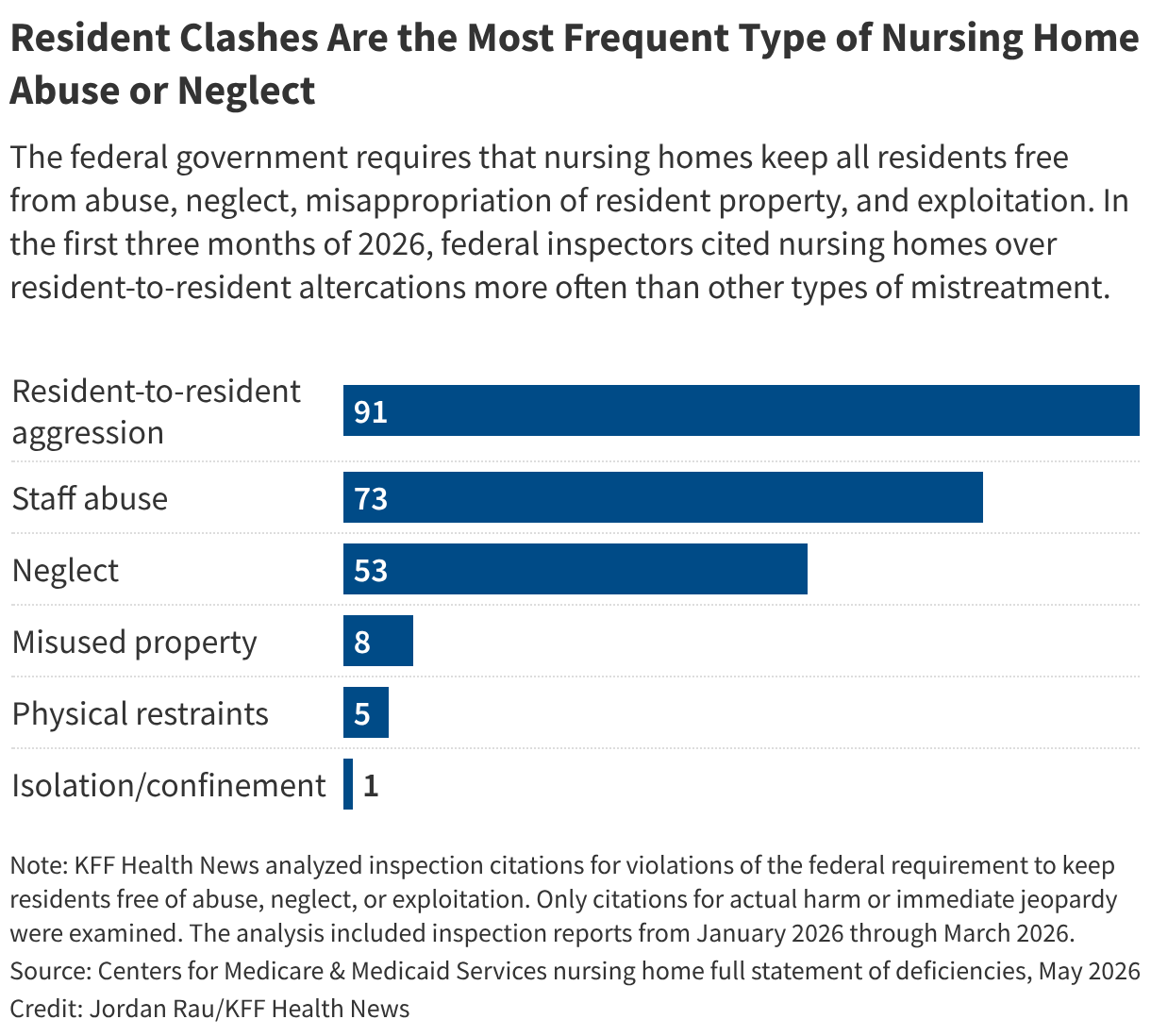
A KFF Health News examination of court records, police reports, and inspection documents indicates that altercations involving residents with dementia frequently occur when warning signs are missed or inadequately addressed. Federal data from the Centers for Medicare & Medicaid Services (CMS) shows that since the beginning of 2024, nursing homes have been cited at least 700 times for failing to protect residents from physical, sexual, or verbal abuse by other residents. In the first quarter of 2026, resident-to-resident abuse accounted for more CMS citations than any other type of abuse, neglect, or exploitation, including abuse by staff.
The long-term care industry acknowledges the complexity of managing residents with advanced dementia, citing that behaviors can be unpredictable. However, experts like Eilon Caspi, a dementia consultant, argue that most altercations are preceded by observable warning signs, indicating unmet needs or escalating distress in the months, weeks, days, or even hours leading up to an incident.
Understanding the Roots of Agitation and Aggression
The psychological underpinnings of aggression in dementia are multifaceted. In Alzheimer’s disease, the most common form of dementia, the deterioration of brain networks can disrupt the balance between the prefrontal cortex (responsible for judgment and self-control) and limbic regions like the amygdala (involved in processing fear and threat). As cognitive abilities decline, individuals struggle to comprehend their surroundings and articulate their distress.
Physical and emotional discomforts, such as pain, infections, or medication side effects, can manifest as aggression. The care environment itself can be a significant trigger. The need for intimate personal care, often delivered by unfamiliar and changing staff members, can lead to feelings of insecurity and distress. The combination of noise, close proximity, and rigid routines can transform routine interactions into flashpoints. Dr. Al Power, a geriatrician and advocate for alternative care models, notes, "You don’t feel safe, because you don’t know these strangers who are coming in and taking off your clothes. These things will be distressing to anybody."
While verbal altercations are the most common form of aggression, studies indicate that a significant percentage of residents in assisted living and nursing homes experience physical assaults. Many of these physical aggressions, as documented in CMS reports, are perpetrated by residents diagnosed with dementia, schizophrenia, or other cognitive disorders. In some cases, both residents involved are aggressors, while in others, the aggression is one-sided, sometimes occurring between roommates. Dr. Laura Mosqueda, a geriatrician and advisor to the National Center on Elder Abuse, expresses concern that such incidents are often attributed solely to the cognitive impairments of the individuals involved, overlooking the responsibility of the care environment to ensure safety.
A Cycle of Neglect and Tragedy: The Case of Gladys Lynch
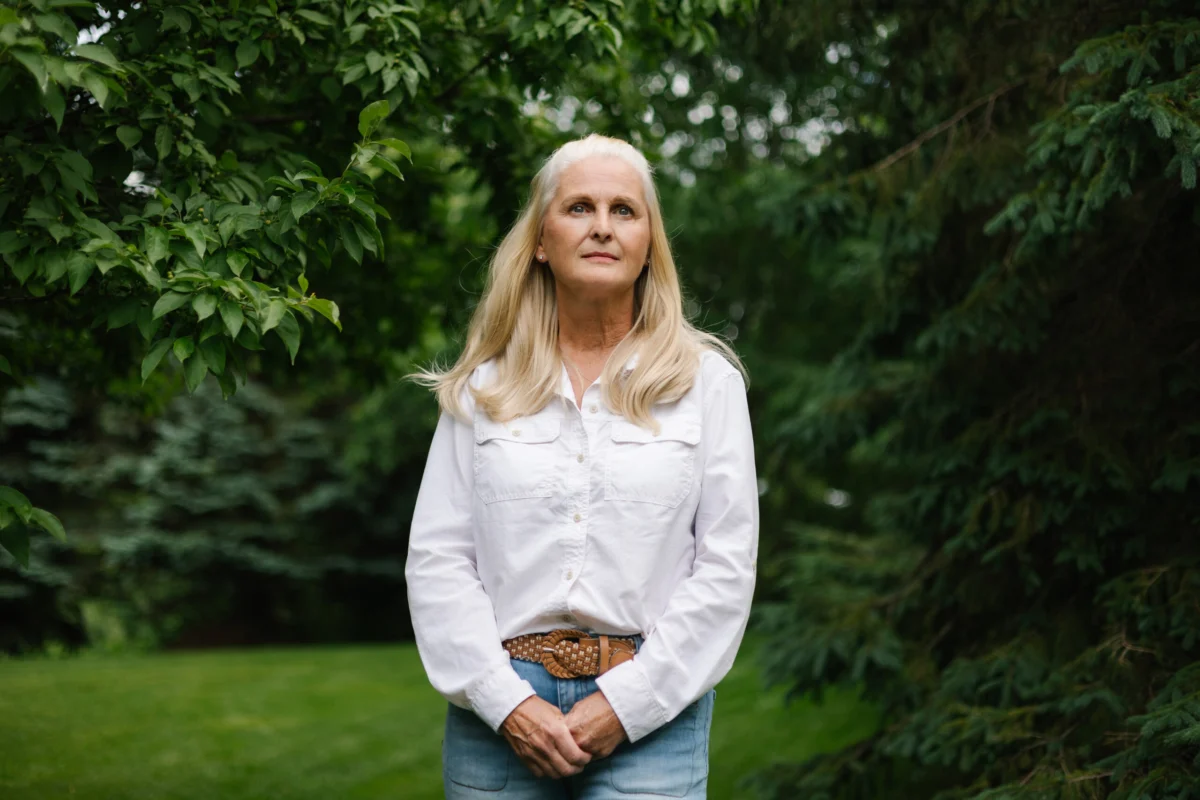
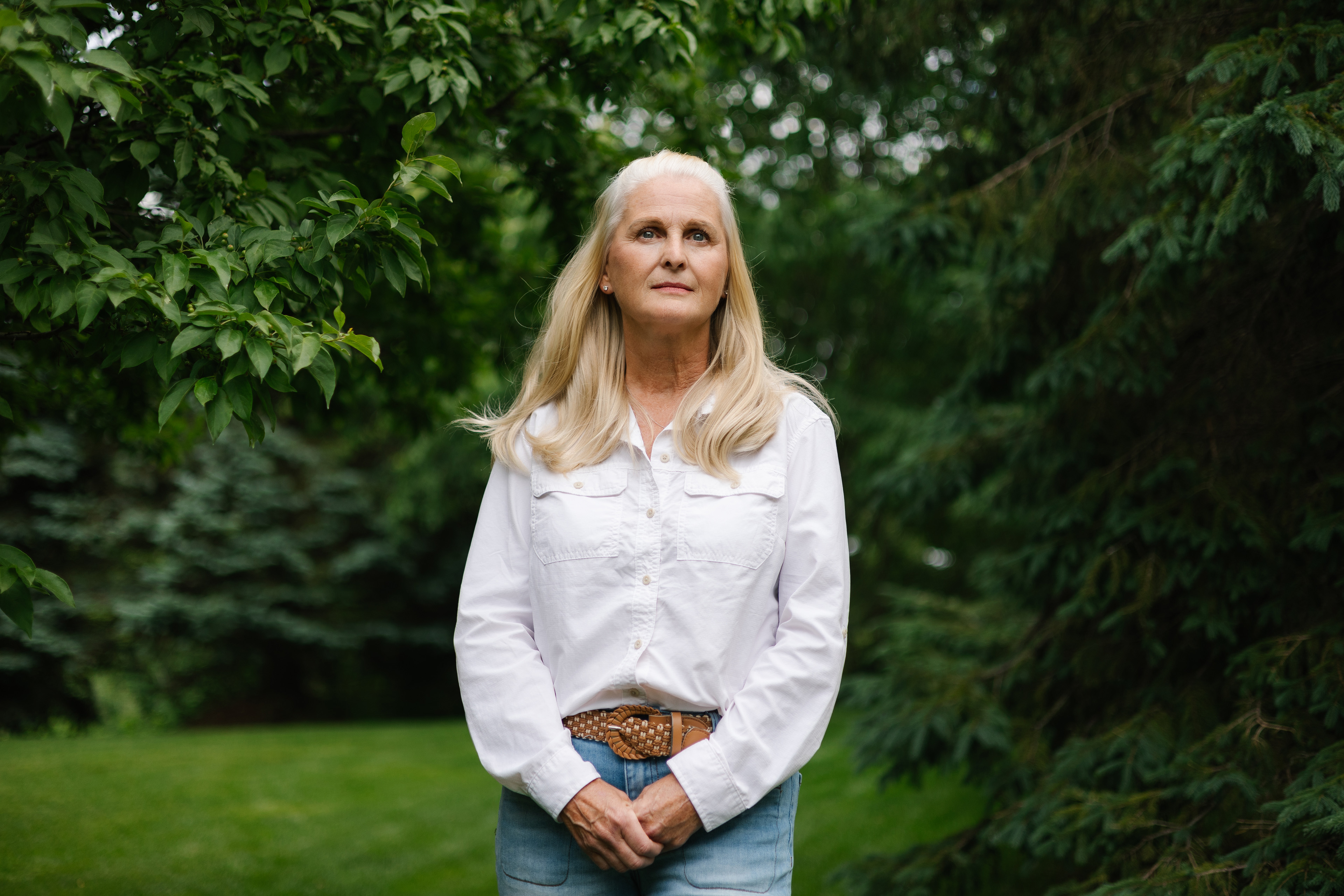
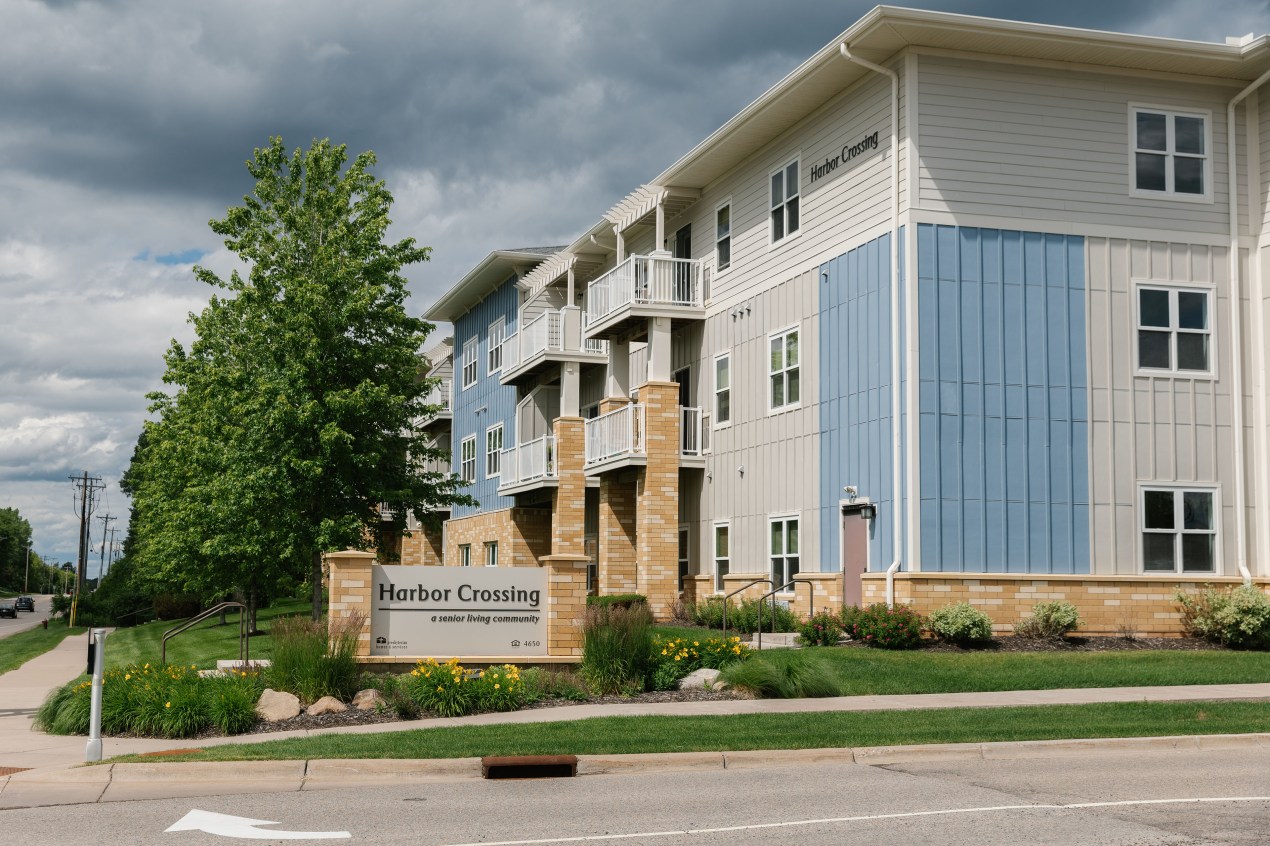
The tragic case of Gladys Lynch, a retired department store accountant who moved into the memory care unit at Harbor Crossing in White Bear Lake, Minnesota, in September 2025, further illustrates the dangers of inadequate oversight. Despite a monthly cost exceeding $10,000, Lynch became a victim of a fellow resident’s escalating aggression. Her daughter, Rebecca Norton, installed web cameras in her mother’s room, documenting a woman who repeatedly entered Lynch’s room, harassed her, rummaged through her belongings, used her bathroom, and yelled at her.
Norton repeatedly informed Harbor Crossing’s administration, who assured her they would secure her mother’s door. However, a Minnesota Department of Health report revealed that Harbor Crossing aides had raised concerns about the other resident, who, like Lynch, was new to the memory unit. This resident, diagnosed with Alzheimer’s, severe dementia with agitation, depression, and anxiety, was confused, had difficulty communicating, and had a history of hitting aides.
Aides had consistently reported the woman’s "ongoing aggression, entered other residents’ apartments, invaded others’ personal space, and was difficult to redirect." Despite attempts to find effective medications, aides pressed for new treatments, with one nurse warning the resident’s doctor that it was "only a matter of time before" she "hurts another resident."
On the last day of September, the aggressive resident entered Lynch’s room and refused to leave. The following morning, she returned. Video evidence described in police and state reports shows Lynch attempting to guide the woman out and lock the door, but the woman re-entered, claiming it was her house. Lynch repeatedly pressed her alert pendant for help. The state report states that aides arrived 13 minutes after the initial alert.
The confrontation escalated when the woman attempted to touch an object near Lynch’s door. Lynch blocked her, prompting the woman to slap her hands and threaten, "I’m going to kill you if you don’t quit it." She then pushed Lynch, who fell and hit her head. Lynch suffered a brain hemorrhage and fractures to her eye socket and ribs, ultimately dying in the hospital five days later at age 96. The medical examiner ruled her death a homicide.
While prosecutors declined to bring charges, the state investigation concluded that Harbor Crossing was responsible for neglect, having been aware of the resident’s violent tendencies and failing to implement effective interventions. Harbor Crossing has requested the state reconsider its findings, and Lynch’s family has filed a wrongful death lawsuit.

Strategies for Prevention and the Ethical Imperative
Geriatricians, researchers, and patient advocates advocate for proactive strategies to mitigate resident-to-resident violence. These include enhanced supervision of high-risk residents, proximity to nursing stations, separation of residents with a history of conflict, and careful consideration of roommate assignments. Comprehensive care plans that identify resident triggers and staff training focused on de-escalation techniques are essential. Engaging residents in organized activities can also reduce boredom and agitation.
While antipsychotic medications are often prescribed, they carry significant risks, including increased falls, strokes, and mortality. The availability of sufficient staffing for one-on-one supervision is a persistent challenge. Some facilities require families to hire private aides, adding substantial costs. In extreme cases, facilities may resort to hospitalizations, psychiatric evaluations, or discharges. Camille Russell, a former long-term care ombudsman, observes that staff are often "woefully undertrained" in dementia care, suggesting a systemic shift towards profit-driven decisions over compassionate care.
A Devastating Injury: The Case of Linda Twiddy
The physical altercations in long-term care can result in severe and permanent injuries, as exemplified by the experience of Linda Twiddy. In August 2024, Twiddy, a former church secretary with vascular dementia, moved into The Vero at Chesapeake, a memory care unit in Virginia. Initially, her days were filled with activities and social engagement. However, seven weeks later, her daughter, Barbara Howerin, received a call that her mother had been kicked by another resident and was being sent to the hospital.
Howerin was shocked by the severity of her mother’s injuries, describing a wound on her shin that was "10 inches long by 6 inches wide," with her calf "just like dangling down." An internal incident report indicated that an aide witnessed a male resident with dementia attempting to strike Twiddy while she lay on the floor in "a pool of blood," and that Twiddy was screaming, "get him away from me, he pushed and kicked me."

Documents obtained by Twiddy’s family revealed that the male resident had a history of aggression at his previous facility, including pushing another resident. His medical records at The Vero indicated late-onset Alzheimer’s, agitation, anxiety, chronic back pain, and difficulty communicating his needs, particularly pain. His agitation often correlated with urinary tract infections. While aides could sometimes calm him with television, some staff found him difficult to manage, noting he would "swing that cane or he would punch at you."
The Vero denied negligence, claiming they complied with standards of care and that Twiddy’s injuries were due to her own negligence or the actions of others. Virginia regulators, however, alleged that The Vero had "failed to assume responsibility" for resident well-being. Twiddy underwent multiple surgeries and rehabilitation but never regained the ability to walk. Her family moved her to a different facility, where she resided until her death earlier this year. The lawsuit was settled confidentially.
The Financial and Ethical Landscape
The financial incentives within the long-term care industry are a significant factor. PACS Group, owner of Sunrise Post Acute, generated $191 million in profit on $5.3 billion in revenue in the previous year. However, a lawsuit filed by the Cecchettos alleges that PACS’s founders, Jason Murray and Mark Hancock, have been draining resources from their nursing homes to fund expansion and personal enrichment, including the purchase of luxury jets and sponsorships for sports teams in states where they own no facilities.
California regulators fined Sunrise $120,000 for failing to protect Cecchetto and for not considering Timaloa’s aversion to noise. Medicare imposed an additional $62,810 fine. In their legal response, PACS denied negligence and asserted that Cecchetto "failed to exercise ordinary care on his own behalf for his own safety." The company is challenging the state fine, arguing it was issued too late and that Sunrise acted reasonably. The Cecchettos’ lawsuit seeks to mandate robust procedures for admissions, staff training, room changes, and altercation reporting, along with a court-appointed monitor. PACS maintains that "important context" will emerge during legal proceedings.
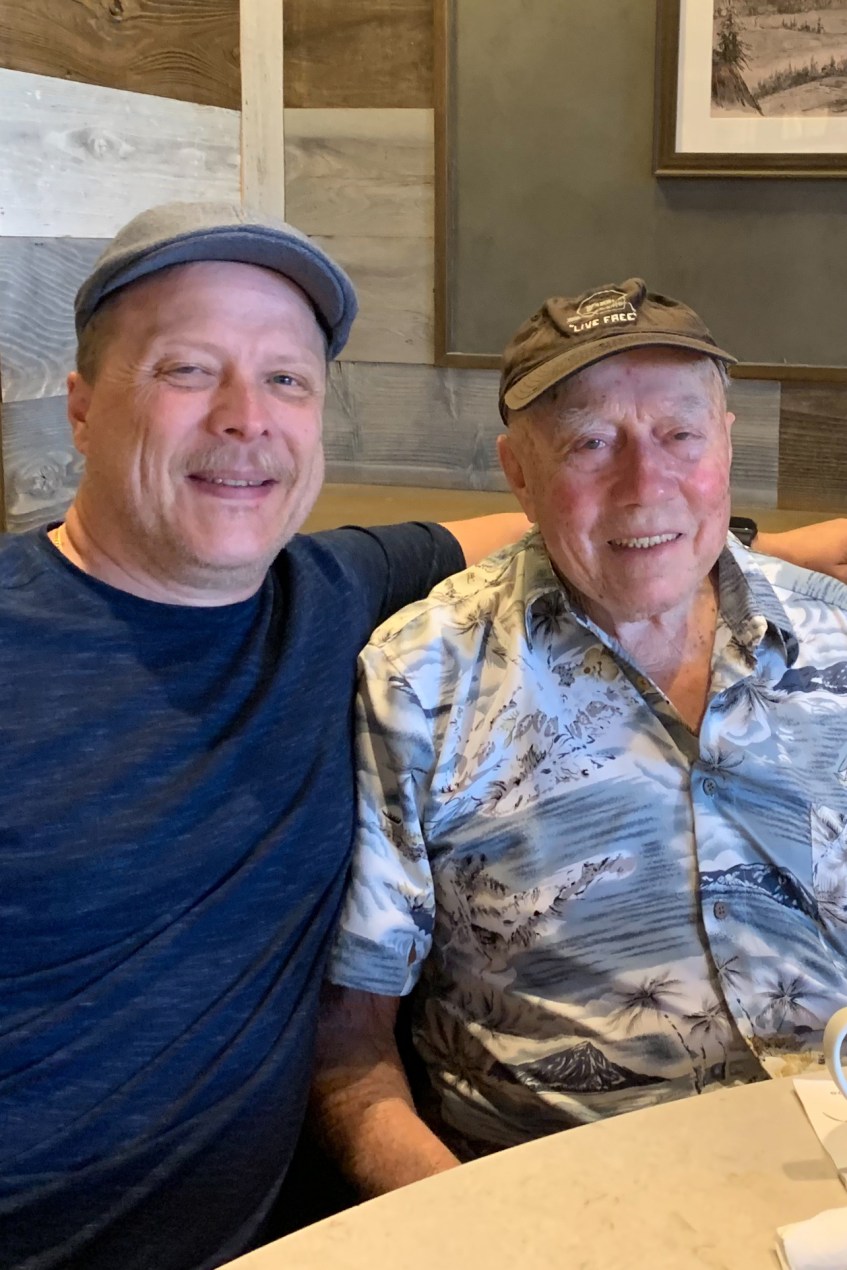
The Cecchetto sons recall their father’s life, from his childhood in Italy to his successful career as a tile contractor in California. They express a profound desire to prevent similar tragedies: "We don’t want this to happen to somebody again. With the life he led, he deserved a quiet, dignified death. Instead, he ended his life in pain and fear."
Data Methodology
KFF Health News’s analysis of federal nursing home inspection reports focused on citations for violations of Medicare and Medicaid regulations concerning residents’ right to be free from abuse, neglect, and exploitation. The analysis prioritized the most severe citations, where inspectors determined residents had been harmed or were at immediate risk of serious injury, harm, impairment, or death. Reports from January 2024 onwards were reviewed, with a specific tally of those explicitly detailing resident-to-resident altercations. A more granular analysis of reports from January through March 2026 involving harm or immediate jeopardy was conducted, categorizing the type of abuse, neglect, or exploitation identified.
